Blog
Oval Radiators Explained: Style, Sizing and Where They Work Best

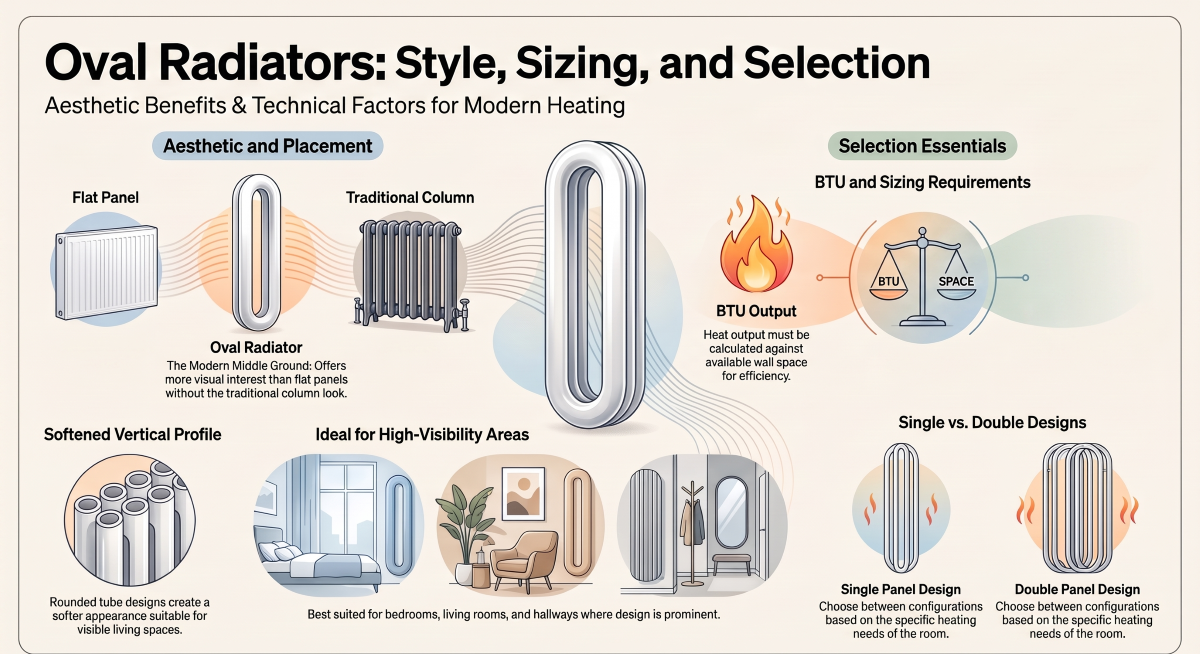
If you want something more interesting than a standard flat panel radiator but don’t want the traditional look of a column radiator, an oval radiator could be a good option.
With their rounded tube design and vertical profile, oval radiators bring a softer look to a room while still providing useful heat output. They can work particularly well in bedrooms, living rooms, hallways, and other spaces where the radiator is visible.
But choosing an oval radiator isn’t only about appearance. You also need to consider its size, BTU output, wall space, and whether a single or double design is more suitable.
What Is an Oval Radiator?
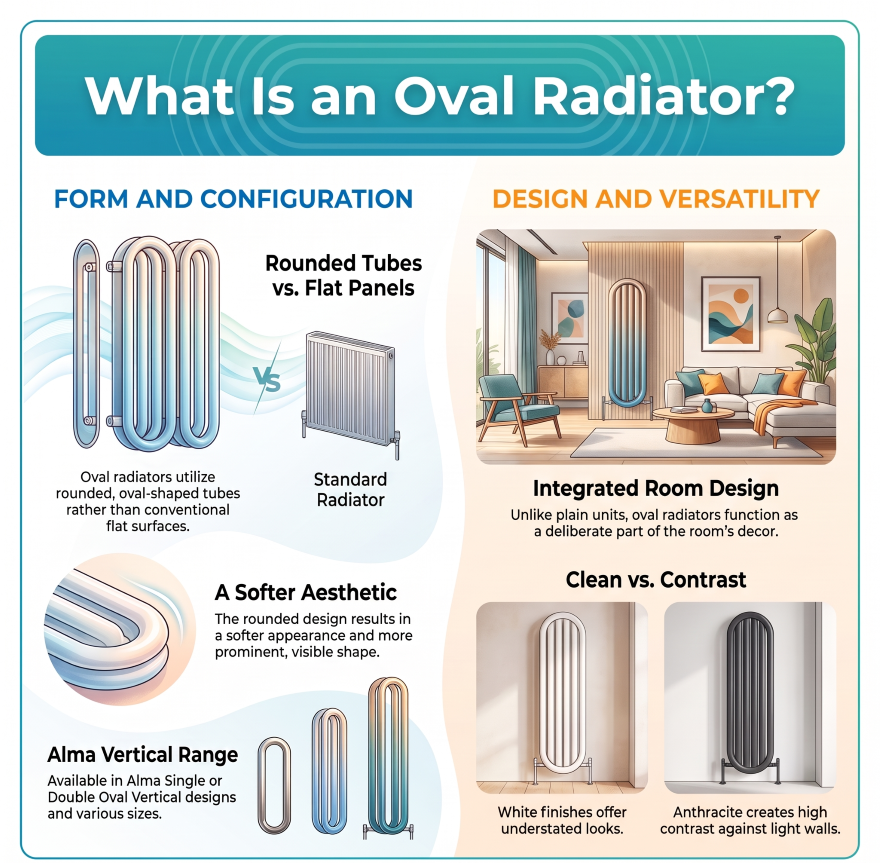
An oval radiator has rounded, oval-shaped tubes rather than the flat surfaces found on conventional panel radiators.
The result is a radiator with a softer appearance and more visible shape. This makes oval designs a popular choice for homeowners looking for a modern designer radiator that still has some of the character associated with tubular designs.
The Radiator Hub's oval range includes Alma Single Oval Vertical Designer Radiators and Alma Double Oval Vertical Designer Radiators in different sizes and finishes.
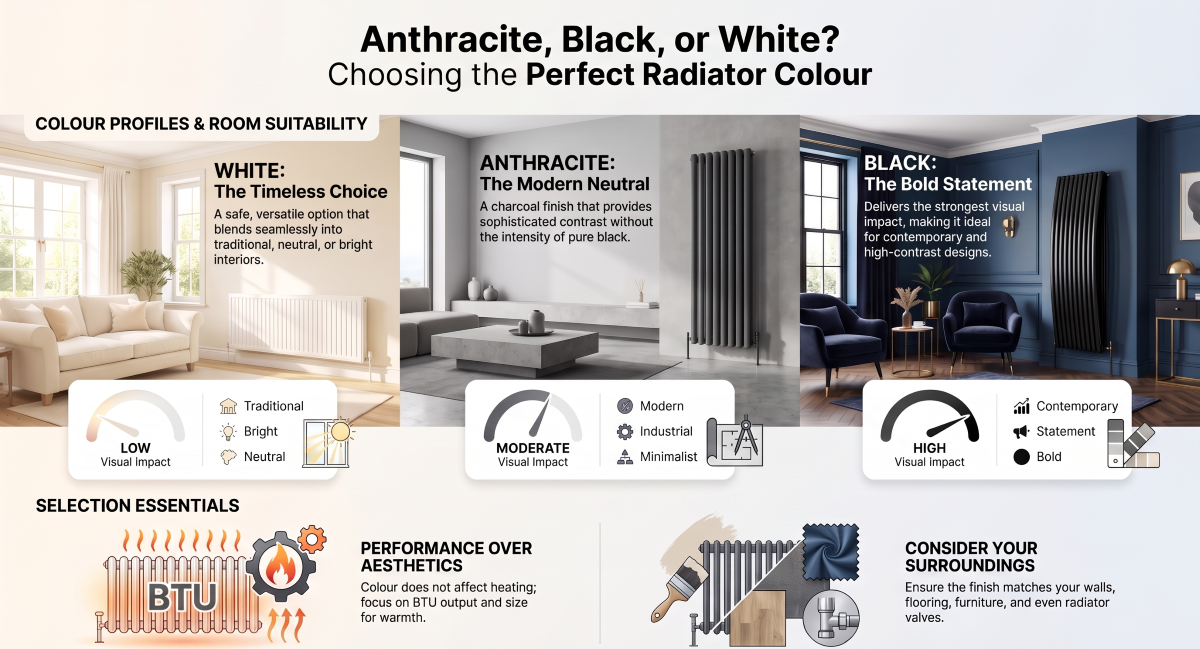
Unlike a plain panel radiator, an oval radiator can become part of the room's overall design. A white model can keep the look clean and understated, while anthracite can create more contrast against a lighter wall.


Why Choose an Oval Designer Radiator?
The main reason people choose oval radiators is their appearance, but there are practical benefits too.
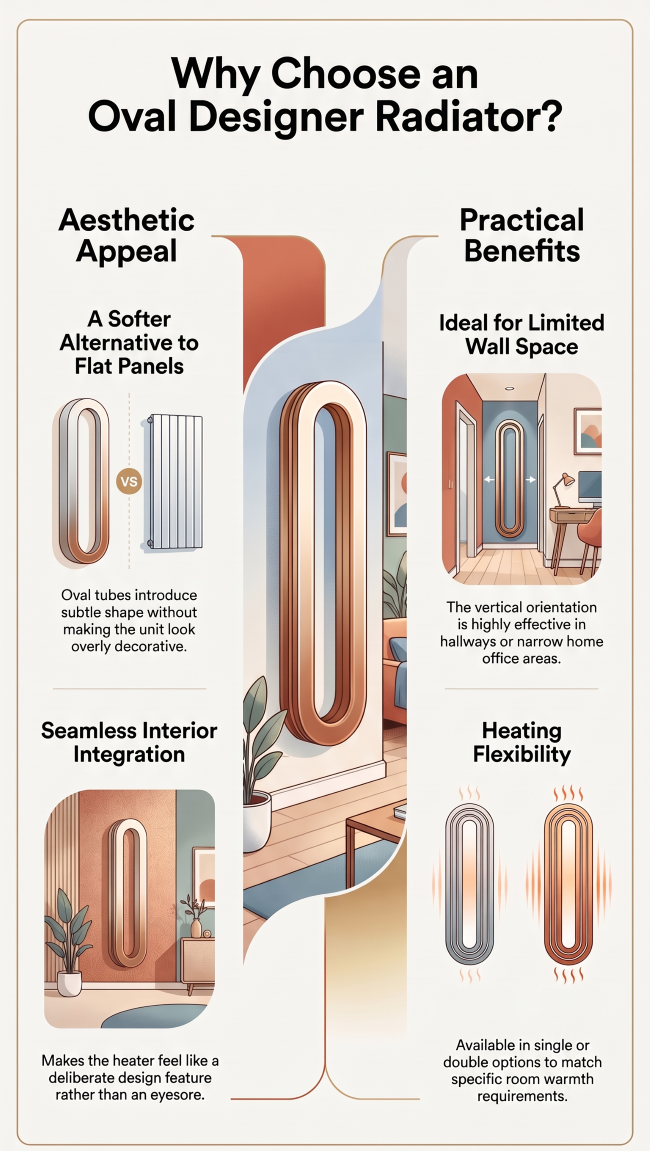
A softer alternative to flat panel radiators
Flat panel radiators have a clean, simple appearance. Oval tubes introduce more shape without making the radiator look overly decorative. This rounded design can add character to the room while maintaining a modern, understated look.
Good for modern interiors
An oval designer radiator can complement contemporary bedrooms, living rooms, hallways and home offices. Its vertical design can also make better use of wall height when floor and wall space is limited. The rounded profile adds a softer touch while keeping the overall look clean and modern.
Single and double options
Choosing between a single and double oval radiator gives you more flexibility when matching the radiator to the room's heating requirement. A double design can provide a higher heat output where more warmth is needed.
Makes the radiator part of the room
If the radiator is going on a prominent wall, a designer shape can make it feel more like part of the interior rather than something that needs to be hidden. Its rounded design can add a subtle decorative touch while providing practical heating.
Single vs Double Oval Radiators: Which Is Better?
One of the main decisions when choosing an oval radiator is whether you need a single or double design.
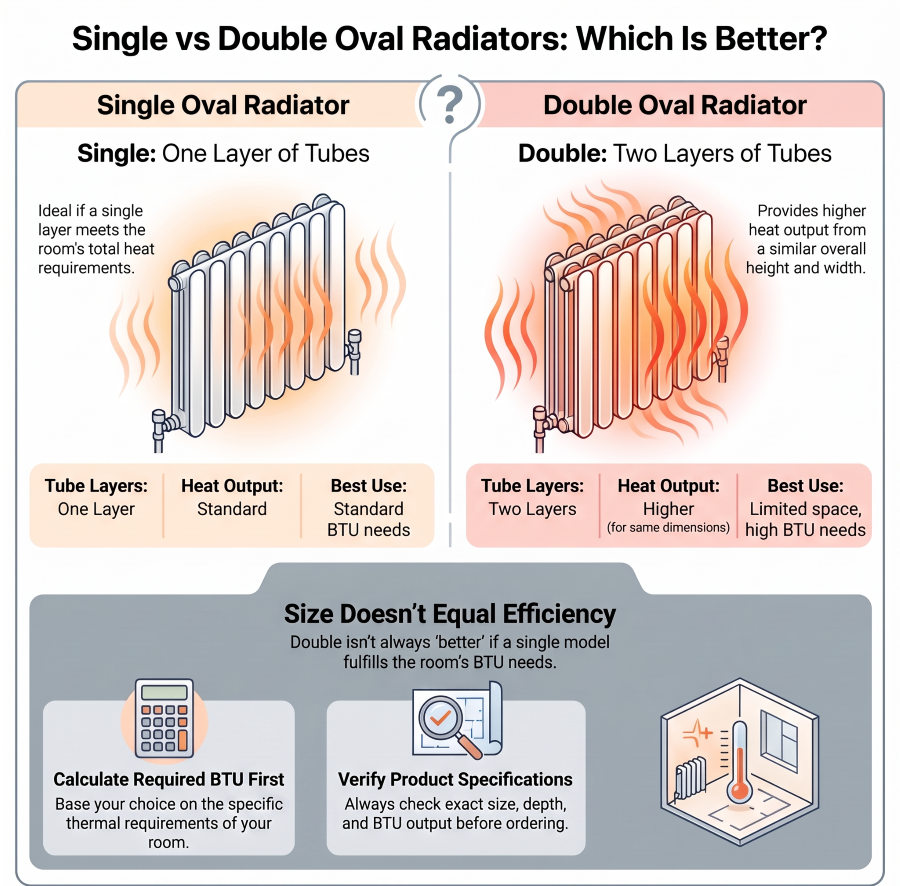
A single radiator has one layer of heating tubes, while a double radiator has two. A double design can therefore provide a higher heat output from a similar overall height and width.
This doesn't automatically mean double is better. If a single radiator provides enough heat for the room, there may be no reason to choose a larger-output model.
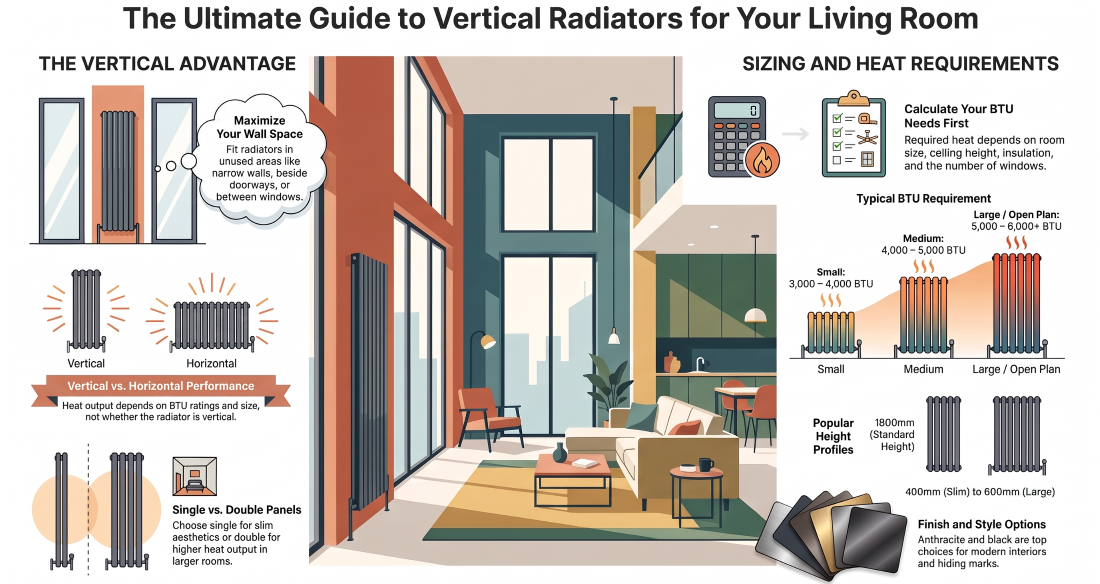
The best approach is to calculate your room's required BTU first and then compare that figure with the heat output of the radiators you're considering.
Always check the current product specification for the exact size, depth and BTU output before ordering, as these can vary between models.


How Much BTU Do You Need for an Oval Radiator?
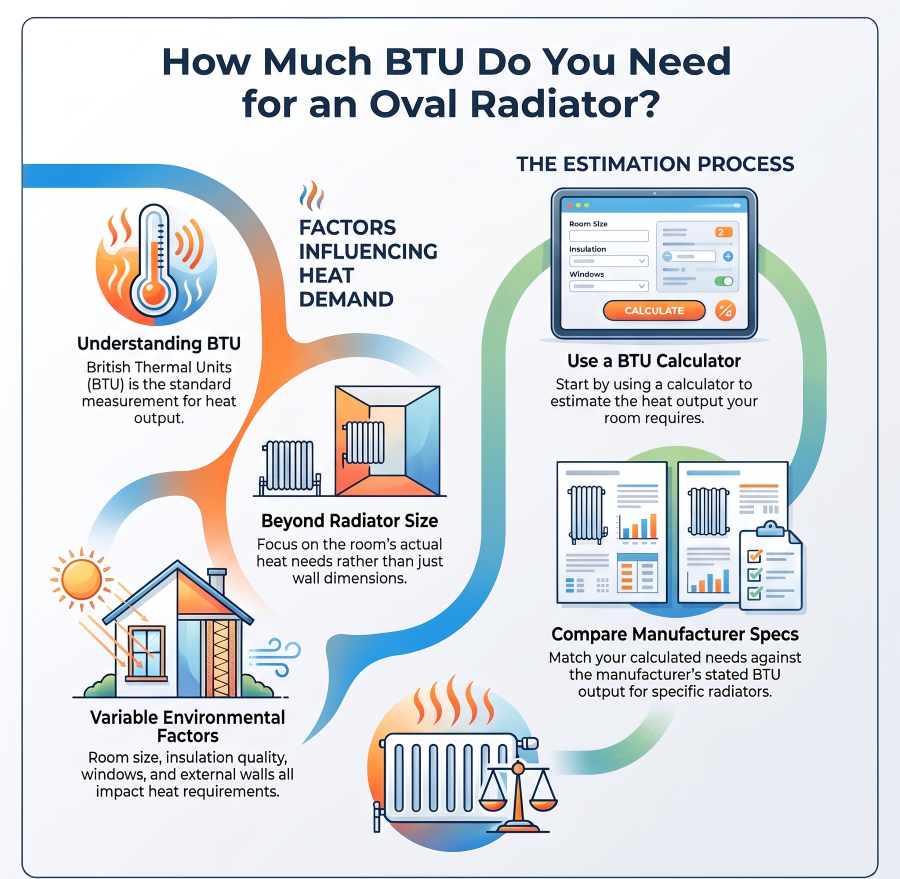
BTU, or British Thermal Units, is a measurement of heat output.
When choosing a radiator, the important question isn't simply:
"What size radiator will fit my wall?"
It should also be:
"How much heat does my room actually need?"
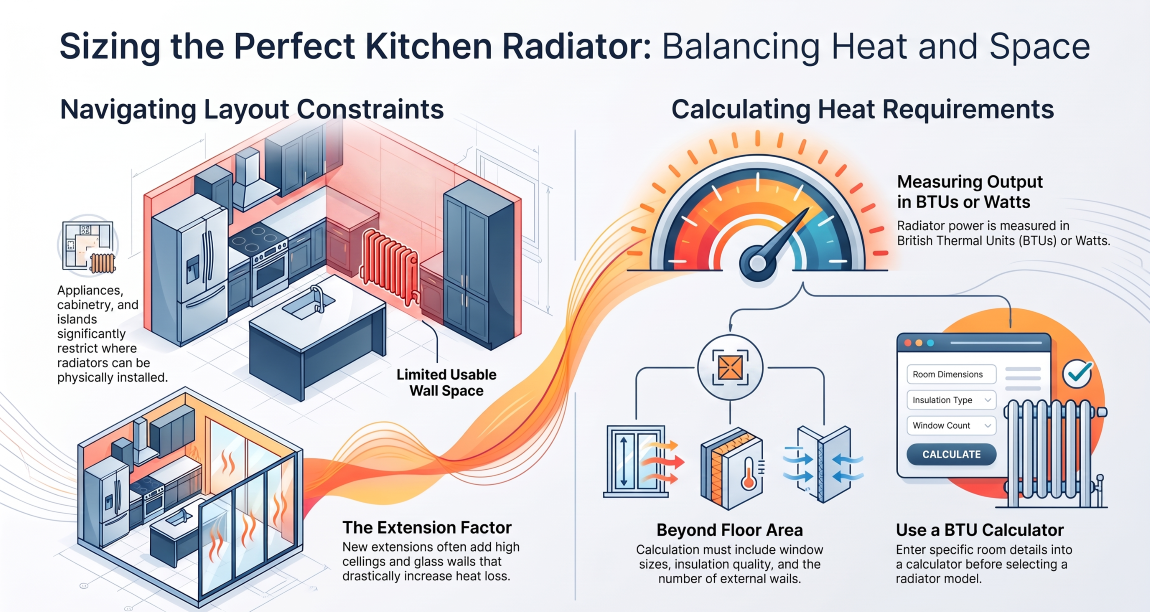
Room size, insulation, windows, external walls and other factors can affect the required heat output.
The Radiator Hub provides a BTU Calculator to help estimate the heat output required before choosing a radiator.
Use the calculator as a starting point, then compare the result with the manufacturer's stated BTU output for the radiator you're considering.
Where Do Oval Radiators Work Best?
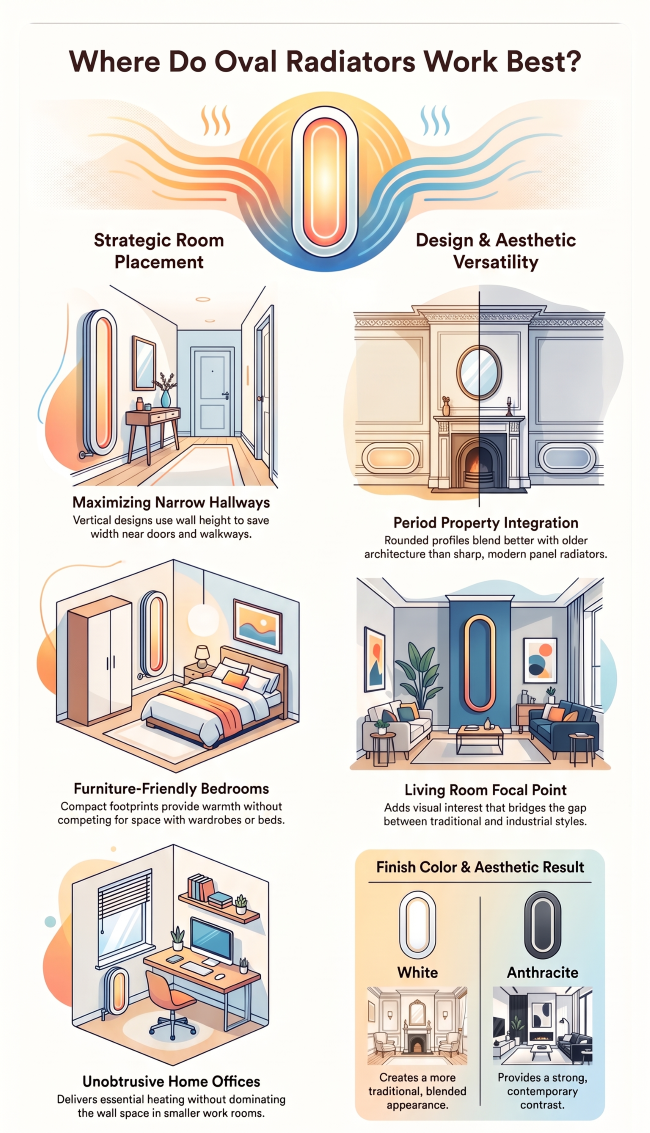
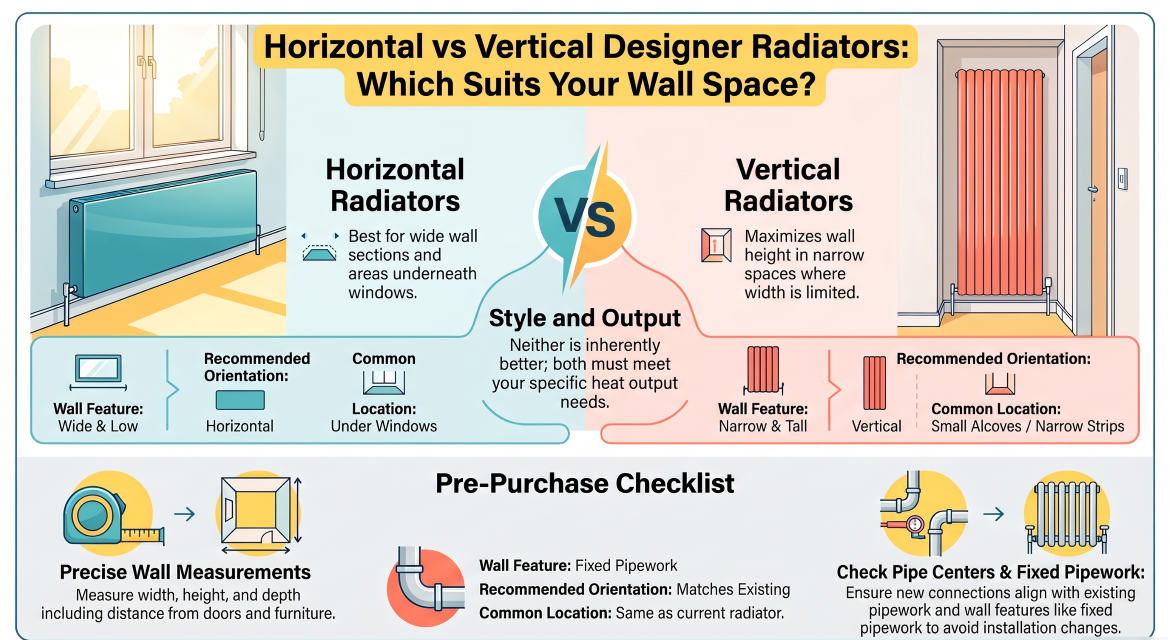
Oval radiators can suit a wide range of rooms, but their vertical design is particularly useful where wall width is restricted.
Bedrooms
A vertical oval radiator can provide useful heat without taking up a large amount of horizontal wall space. This can be helpful when wardrobes, beds or other furniture already take up much of the room.
Living Rooms
In a living room, the radiator is often in a visible position. An oval designer radiator can add visual interest without looking overly traditional or industrial.
Hallways
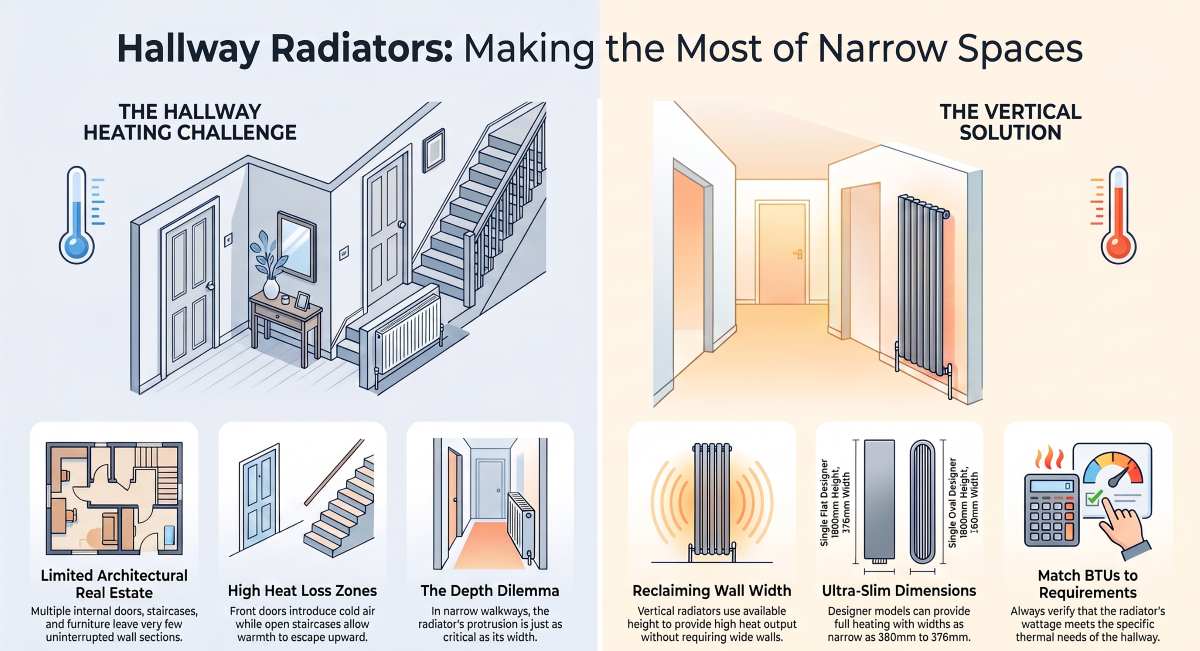
Hallways can be awkward places for radiators because doors and walkways reduce the available wall space.
A vertical oval radiator can make better use of wall height while keeping its width relatively compact.
Home Offices
An oval radiator can provide heating without taking over the wall. Its decorative appearance can also work well in a room where the radiator is always visible.
Period Properties
The rounded profile of an oval radiator can work well in older properties where a very sharp, minimalist panel radiator might look out of place.
The finish matters too. White can give a more traditional appearance, while anthracite can create a stronger contemporary contrast.

Are Oval Radiators Good for Small Rooms?
They can be.
The important point is not simply whether the radiator is oval. You need to consider its width, height, depth and BTU output.
A tall, narrow oval radiator can be useful in a smaller room because it makes use of vertical wall space rather than requiring a wide section of wall.
However, don't choose a radiator simply because it looks compact. A narrow radiator with insufficient BTU output won't properly heat the room.
Calculate the required heat output first and then look for an oval radiator that fits both the BTU requirement and available wall space.
How to Measure for an Oval Radiator
Before ordering, measure the available wall carefully.
Check:
- Available wall height
- Available wall width
- Radiator depth
- Distance from doors, furniture and other obstructions
- Existing pipe positions
- Pipe centres
- Wall construction and fixing requirements
- Required BTU output
This is particularly important when replacing an existing radiator.
A new radiator may physically fit the wall but have different connection positions from the old one. In some cases, pipework may need to be adjusted during installation.
It is also worth checking the product specification for included brackets and fittings, as these can vary between radiator models.
Do Oval Radiators Come With Valves?
Radiator valves are generally purchased separately.
This gives you the flexibility to choose valves that suit your pipework and the finish of your radiator.
For example, if you're installing an anthracite oval radiator, you may want matching anthracite valves rather than standard white valves.
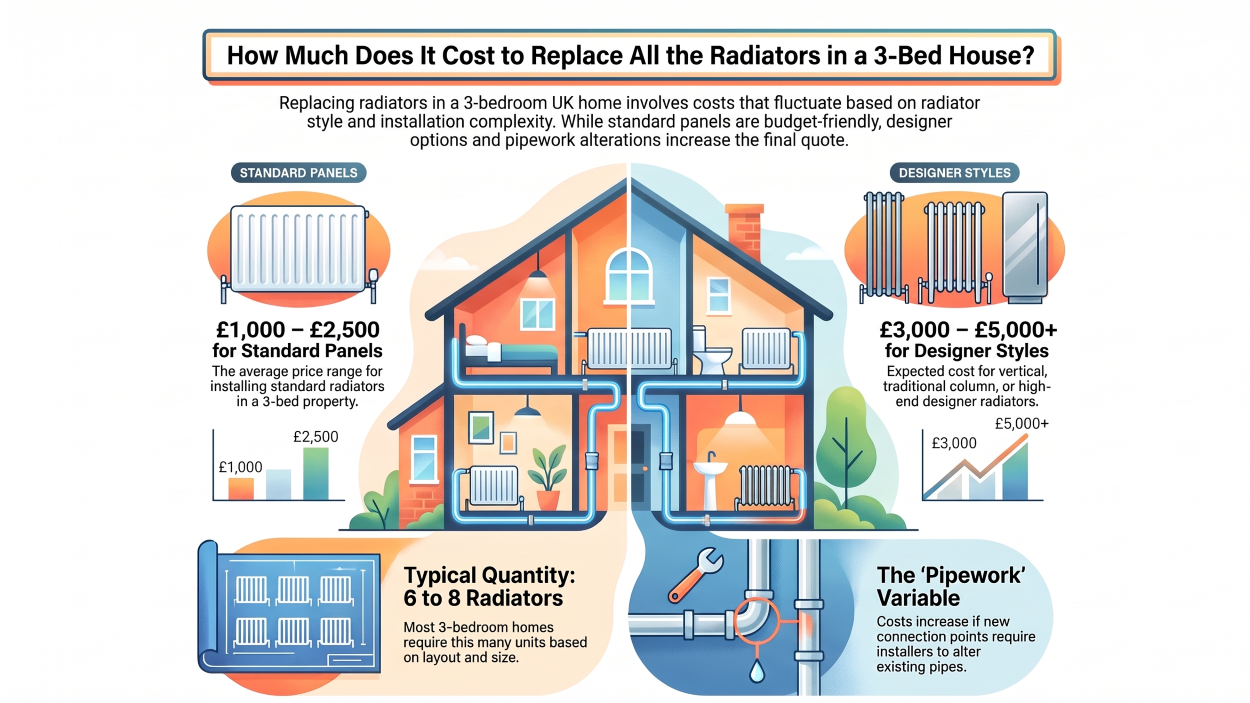
Remember to include the cost of valves when working out your overall radiator installation budget.
Oval Radiators vs Flat Panel Radiators
If you're deciding between the two, the choice usually comes down to appearance, available space and heat output.
Oval radiators are a good choice if you want:
- A more distinctive designer appearance
- Rounded rather than flat surfaces
- A vertical radiator for a narrow wall
- A softer alternative to industrial-style column radiators
- A radiator that becomes part of the room's design
Flat panel radiators may be more suitable if you prefer:
- A simple, understated appearance
- A radiator that blends into the background
- A straightforward panel design
- An easy replacement for an existing panel radiator
Neither is automatically better. The right option depends on the room and your priorities.
Are Oval Radiators Suitable for Modern Homes?
Yes.
The rounded profile works particularly well with contemporary interiors, especially when paired with modern flooring, neutral walls and simple furniture.
Anthracite oval radiators can create a stronger feature, while white oval radiators can provide a cleaner and more subtle appearance.
The key is to choose the finish and size based on the rest of the room rather than treating the radiator as a separate element.
What Should You Check Before Buying an Oval Radiator?
Before ordering, work through this quick checklist:
1. Calculate your BTU requirement
Don't choose based on size alone.
2. Measure your wall
Check both height and width, including space around doors and furniture.
3. Compare single and double options
If wall space is limited but you need more heat output, a double radiator may be worth considering.
4. Check the radiator depth
A vertical radiator can save wall width but may project further into the room.
5. Check the pipe connections
This is particularly important when replacing an existing radiator.
6. Check what is included
Confirm whether brackets and other fittings are supplied, and remember that valves are generally purchased separately.
7. Consider the finish
Choose a colour that works with your walls, flooring, furniture and other fixtures.
Frequently Asked Questions
What is an oval radiator?
An oval radiator uses rounded, oval-shaped heating tubes rather than the flat surfaces found on standard panel radiators. It provides a softer, more distinctive alternative to conventional radiator designs.
Are oval radiators good for narrow walls?
Yes. Many oval radiators are available in vertical designs, making them useful when you have limited horizontal wall space but enough height.
Are oval radiators better than flat panel radiators?
Not necessarily. Oval radiators offer a different appearance and can work particularly well as a design feature. A flat panel radiator may be more suitable if you want a simple radiator that blends into the room.
Is a double oval radiator better than a single one?
A double oval radiator can provide a higher BTU output than a single model of a similar size. However, you should choose based on your room’s calculated heat requirement rather than automatically choosing the larger option.
Is a double oval radiator better than a single one?
A double oval radiator can provide a higher BTU output than a single model of a similar size. However, you should choose based on your room’s calculated heat requirement rather than automatically choosing the larger option.
What size oval radiator do I need?
The correct size depends on the room’s heat requirement as well as the available wall space. Calculate the required BTU first, then compare the result with the output of suitable oval radiators.
Can an oval radiator heat a large room?
It can, provided the radiator has enough heat output for the room. For larger rooms, you may need a larger model, a double radiator or more than one radiator depending on the heat-loss calculation.
How do I choose between a white and anthracite oval radiator?
Think about the overall room design. White can create a lighter, more understated appearance, while anthracite can provide more contrast and make the radiator a stronger feature.
Final Thoughts
Oval radiators offer a useful middle ground between simple flat panel radiators and more traditional column designs.
Their rounded profile gives them a distinctive appearance, while vertical models can make good use of wall height where horizontal space is limited.
The most important thing is not to choose an oval radiator based on appearance alone. Check the BTU output, dimensions, depth, pipe connections and available wall space before ordering.
If you're looking for an oval radiator for a bedroom, hallway, living room or another room in your home, start by calculating the required heat output and then choose a design that fits both the room and your style.
Ready to find the right oval radiator? Browse The Radiator Hub's range of oval designer radiators to compare sizes, finishes and heat outputs.
You can also explore the wider range of Vertical Designer Radiators if you're considering other space-saving vertical designs.