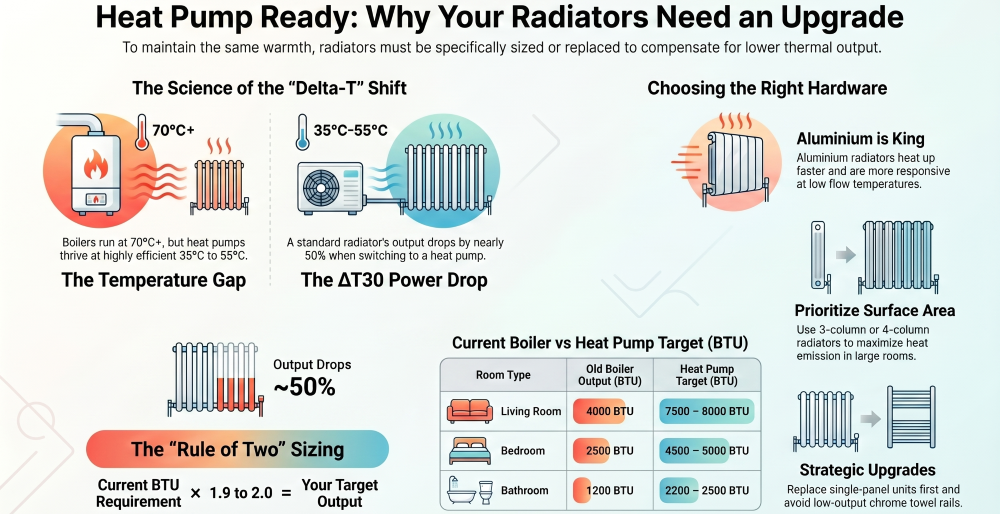
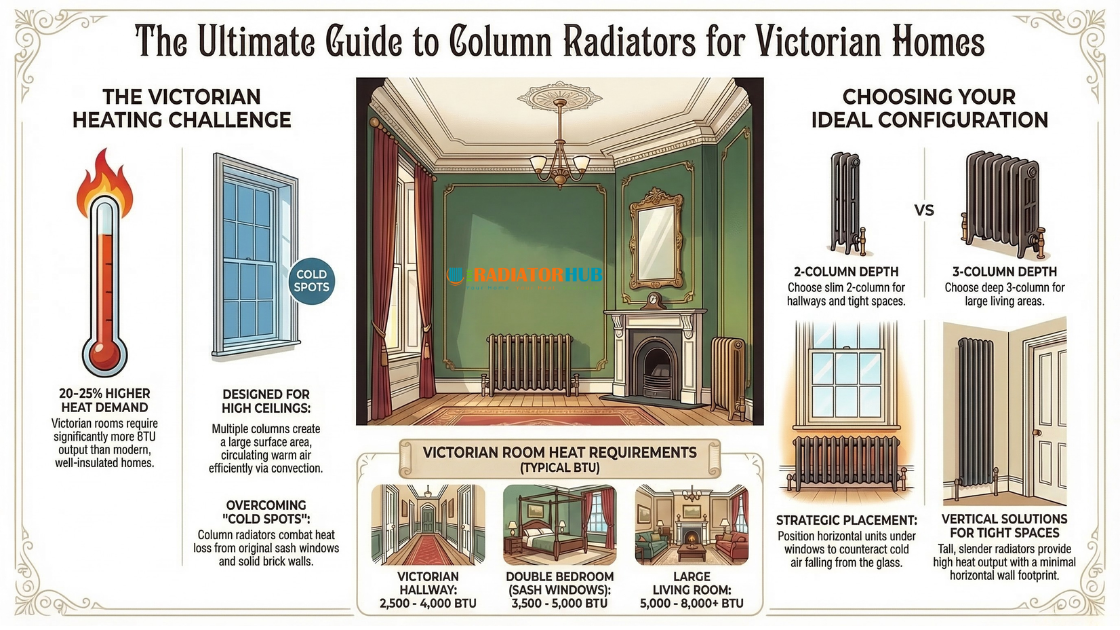
Blog
Hallway Radiators: Making the Most of Narrow Spaces

Finding somewhere to put a radiator in a hallway can be surprisingly difficult. A front door may be at one end, with doors leading into rooms on either side and a staircase taking up the remaining space. What looks like a simple heating job can quickly become a question of finding a radiator that fits without getting in the way.
The good news is that a narrow hallway doesn't mean you have to settle for a radiator with poor heat output. With the right size, shape, and position, you can make good use of limited wall space while keeping your home's entrance comfortable.
In this guide, we'll look at how to choose a radiator for a narrow hallway, where to position it and which styles are worth considering.
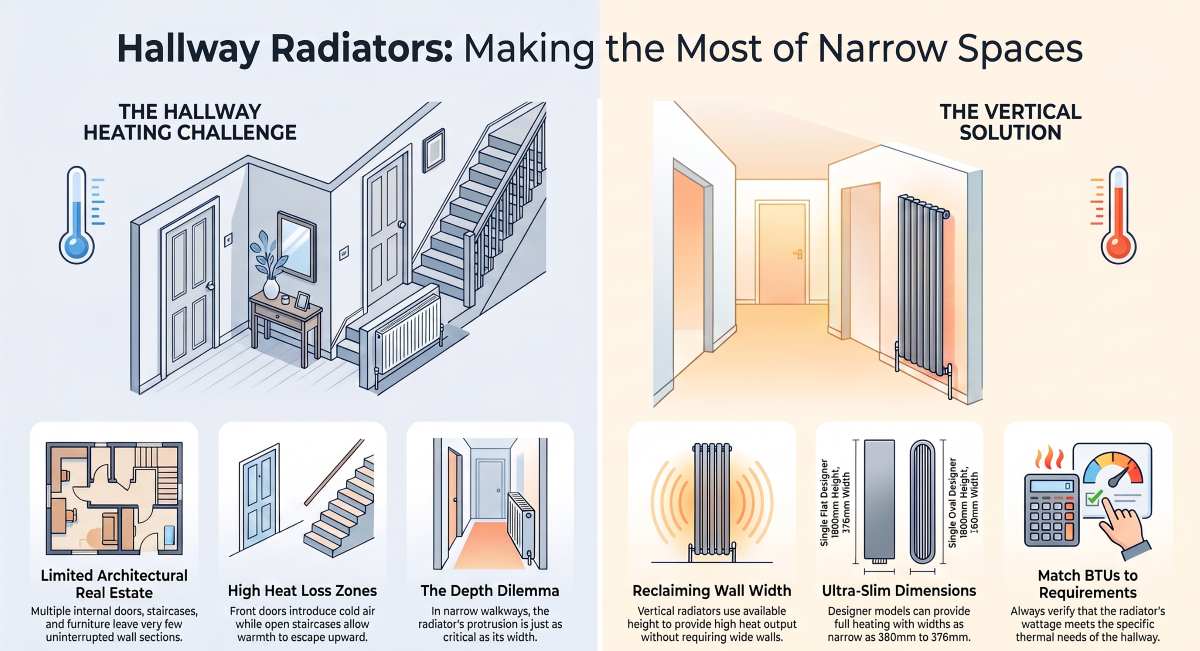
Why Are Hallways Difficult to Heat?
Hallways are different from most rooms because the main challenge is often available space rather than radiator output.
A typical hallway may have:
- Limited sections of uninterrupted wall
- A front door that lets in cold air
- Several internal doors
- An open staircase
- Furniture, coats or storage taking up space
- A narrow walkway where radiator depth matters
An open staircase can also allow warm air to rise into the upper part of the house, while the front door can introduce cold air whenever it's opened.
That's why choosing a hallway radiator involves more than simply finding something that fits the wall.
You need to consider heat output, width, height, depth and position together.
What Is the Best Radiator for a Narrow Hallway?
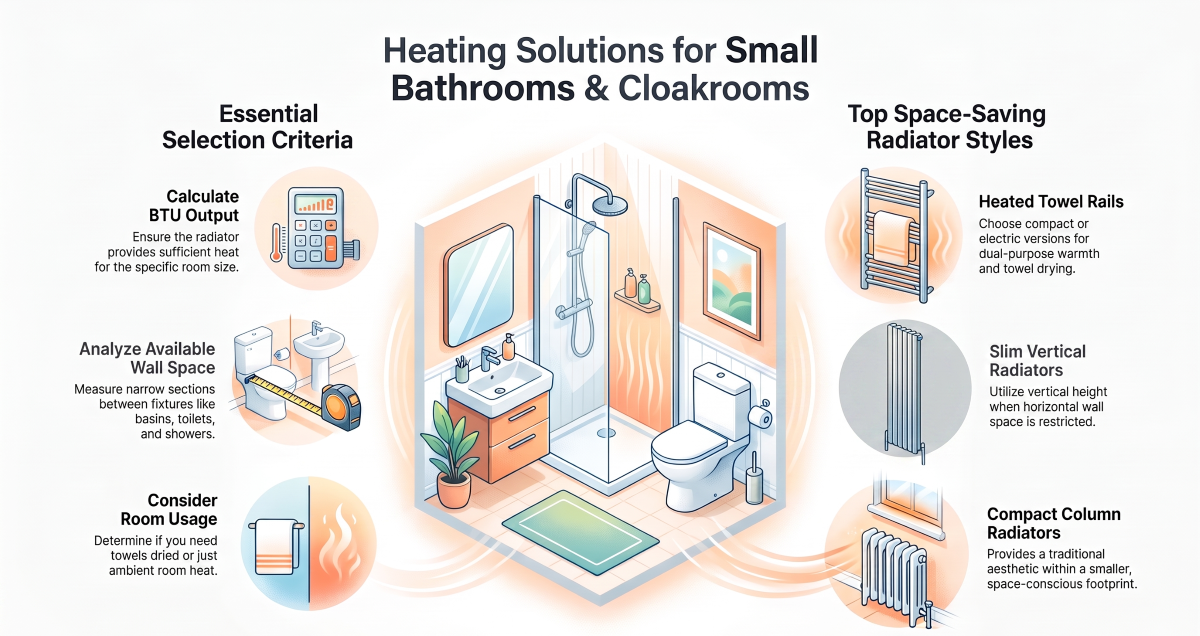
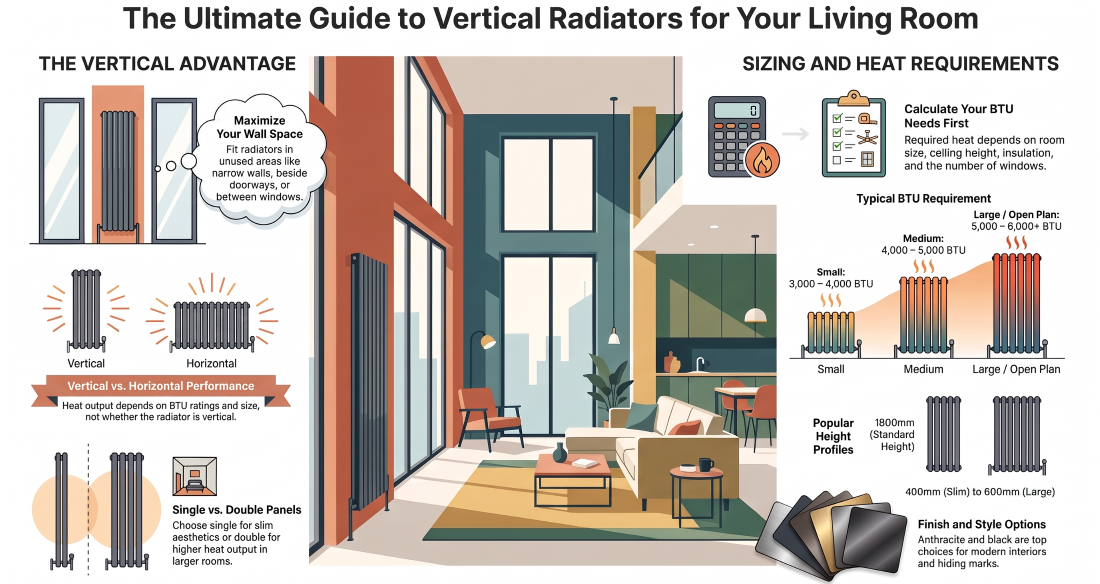
For many narrow hallways, a vertical radiator is one of the most practical options.
Instead of using a large amount of wall width, it makes better use of the available height. This can be particularly useful when the only suitable section of wall is between two doorways or beside a glazed entrance.
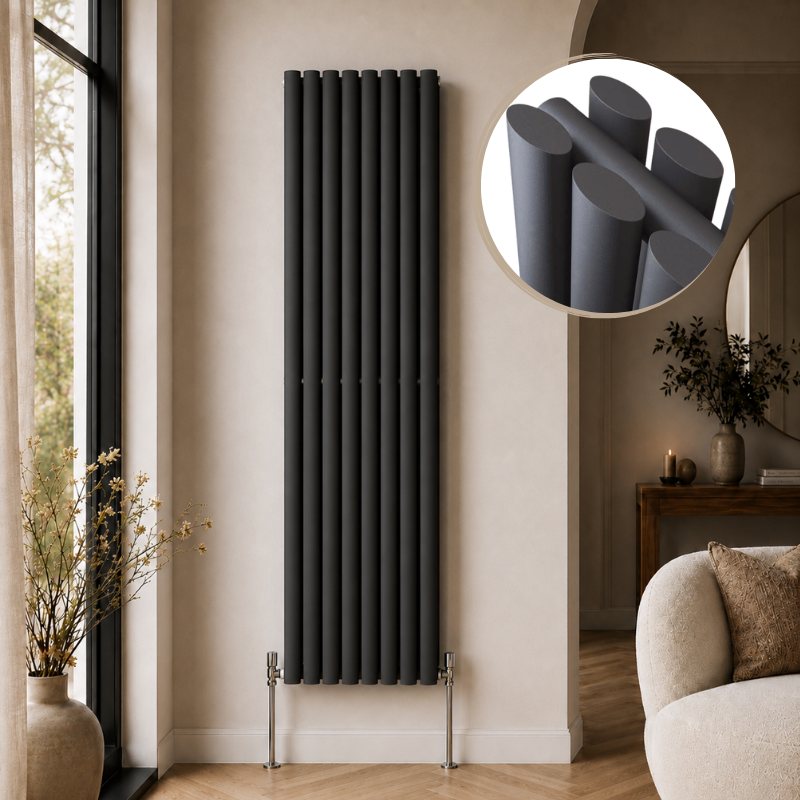
For example, The Radiator Hub has vertical designer models such as the Luna Single Flat Vertical Designer Radiator, available in a 1600mm × 376mm size, and the Alma Single Oval Vertical Designer Radiator, available in a 1600mm × 360mm size. These types of dimensions show why vertical designs can be useful when horizontal wall space is limited.
Why Choose a Vertical Radiator?
A vertical radiator for a hallway can work particularly well when:
- You have a narrow section of usable wall
- Several doors restrict the available width
- You want to keep floor space clear
- You need useful heat output without a wide radiator
- You want the radiator to become part of the hallway design
Just remember that a taller radiator isn't automatically the right choice. Heat output still matters. Always check the radiator's stated BTU/Watt output against what your hallway actually requires.

Where Should You Put a Radiator in a Hallway?
Once you've chosen the right type, positioning is just as important.
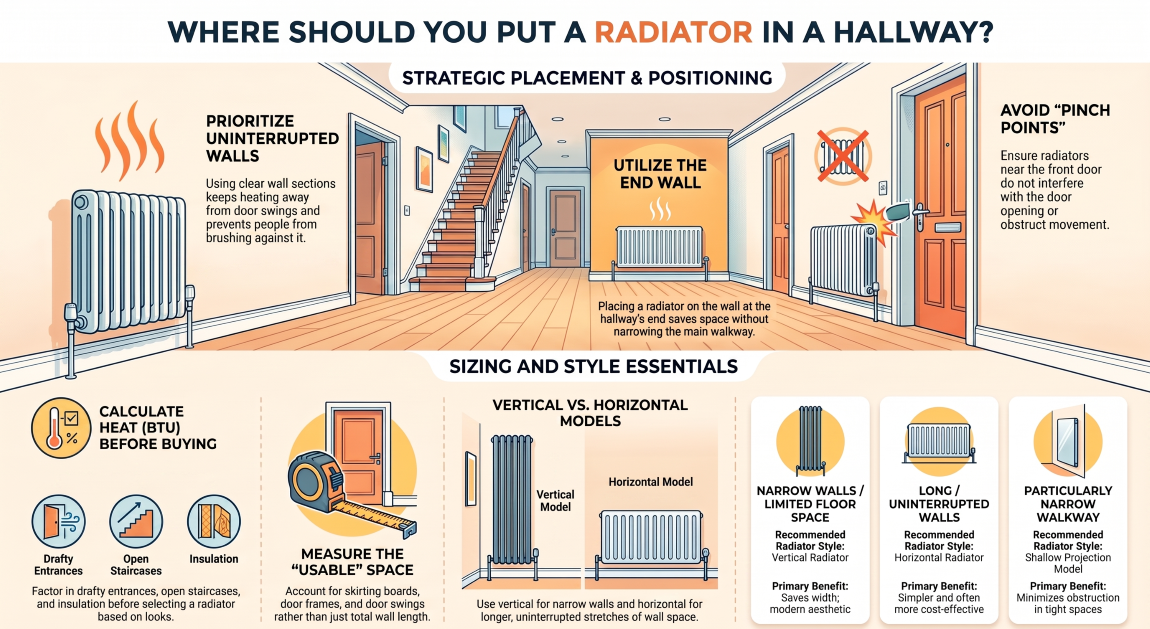
Use the clearest section of wall
If you have one uninterrupted section of wall, this is usually the easiest place to install a radiator. It keeps the heating away from door swings and reduces the chance of people brushing against it.
Consider the end wall
Don't overlook the wall at the end of the hallway. If it isn't occupied by a door, cupboard or furniture, it can provide valuable space for a radiator without narrowing the main walkway.
Be careful around the front door
A radiator can be positioned near an entrance, but it shouldn't interfere with the door opening or create an awkward pinch point.
In a particularly narrow hallway, a radiator with a shallow projection can be a better choice than simply selecting the highest-output model available.
Measure the space properly
Before ordering, measure the actual usable space, not just the total wall length.
Check:
- Available width
- Maximum height
- Radiator depth
- Skirting boards
- Door frames
- Furniture
- Door swing
- Pipe positions
A radiator can have the right output and still be unsuitable if it makes the hallway difficult to move through.
Alma Double Oval Vertical Designer Radiator 1600mm x 360mm Anthracite
In stock
- 🔥 BTU Output: 2798
- ⚡ Watt Output: 820
- 🛡️ Warranty: 5 Years
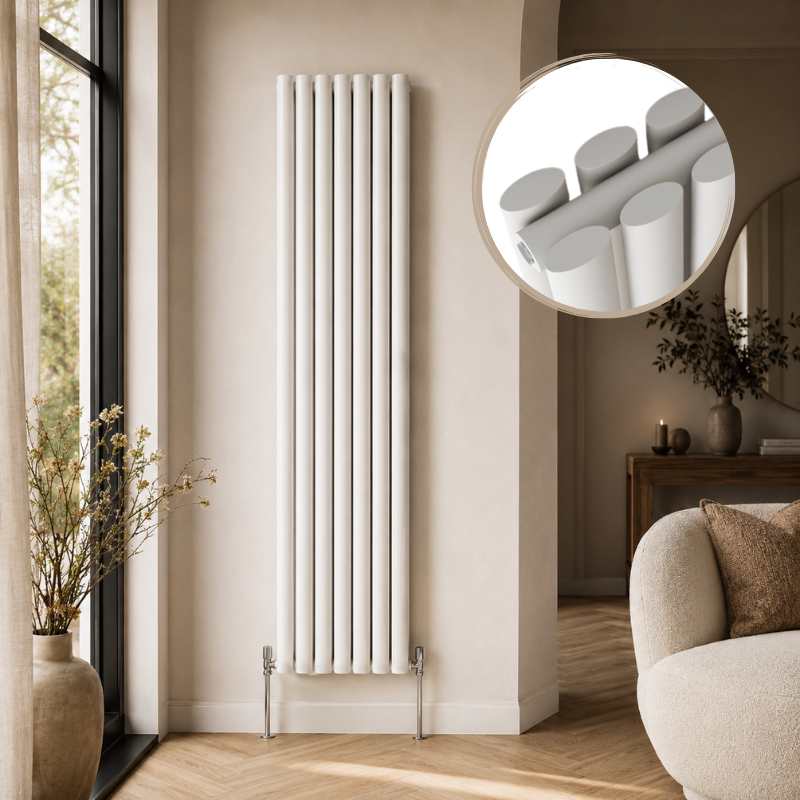
Alma Double Oval Vertical Designer Radiator 1600mm x 360mm White
In stock
- 🔥 BTU Output: 2798
- ⚡ Watt Output: 820
- 🛡️ Warranty: 5 Years
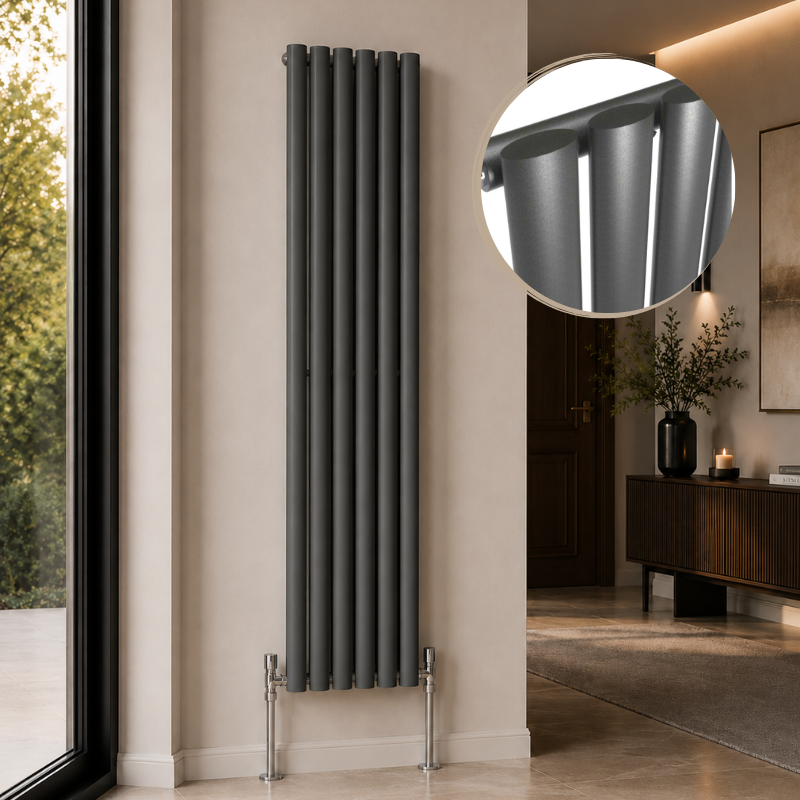
Alma Single Oval Vertical Designer Radiator 1600mm x 360mm Anthracite
In stock
- 🔥 BTU Output: 2156
- ⚡ Watt Output: 632
- 🛡️ Warranty: 5 Years
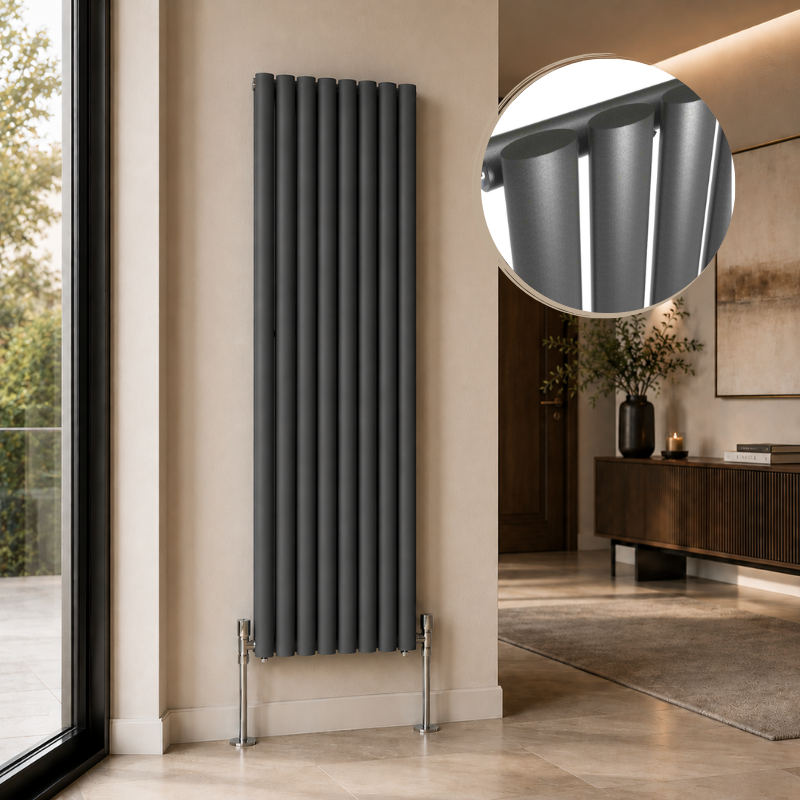
Alma Single Oval Vertical Designer Radiator 1600mm x 480mm Anthracite
In stock
- 🔥 BTU Output: 2357
- ⚡ Watt Output: 691
- 🛡️ Warranty: 5 Years
How Much Heat Does a Hallway Radiator Need?
It's easy to choose a radiator based on the space available and work backwards. It's better to do the opposite.
Calculate the approximate heat requirement first, then find a radiator that provides that output within your available space.
Our BTU Calculator can give you a useful starting point.
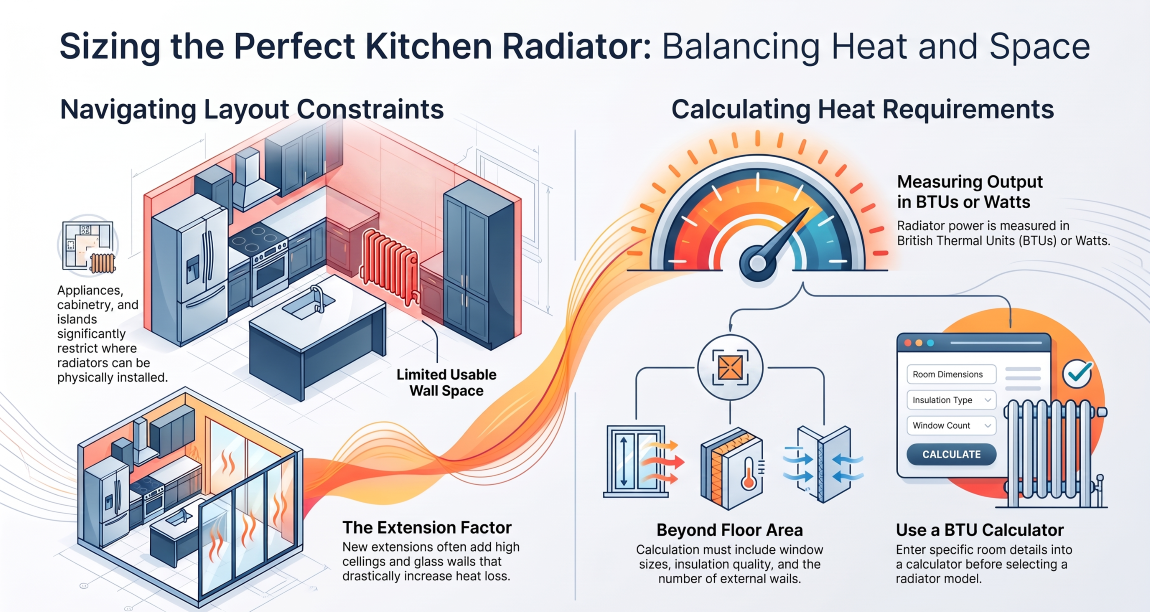
When working out your hallway radiator sizing, consider:
- Length, width and height
- External doors
- Windows
- External walls
- Insulation
- Open staircases
- The overall shape of the hallway
A small hallway can still have a meaningful heating requirement, particularly if it has a draughty entrance or open staircase.
Vertical vs Horizontal Radiators for Hallways
Vertical radiators
Best for: narrow walls and limited floor space.
Vertical radiators are usually the easiest option when wall width is the main restriction. They also offer plenty of choice if you want a contemporary look.
Horizontal radiators
Best for: longer, uninterrupted walls.
If your hallway has a decent stretch of clear wall, there is no reason you can't use a horizontal radiator. It may even be the simpler and more cost-effective option.
The important thing isn't whether a radiator is vertical or horizontal. It's whether it fits the space and provides the required heat output.
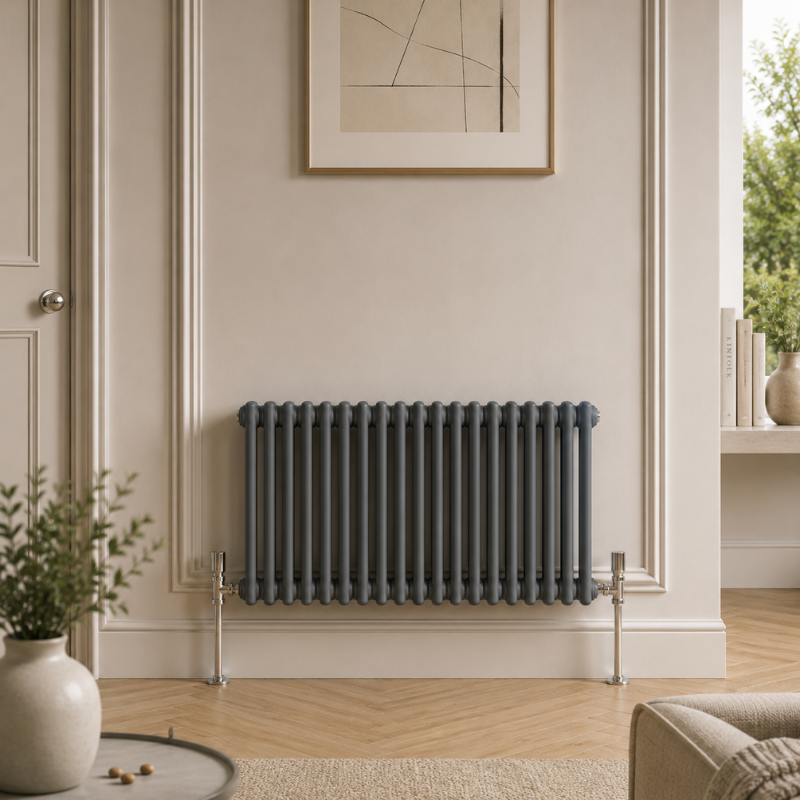
Aura 2 Column Horizontal Radiator 600mm x 1010mm Anthracite
In stock
- 🔥 BTU Output: 3273
- ⚡ Watt Output: 960
- 🛡️ Warranty: 5 Years
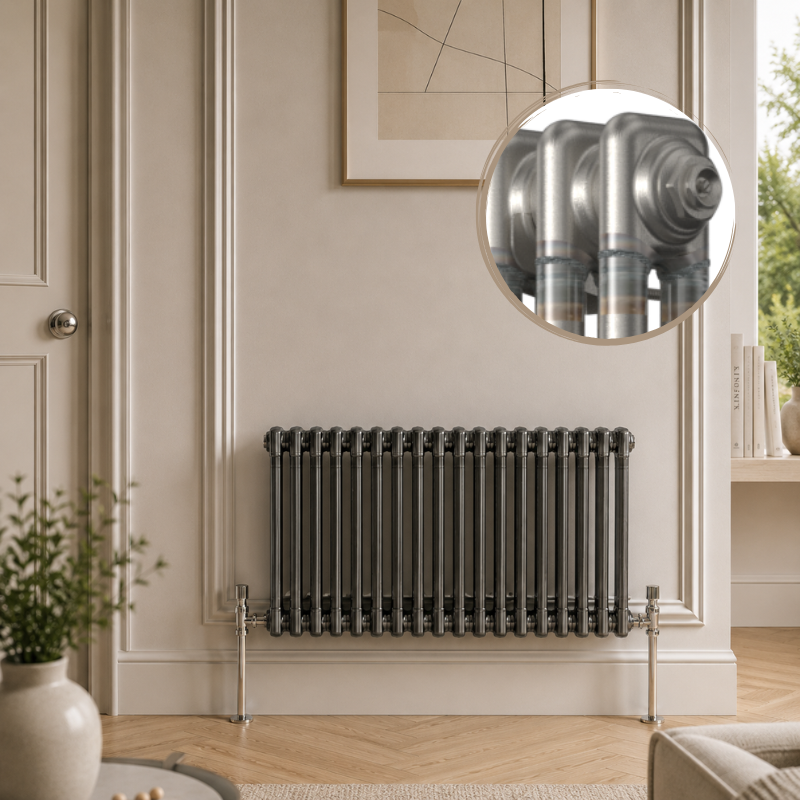
Aura 2 Column Horizontal Radiator 600mm x 1010mm Raw Metal
In stock
- 🔥 BTU Output: 3273
- ⚡ Watt Output: 960
- 🛡️ Warranty: 5 Years
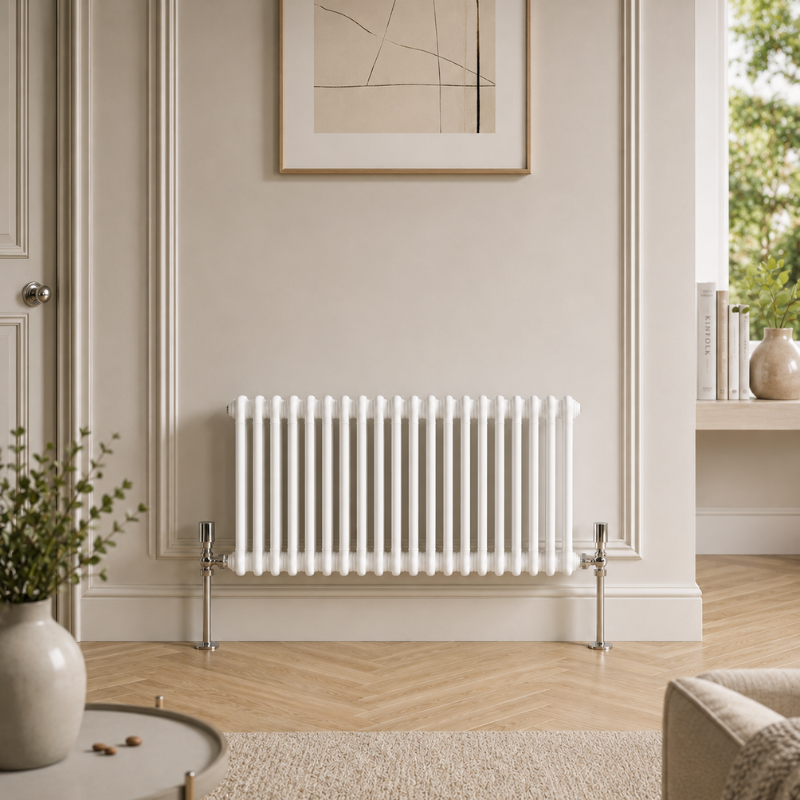
Aura 2 Column Horizontal Radiator 600mm x 1010mm White
In stock
- 🔥 BTU Output: 3273
- ⚡ Watt Output: 960
- 🛡️ Warranty: 5 Years
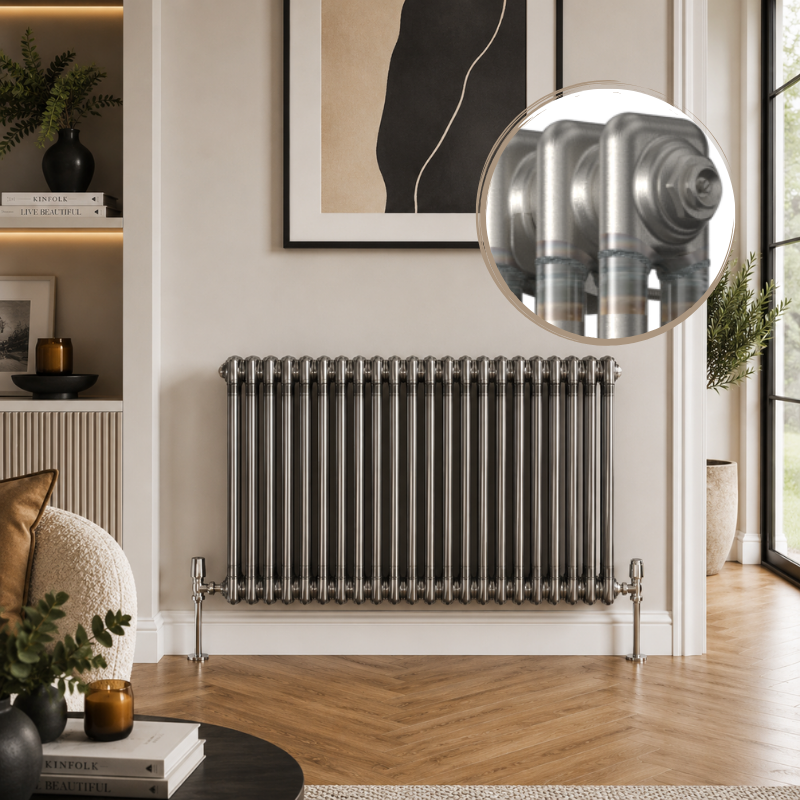
Aura 2 Column Horizontal Radiator 600mm x 1100mm Raw Metal
In stock
- 🔥 BTU Output: 3393
- ⚡ Watt Output: 994
- 🛡️ Warranty: 5 Years
Are Column Radiators Suitable for Hallways?
Yes, particularly if you're working with a traditional or period-style interior.
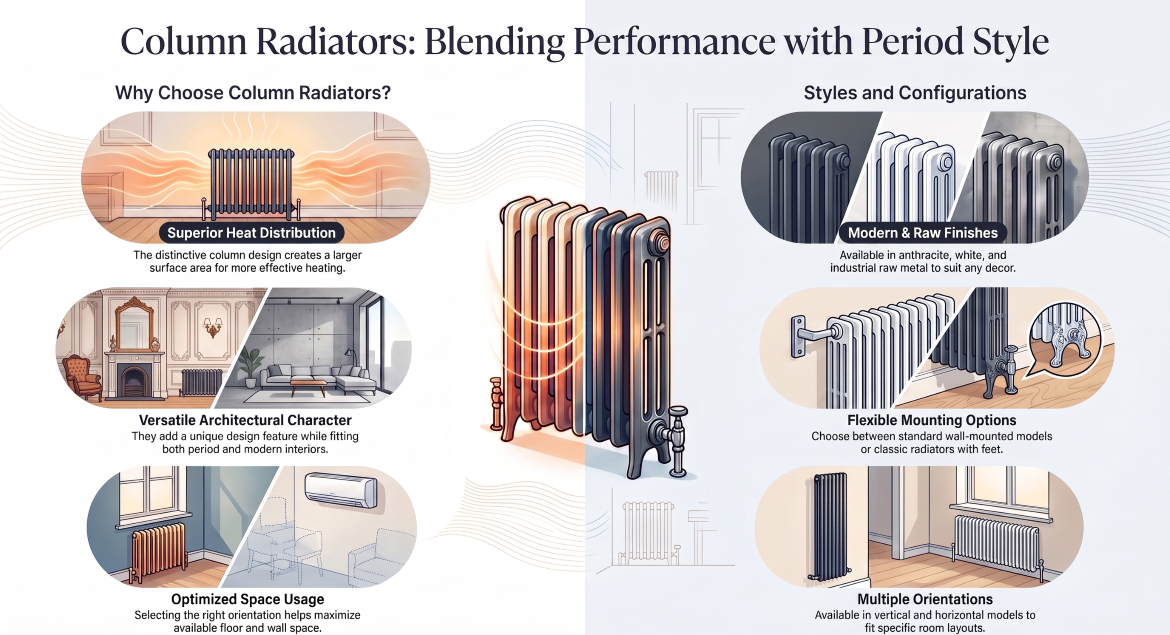
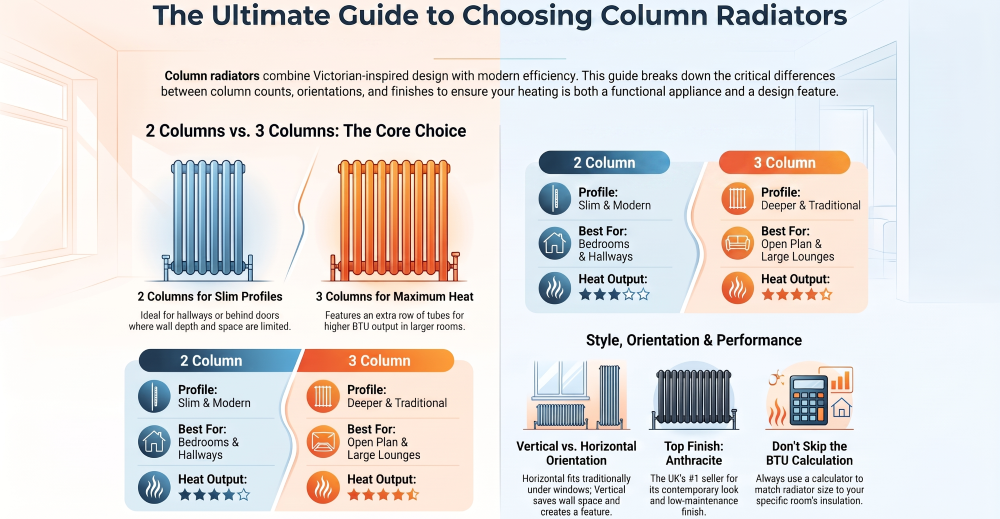
Column radiators can add character while providing useful heat output, and they're available in different sizes and configurations. The Radiator Hub's range includes 2 Column Radiators and 3 Column Radiators, giving you options for different wall sizes and output requirements.
For a hallway where you have enough wall space, a column radiator can be more than just a heating appliance it can become part of the overall design.
Which Radiator Finish Works Best in a Hallway?
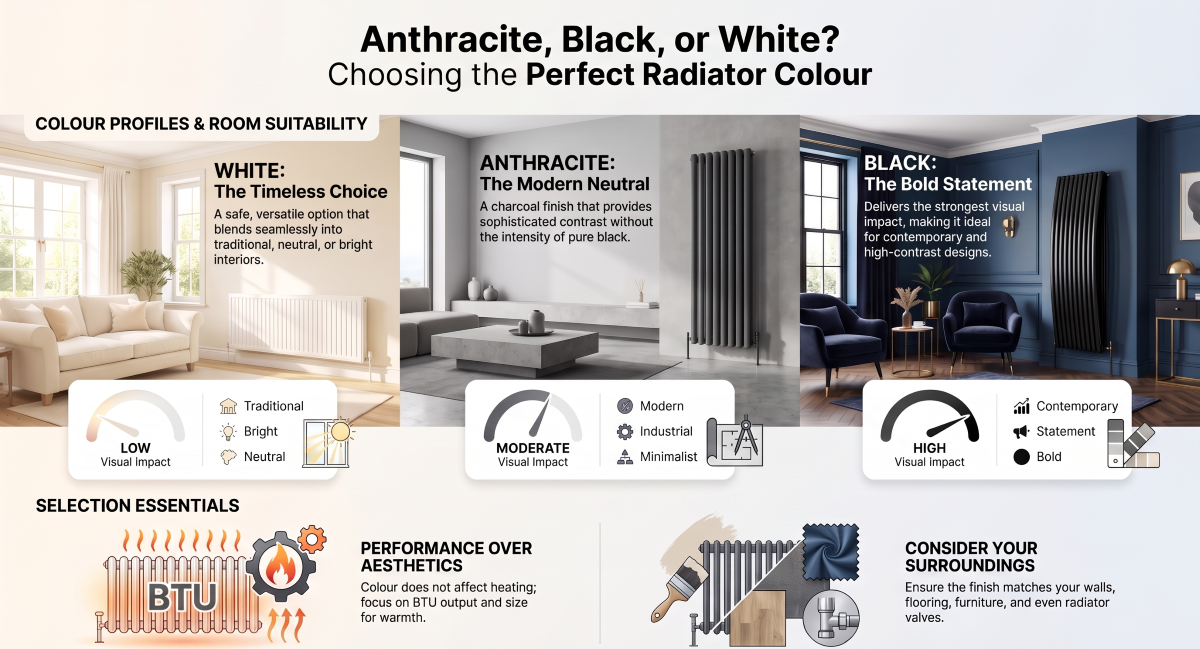
There's no single best finish. The right choice depends on the rest of your hallway.
White radiators are ideal when you want the radiator to blend into the wall and keep the look understated.
Anthracite radiators work well in modern hallways where you want a little more contrast.
Black radiators can make a stronger feature and work particularly well with darker doors, flooring or metal fittings.
For traditional homes, a column radiator can complement original flooring, wooden doors and other period features.
Radiator Feet and Pipework: Small Details That Matter
Hallways tend to get more everyday traffic than bedrooms or other quieter rooms.
If you're installing a freestanding column radiator, radiator feet can provide additional floor support and help keep the radiator stable.
If your radiator pipework is exposed, radiator pipe sleeves can also give the installation a cleaner finished appearance.
These details may seem minor, but they're particularly noticeable in a hallway because it's one of the first areas people see when they enter your home.
How to Choose the Right Hallway Radiator
Before buying, work through these five points:
Calculate the heat requirement
Use the hallway's dimensions and construction to establish your approximate BTU/Watt requirement.
Measure the usable wall space
Account for doors, skirting, furniture, and other obstacles.
Check radiator depth
In a narrow hallway, projection can be just as important as width.
Choose the right orientation
Vertical models suit narrow walls, while horizontal radiators are better suited to longer clear sections.
Check the actual radiator output
Two radiators with similar dimensions can produce very different amounts of heat, so always check the product specification.
Frequently Asked Questions
What is the best radiator for a narrow hallway?
A vertical radiator is often a practical choice because it uses wall height rather than requiring a wide section of wall. However, the radiator still needs to provide enough heat output for the hallway.
What size radiator do I need for a hallway?
There isn't one standard size. Calculate the required BTU or Watt output based on the hallway's dimensions and characteristics, then choose a radiator that provides that output while fitting the available space.
Are vertical radiators good for hallways?
Yes. They're particularly useful where horizontal wall space is limited. Just make sure the model you choose has sufficient heat output for the room.
Where should a radiator go in a hallway?
Choose a clear section of wall where it won't interfere with doors or make the walkway unnecessarily narrow. An end wall or suitable section away from the main traffic route can often work well.
Can I put a radiator near my front door?
Yes, provided it doesn't interfere with the door swing or create an obstruction. Always follow the radiator manufacturer's installation and clearance guidance.
Why is my hallway always cold?
Front-door draughts, an open staircase, poor insulation and insufficient radiator output can all contribute. If your radiator is running but the hallway remains cold, look at the room's heat loss as well as the radiator itself.
Are vertical radiators as effective as horizontal radiators?
Yes, provided the radiator has the appropriate heat output for the space. The main advantage of a vertical model is that it can make better use of limited wall width.
Can I use a column radiator in a hallway?
Yes. Column radiators can work particularly well in traditional hallways, provided there is enough space and the chosen model provides the required output.
Find the Right Hallway Radiator
A hallway may be narrow, but it still needs effective heating.
The best approach is to calculate the required heat output first, measure the usable wall space and then choose a radiator that fits comfortably without obstructing the walkway.
For many narrow hallways, a vertical radiator is an excellent starting point. If you have more uninterrupted wall space, horizontal or column radiators can give you more flexibility.
Explore Hallway Radiators or compare Vertical Designer Radiators, Horizontal Designer Radiators and Column Radiators.
Before choosing a size, use the BTU Calculator to establish the approximate heat output your hallway needs.