Blog
How to Measure Radiator Pipe Centres Before You Buy

Replacing an old radiator sounds simple until you discover that the new radiator does not line up with your existing pipes.
This is where radiator pipe centres become important.
Before ordering a replacement radiator, you need to know where your existing connections are and how far apart they are. Getting this measurement right can make a like-for-like replacement much easier and may help you avoid unnecessary changes to your pipework.
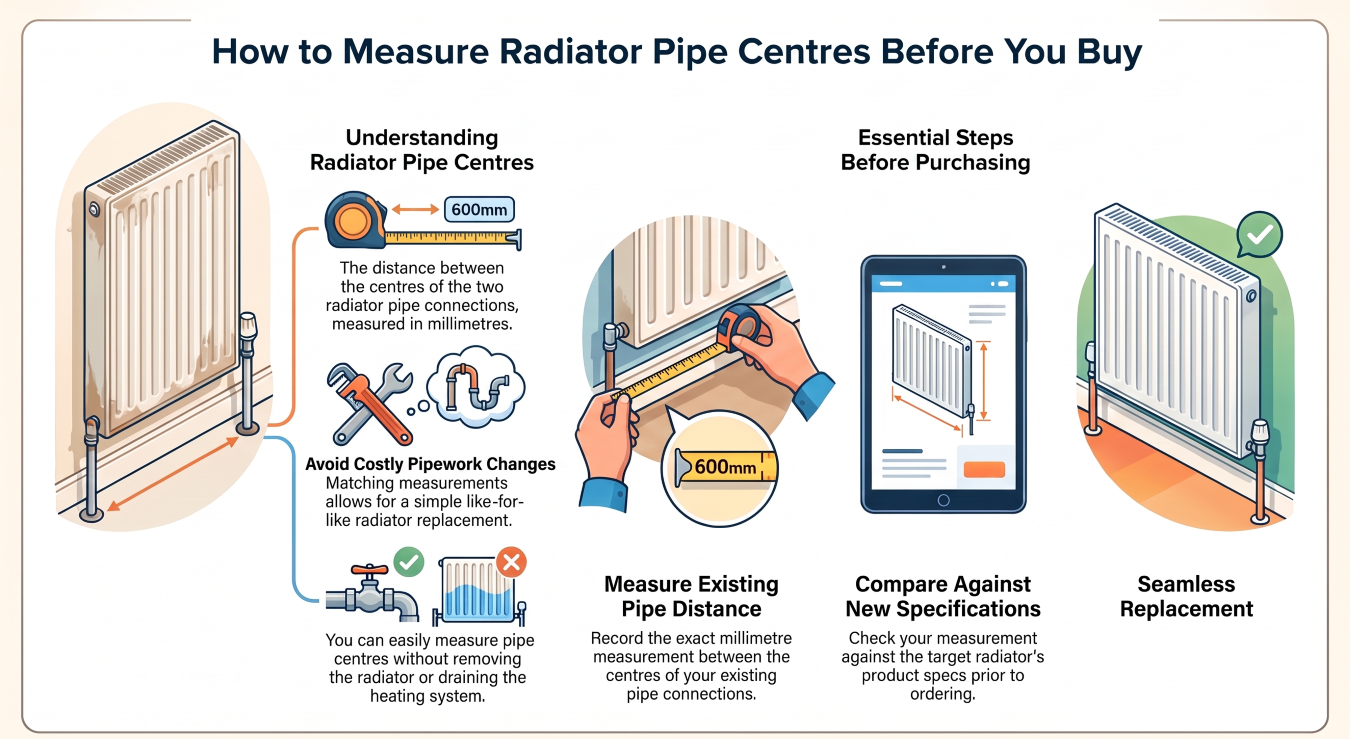
The good news is that measuring radiator pipe centres is straightforward. In most cases, you can do it without removing the radiator or draining your heating system.
Quick answer: Radiator pipe centres are the centre-to-centre distance between the two pipe connections serving the radiator, measured in millimetres. Measure your existing connections before ordering a replacement and compare the measurement with the new radiator's product specifications.
Here's what to measure and what to check before you buy.

What are radiator pipe centres?
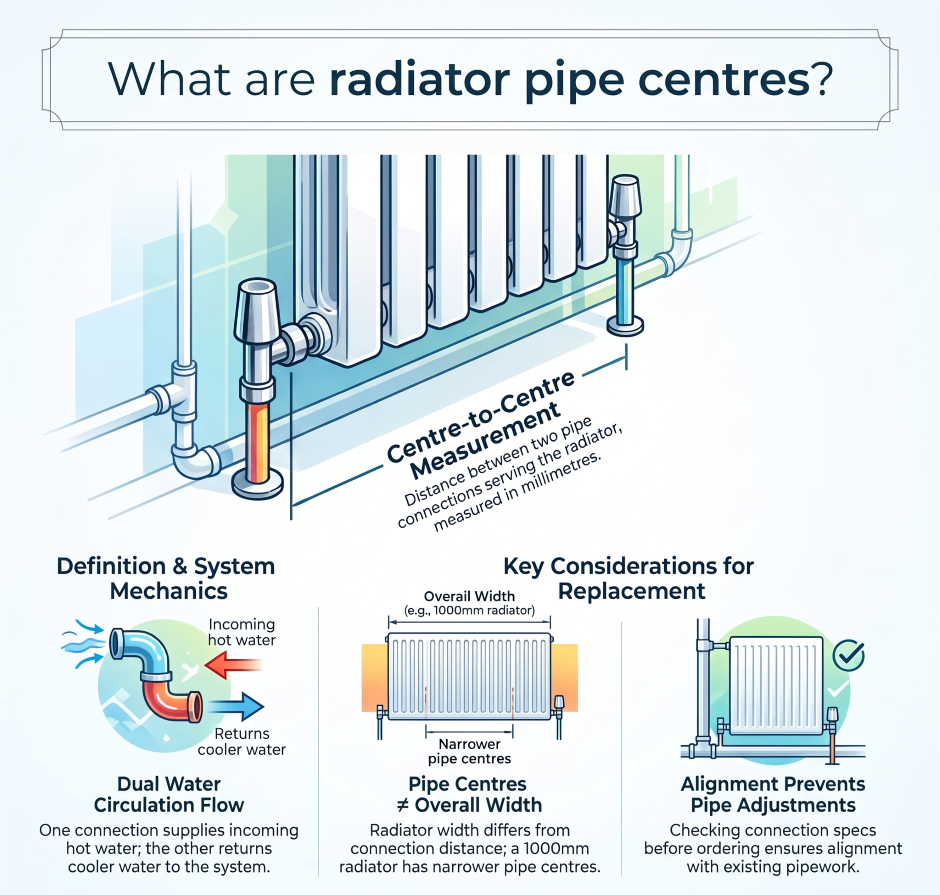
Radiator pipe centres are the centre-to-centre distance between the two pipe connections serving the radiator, measured in millimetres.
In a typical central-heating system, one connection supplies hot water to the radiator and the other returns cooler water to the heating system.
The important point is that pipe centres are not the same as the radiator’s overall width.
For example, a radiator may be 1000mm wide, but the distance between its two connection points could be considerably less.
When replacing an existing radiator, the pipe centre measurement helps you work out whether the new radiator’s connections will line up with your existing pipework.
Connection arrangements can vary between radiator types, so always check the individual radiator’s technical specifications before ordering.
Why do radiator pipe centres matter?
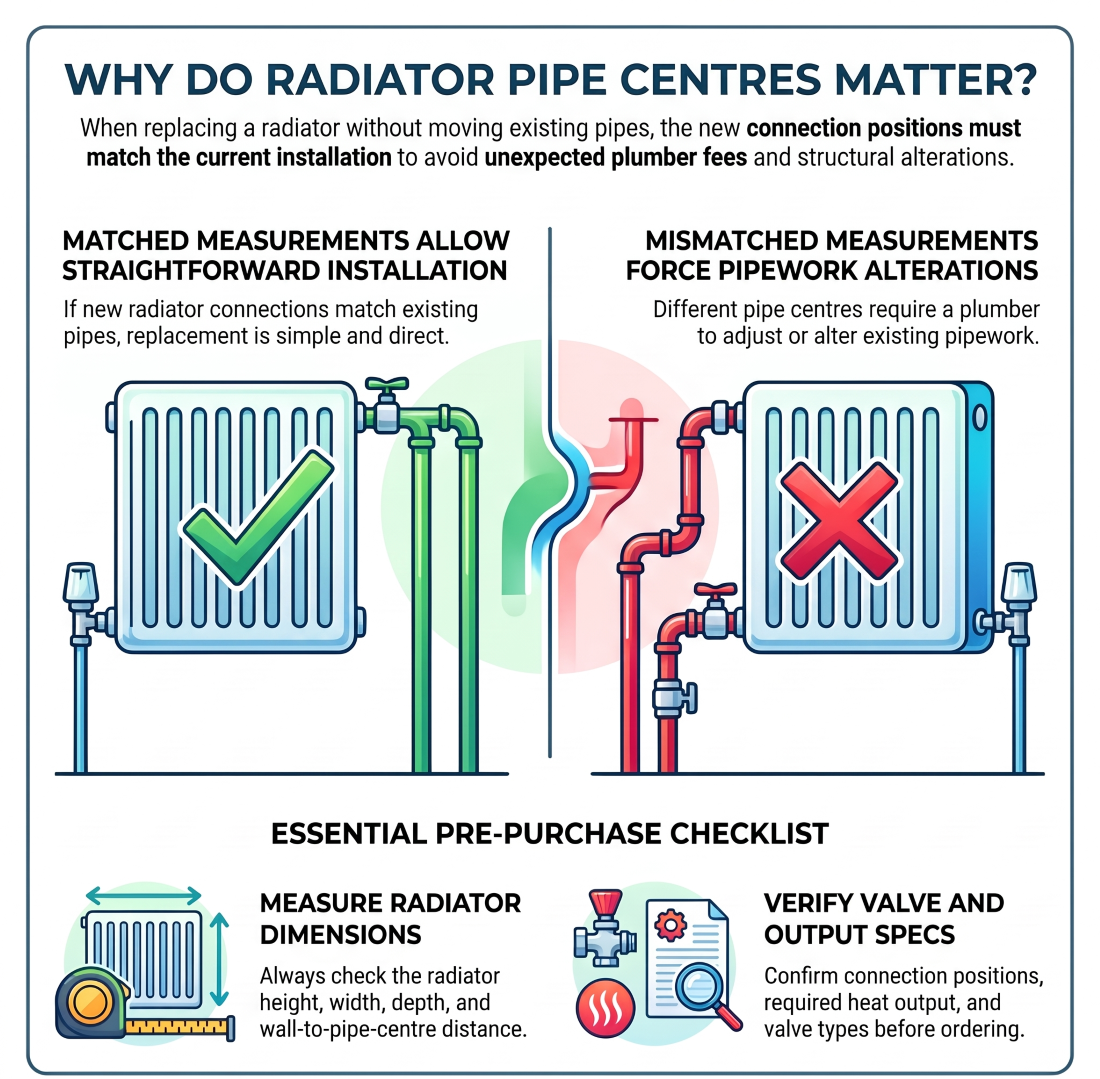
If you want to replace a radiator without moving the existing pipes, the connection positions of the new radiator need to work with your current installation.
If the measurements match, the replacement may be relatively straightforward.
If they are different, your plumber may need to adjust or alter the pipework. The amount of work required will depend on how different the measurements are and how the pipes are installed.
This is why it is worth checking pipe centres before choosing your new radiator.
It is also important to check the radiator’s:
- Height
- Width
- Depth
- Wall-to-pipe-centre measurement
- Connection position
- Required heat output
- Valve type
Our Radiator Buying Guide covers these measurements and other things to check before ordering.


What do I need to measure radiator pipe centres?
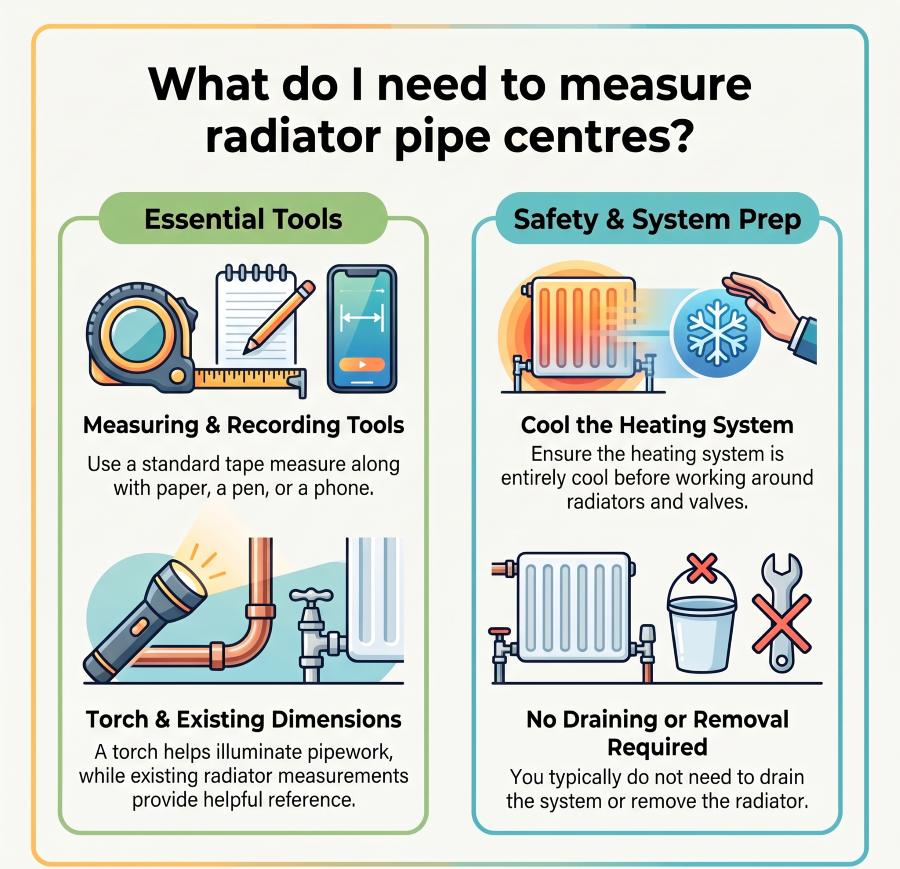
You don’t need any specialist equipment.
For most installations, you will need:
- A tape measure
- A pen and paper or your phone
- A torch if the pipework is difficult to see
- Your existing radiator’s measurements
Make sure the heating system is cool before working around the radiator and valves.
You normally do not need to remove the radiator or drain the heating system just to take these measurements.

How to measure radiator pipe centres
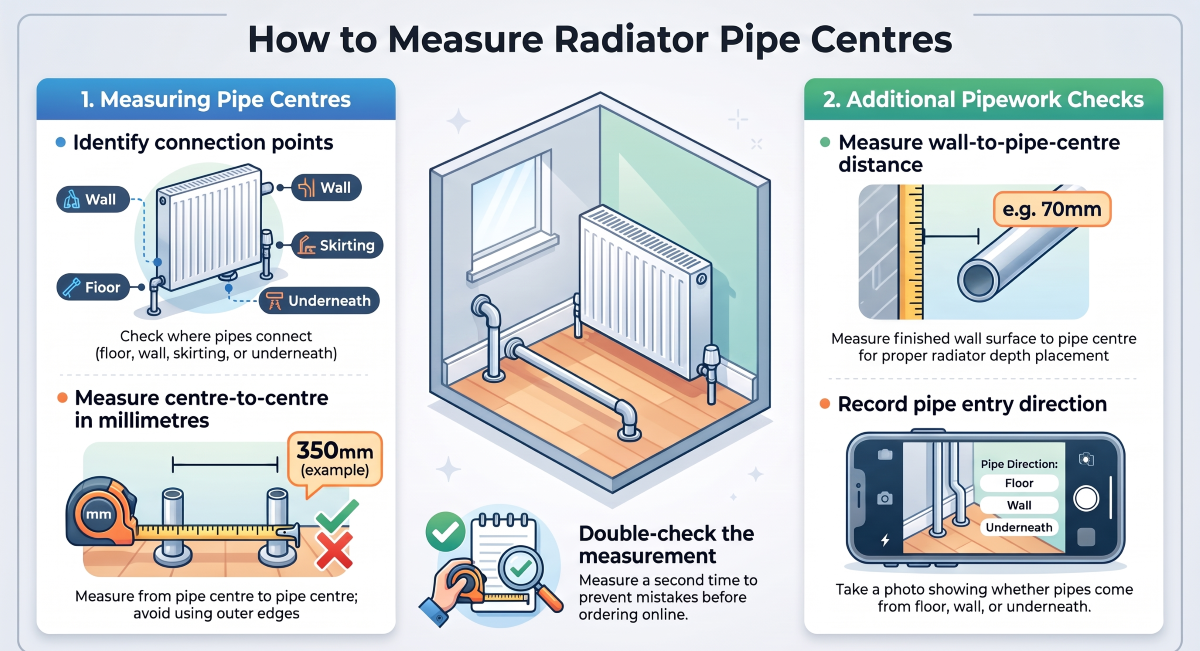
1. Find the two radiator connections
Look at the bottom of your radiator and identify the two points where the radiator connects to the heating system.
Depending on the installation, the pipes may come:
- Up through the floor
- Through the wall
- Up from the skirting board
- Into connections underneath the radiator
The exact arrangement varies between radiators, so look at the pipework rather than assuming that every radiator is connected in the same way.
2. Measure from the centre of one connection to the centre of the other
This is the measurement that matters.
Place your tape measure at the centre of one pipe connection and measure across to the centre of the other.
Record the measurement in millimetres.
For example, if the distance is 500mm, write down:
Pipe centres: 500mm
Try not to measure from the outside edges of the pipes or valves, as this can give you an incorrect figure.
If the centre of a connection is difficult to identify, take a clear photo of the installation and consider asking a plumber or heating professional to confirm the measurement.
3. Measure it twice
It is easy to read a tape measure incorrectly, especially when you’re working close to the floor.
Take the measurement again and make sure you get the same result.
A second measurement only takes a few seconds and can prevent problems when you are comparing radiators online.
4. Measure the wall-to-pipe-centre distance
Pipe centres are not the only pipework measurement worth recording.
Measure from the finished wall surface to the centre of the pipe connection.
This is sometimes listed on a radiator product page as the wall-to-pipe-centre measurement.
It matters because two radiators can have similar pipe centres but different distances between the wall and their connection points.
Checking this measurement can help you make sure the new radiator will sit correctly in relation to your existing pipework.
5. Check which way the pipes come into the radiator
Take a quick photo of the existing installation.
Are the pipes coming up from the floor?
Are they coming through the wall?
Are the connections underneath the radiator or at the sides?
This information helps you choose the right radiator valves.
If you are also looking at the finishing details around your radiator, you can explore our radiator feet and pipe sleeves for options to finish the installation.
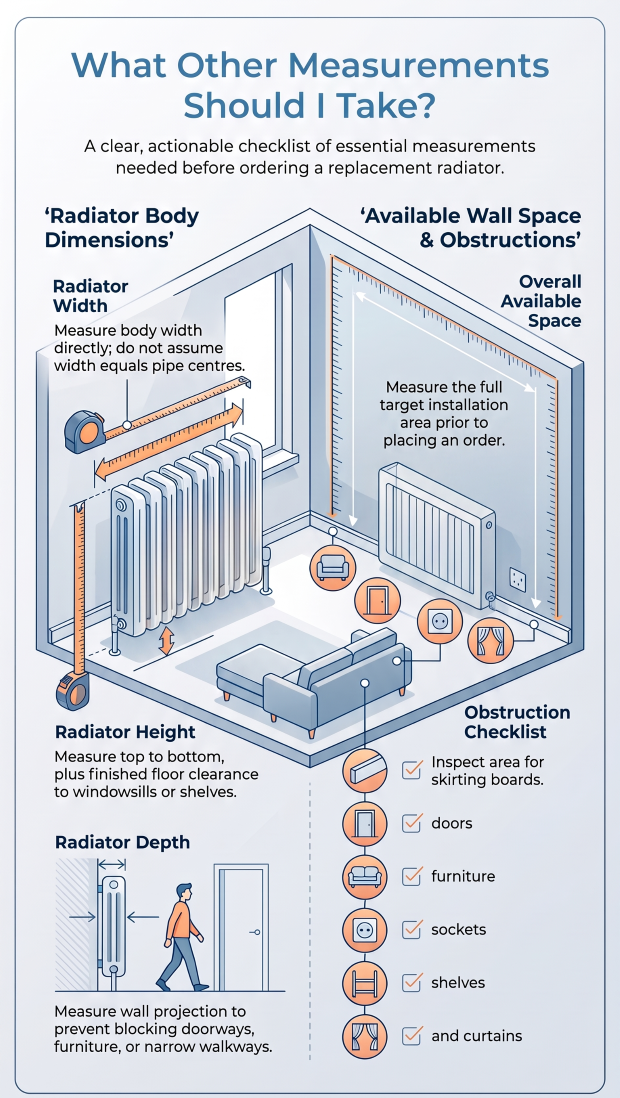
What other measurements should I take?
If you’re replacing an existing radiator, don’t stop at pipe centres.
Take a few minutes to record the following.
Radiator width
Measure across the radiator body from one side to the other.
Do not assume that the radiator width tells you the pipe centres.
Radiator height
Measure from the bottom of the radiator to the highest point of the radiator body.
Radiator depth
Measure how far the existing radiator projects from the wall.
This is particularly important if the radiator is near a doorway, furniture, or a narrow walkway.
Available wall space
Measure the actual space where the new radiator will be installed.
Check for:
- Skirting boards
- Window sills
- Doors
- Furniture
- Shelves
- Sockets
- Curtains
- Nearby walls
Taking these measurements before ordering gives you a better idea of which radiators will work in the available space.

Do radiator pipe centres have to match?
Not always, but matching pipe centres is usually the easiest option if you want to keep your existing pipework in place.
If the new radiator has different connection positions, the pipework may need to be adjusted. The work required depends on the difference in measurements and the existing installation.
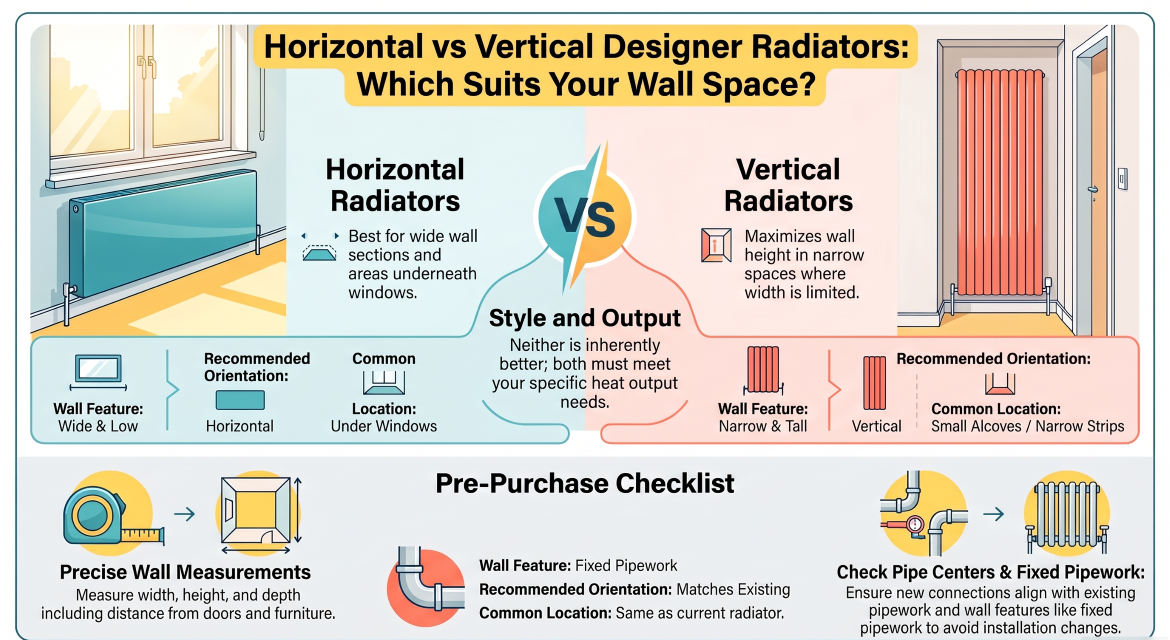
This is particularly important when changing from a horizontal to a vertical radiator, as the connection positions can differ.
Can I replace a radiator without moving the pipes?
Sometimes. For a straightforward replacement, check that the new radiator has suitable:
- Pipe centres
- Connection positions
- Wall-to-pipe-centre measurement
- Height and width
- Depth
A similar radiator width doesn’t guarantee the connections will line up, so always check the product specifications.
What if my new radiator has different pipe centres?
You may still be able to install it, but you may need to adjust the existing pipework.
Your options may include choosing a radiator with closer connection measurements or asking a plumber about suitable fittings or pipework alterations.
If you are unsure, check with a qualified plumber or heating professional before ordering.
Don’t forget the radiator valves and pipe sleeves
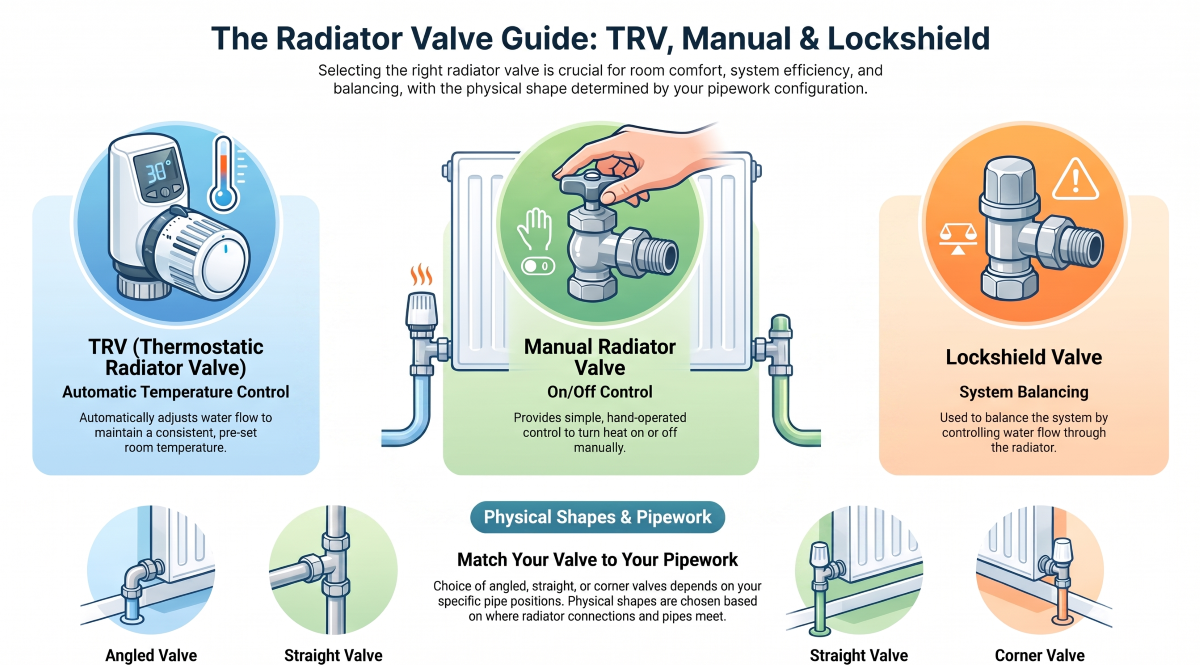
The correct radiator valve depends on where the pipes enter the radiator and where the connections are positioned.
Pipework arrangement | Common valve option |
Pipes from the floor to side connections | Angled valves |
Pipes through the wall to side connections | Corner or angled valves |
Pipes from the floor to underneath connections | Straight valves |
Pipes through the wall to underneath connections | Corner or angled valves |
These are general guidelines, so check the radiator and valve specifications before ordering.
You can also use radiator pipe sleeves to cover exposed pipework between the radiator valve and floor or wall.
If the radiator is already installed, retrofit snap-on pipe sleeves may be suitable for accessible pipework. Check the pipe diameter and required sleeve length before ordering.
What about vertical radiators?
Vertical radiators can have different connection arrangements, so check more than just the height and width.
Before ordering, compare:
- Pipe centres
- Wall-to-pipe-centre measurement
- Connection position
- Valve position
- Depth
- BTU output
If you are deciding between radiator orientations, see our Horizontal vs Vertical Designer Radiators guide.
What about the heat output?
A radiator needs to fit the available space and provide enough heat for the room.
Check the radiator’s BTU or Watt output and compare it with the room’s requirements. Use our BTU Calculator to estimate the heat output you need.
When comparing products, check the Delta T used for the stated output.
A simple radiator measuring checklist
Before ordering, record:
- Pipe centres: ____ mm
- Wall to pipe centre: ____ mm
- Width: ____ mm
- Height: ____ mm
- Depth: ____ mm
- Available wall space: ____ mm
- Pipes come from: floor/wall
- Connections: side / underneath
- Valve type: __________
- Required BTU: ____ BTU
- Photo taken: radiator, pipes and valves
Keep these details with you when comparing radiators online.
Common mistakes when measuring radiator pipe centres
Measuring radiator width instead
Radiator width and pipe centres are different measurements. Check both before ordering.
Measuring from the outside of the pipes
Pipe centres are measured from centre to centre, not outside edge to outside edge.
Checking only one measurement
Also check the wall-to-pipe-centre distance, connection position, dimensions and heat output.
Assuming every radiator has the same connections
Connection arrangements vary between radiator types, particularly between horizontal and vertical models.
Choosing a radiator by size alone
A radiator may fit the available space but still provide insufficient heat. Check the required BTU or Watt output.
Frequently Asked Questions
How do I know if a new radiator will fit my existing pipework?
Measure the pipe centres and wall-to-pipe-centre distance, then compare them with the new radiator’s specifications. Also check the dimensions and connection position.
Can I measure pipe centres while the radiator is still on the wall?
Yes, in most cases. If you can access the connections or pipes leading to them, you can measure them without removing the radiator.
What is the easiest way to measure radiator pipe centres?
Measure from the centre of one connection to the centre of the other and record the measurement in millimetres. Take it twice to check your result.
Why doesn't radiator width tell me the pipe centres?
Radiator width measures the overall radiator body, while pipe centres measure the distance between the connection points. The two measurements can be different.
Do I need to measure anything besides pipe centres?
Yes. Check the height, width, depth, wall-to-pipe-centre distance, connection position and available wall space.
What happens if the new radiator has different pipe centres?
The radiator may still be suitable, but the existing pipework could require adjustment. Choosing a model with similar connection measurements may reduce the amount of alteration needed.
Can I choose a larger or smaller radiator?
Yes, provided it fits the available space and provides enough heat for the room. Check the connection positions as well as the overall dimensions.
How do I know which radiator valves I need?
Check where the pipes enter the radiator and whether the connections are on the side or underneath. Then compare the radiator and valve specifications.
What should I do if I am unsure about my measurements?
Take clear photos of the radiator, connections and pipework and record your measurements. If anything is unclear, ask a qualified plumber or heating professional before ordering.
s are two different measurements. Two radiators can have a similar width but different connection positions, which means the existing pipework may not line up with the new radiator.
Are radiator pipe sleeves worth adding?
If sections of pipework are visible between the radiator and the floor or wall, pipe sleeves can give the installation a cleaner, finished look. They are available in different finishes, and retrofit snap-on versions can be useful where the radiator is already installed.
Ready to choose your replacement radiator?
Getting the measurements right before ordering can save you time and avoid unnecessary changes to your pipework.
Start with your pipe centres, then check the wall-to-pipe-centre measurement, radiator dimensions, valve position, and required heat output.
Once you have those details, you can compare suitable designer radiators, column radiators and other radiator styles with much more confidence.
If you need help choosing the right heat output, use our BTU Calculator before ordering.