Blogs, Radiator Buying Guides

TRV vs Manual vs Lockshield Valves: Which Radiator Valve Do You Need?

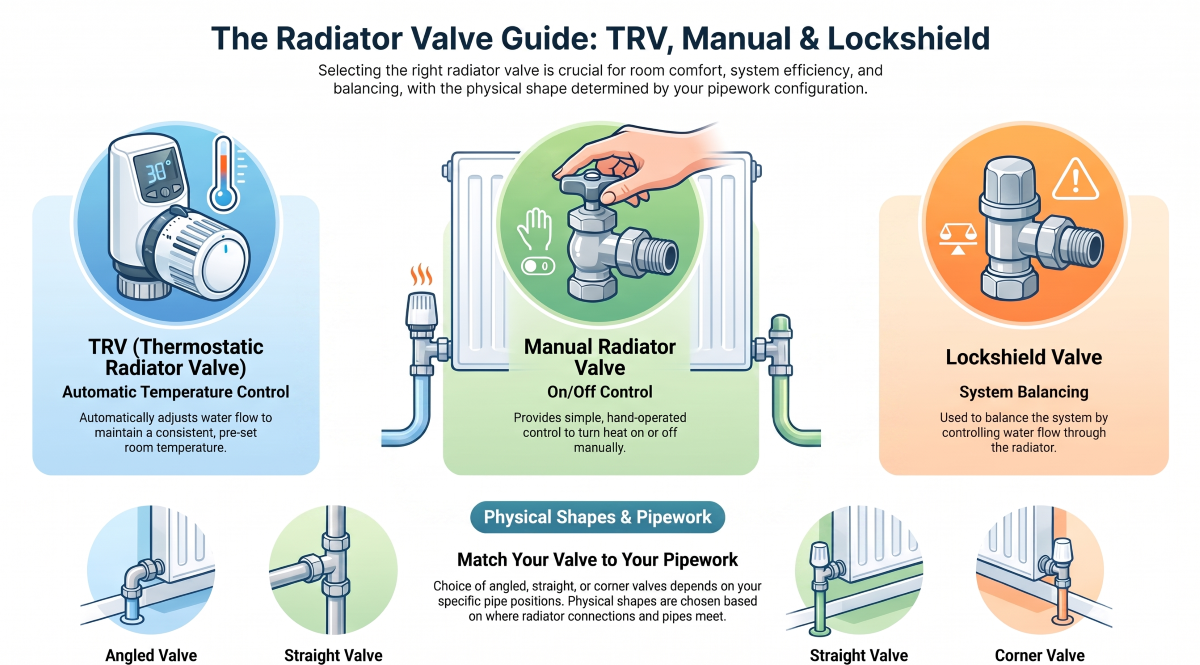
Radiator valve guide showing TRV, manual and lockshield valves with angled, straight and corner valve options

Choosing a radiator is only part of the job. Once you've found the right size and style, you also need to choose the right radiator valves.

This is where things can get confusing. You may have seen terms such as TRV, manual valve, lockshield valve, angled valve, straight valve and corner valve, but what do they actually mean?

The good news is that it is easier than it sounds.

A thermostatic radiator valve (TRV) automatically controls the temperature of a room. A manual radiator valve gives you simple control by hand, while a lockshield valve is used to balance the flow of water through the heating system.

Then there is the physical shape of the valve. Angled, straight and corner radiator valves are chosen according to where your pipework comes from and where the radiator connections are positioned.

In this guide, we'll explain the different types of radiator valves, how they work, and how to choose the right option for a column or designer radiator.

What Is the Difference Between a TRV, Manual and Lockshield Valve?

The simplest way to understand the three main types is:

  • TRV: Automatically regulates the radiator according to room temperature.
  • Manual radiator valve: Lets you adjust the radiator by hand.
  • Lockshield valve: Controls and balances water flow through the heating system and is normally set during installation.

A typical radiator installation has a control valve at one end and a lockshield valve at the other. The control valve can be a TRV or manual valve.

For example, The Radiator Hub's Kensington Traditional Corner TRV Set includes both the TRV head and lockshield, making it a suitable option for traditional steel and column radiators.

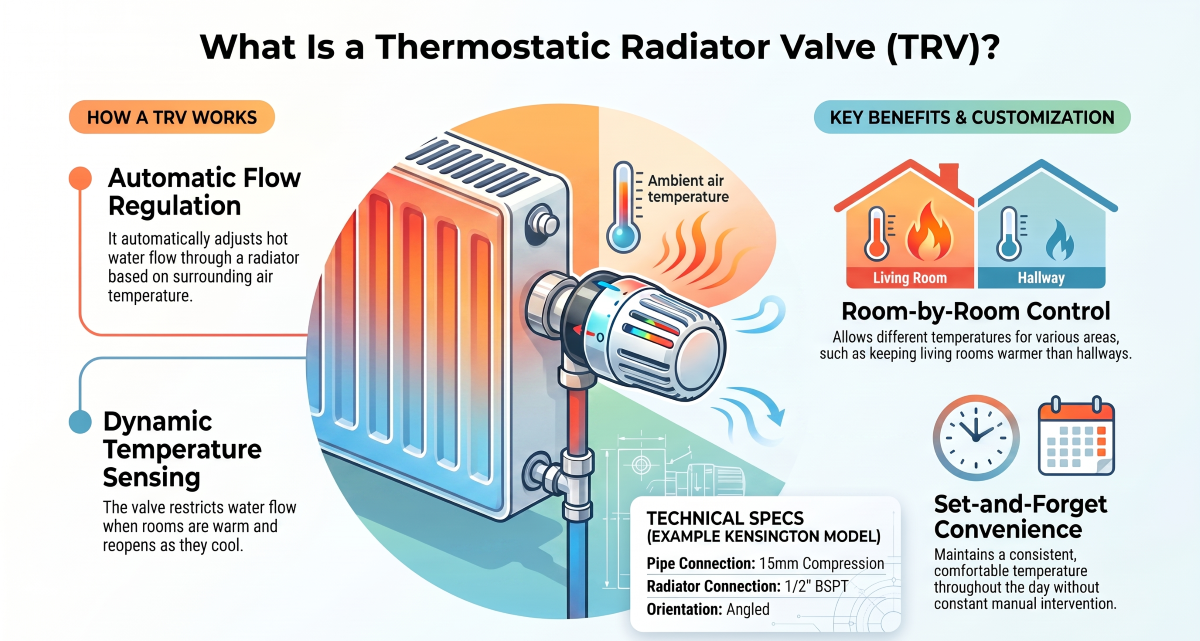
Thermostatic radiator valve (TRV) showing automatic temperature and water flow control

What Is a Thermostatic Radiator Valve (TRV)?

A thermostatic radiator valve, usually called a TRV, automatically adjusts the flow of hot water through a radiator according to the temperature around the valve.

Instead of repeatedly turning the radiator up or down, you select a setting on the TRV. When the room reaches the desired temperature, the valve reduces the flow. If the room cools down, it can open again.

This makes TRVs useful for room-by-room temperature control.

For example, you might want your living room warmer than a hallway or spare bedroom. A TRV allows you to make those adjustments independently.

Why choose a TRV?

A thermostatic radiator valve can be useful if you want:

  • Better room-by-room temperature control
  • Less manual adjustment
  • A more comfortable temperature throughout the day
  • Greater control over how individual radiators operate
  • A neat, traditional or modern finish to complement your radiator

TRVs are particularly popular for living rooms, bedrooms and other regularly used rooms.

The Radiator Hub offers TRV options in different designs and finishes, including traditional styles suitable for column radiators. Its Kensington set, for example, has an antique brass finish, angled orientation, 15mm compression pipe connection, and a 1/2" BSPT radiator connection.

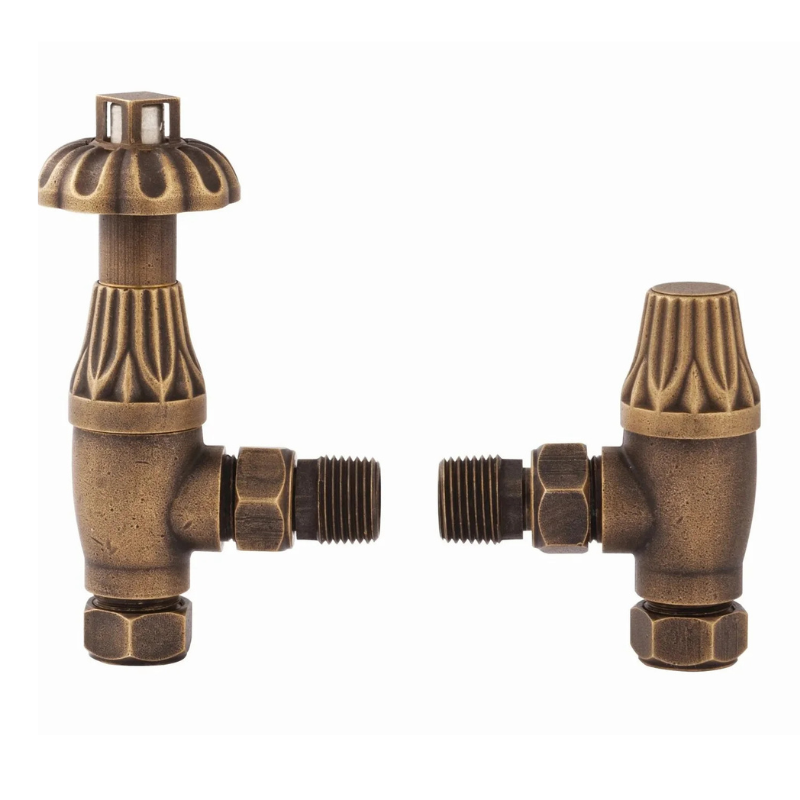
TRH Buckingham Ornate Angled TRV Set Antique Brass

In stock

£60.00 inc. VAT and Delivery
  • 🛡️ Warranty: 2 Years
Add to basket
More Details

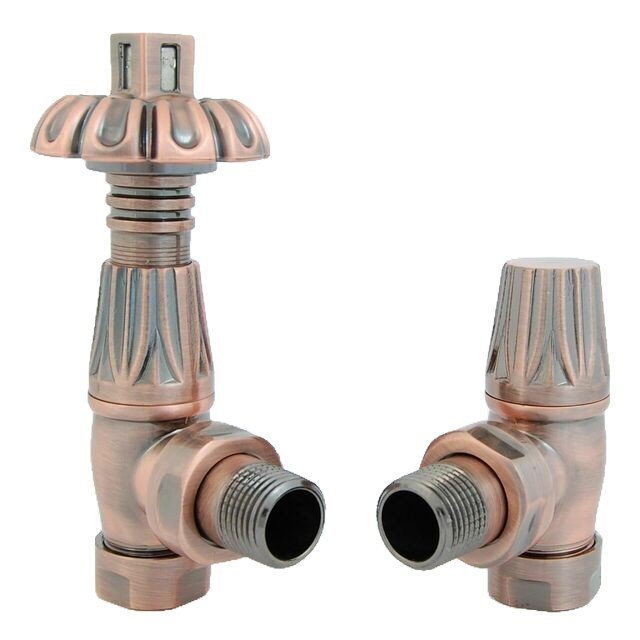
TRH Buckingham Ornate Angled TRV Set Antique Copper

In stock

£65.00 inc. VAT and Delivery
  • 🛡️ Warranty: 2 Years
Add to basket
More Details

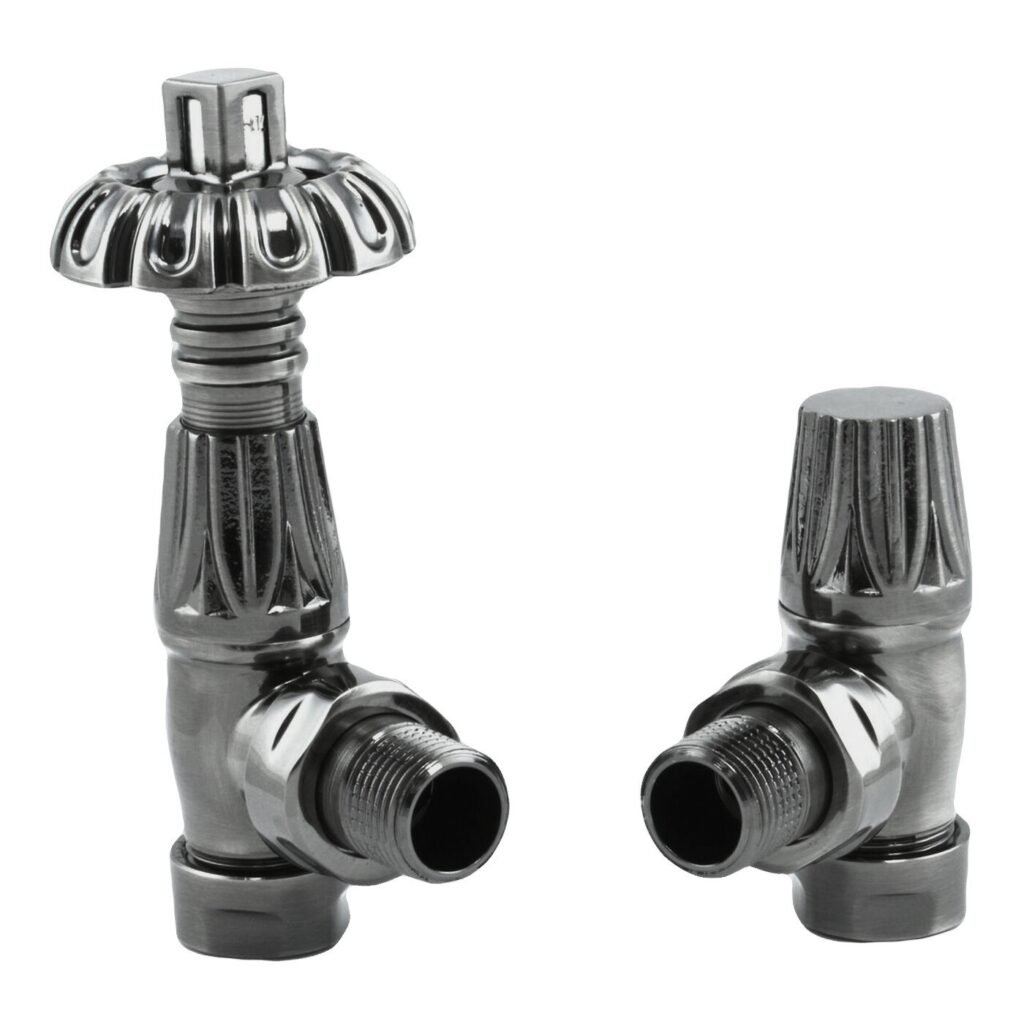
TRH Buckingham Ornate Angled TRV Set Black Nickel

In stock

£65.00 inc. VAT and Delivery
  • 🛡️ Warranty: 2 Years
Add to basket
More Details

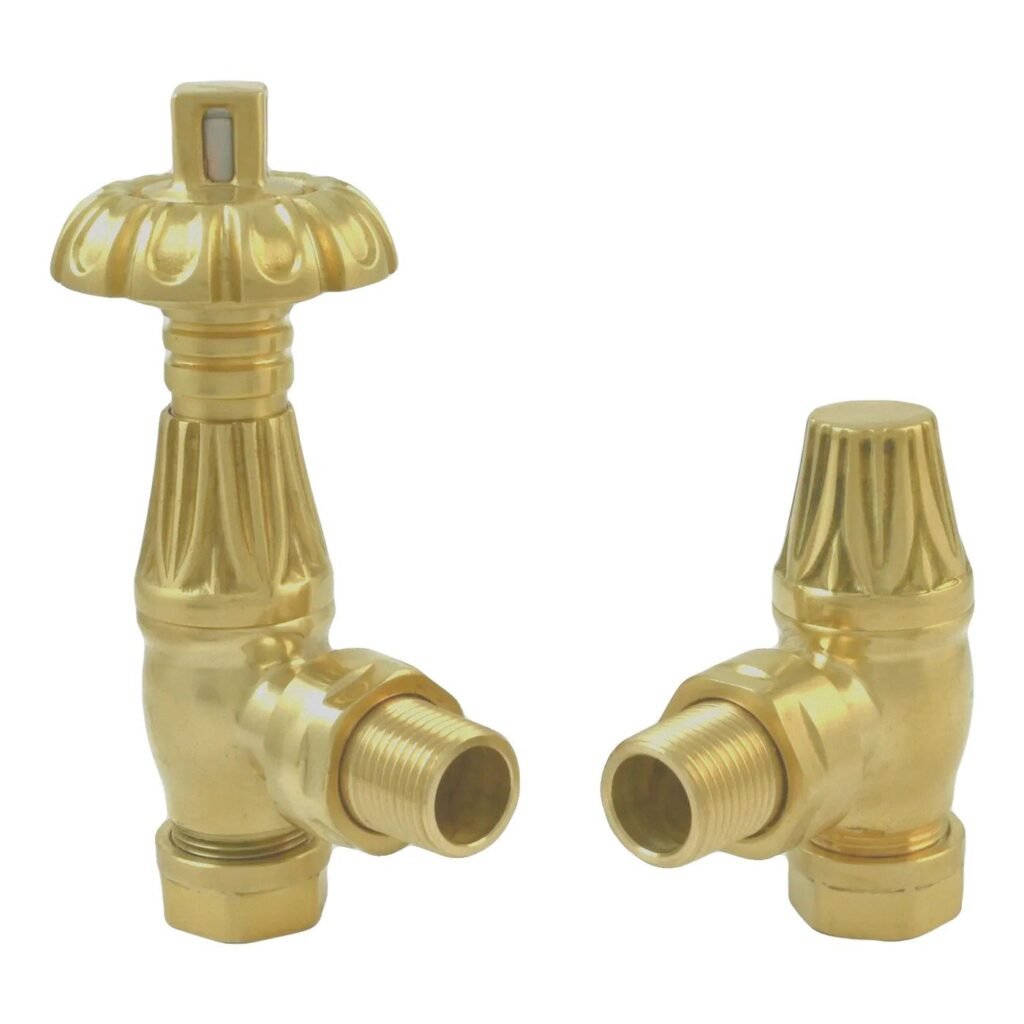
TRH Buckingham Ornate Angled TRV Set Brushed Brass

In stock

£65.00 inc. VAT and Delivery
  • 🛡️ Warranty: 2 Years
Add to basket
More Details
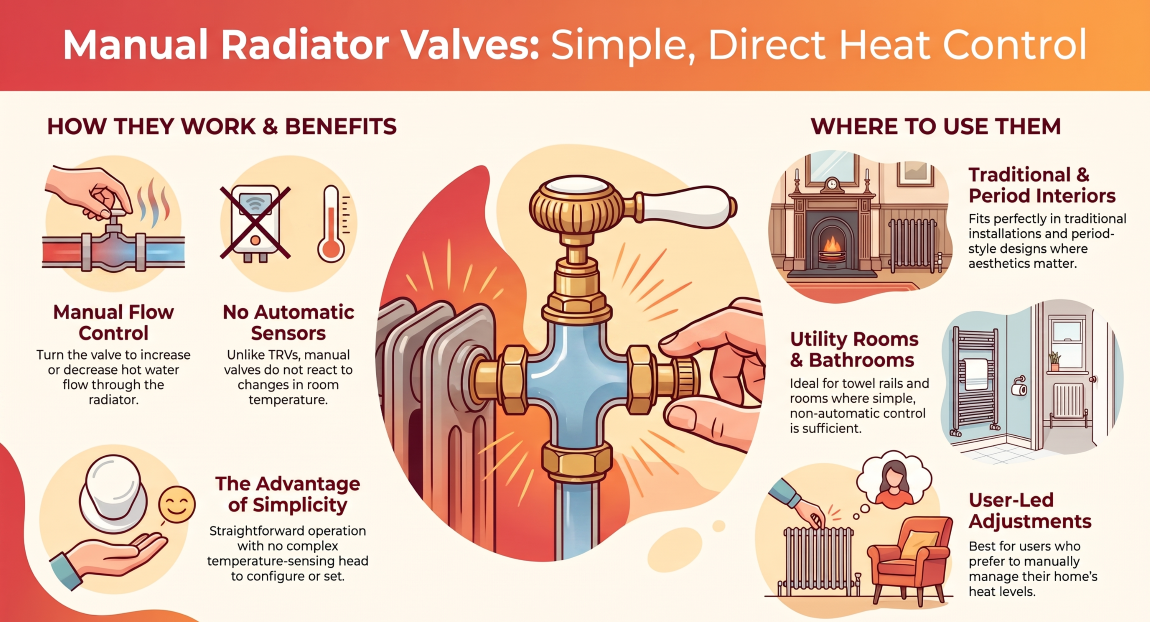
Manual radiator valve showing simple hand-operated heat control for radiators

What Is a Manual Radiator Valve?

A manual radiator valve is much simpler.

You turn the valve to increase or reduce hot water flow through the radiator. Unlike a TRV, it doesn't automatically react to the room temperature.

That makes manual valves a straightforward option if you prefer to control your radiator yourself.

Manual radiator valves can suit:

  • Rooms where simple control is all you need
  • Traditional radiator installations
  • Utility rooms
  • Some bathrooms and towel rail installations
  • Period-style interiors where a traditional valve is part of the overall design

One advantage is simplicity. There is no temperature-sensing head to set. You simply adjust the valve when you want more or less heat.

The downside is that you need to remember to adjust it yourself. If the room becomes too warm, the radiator will not automatically reduce its output like a TRV can.

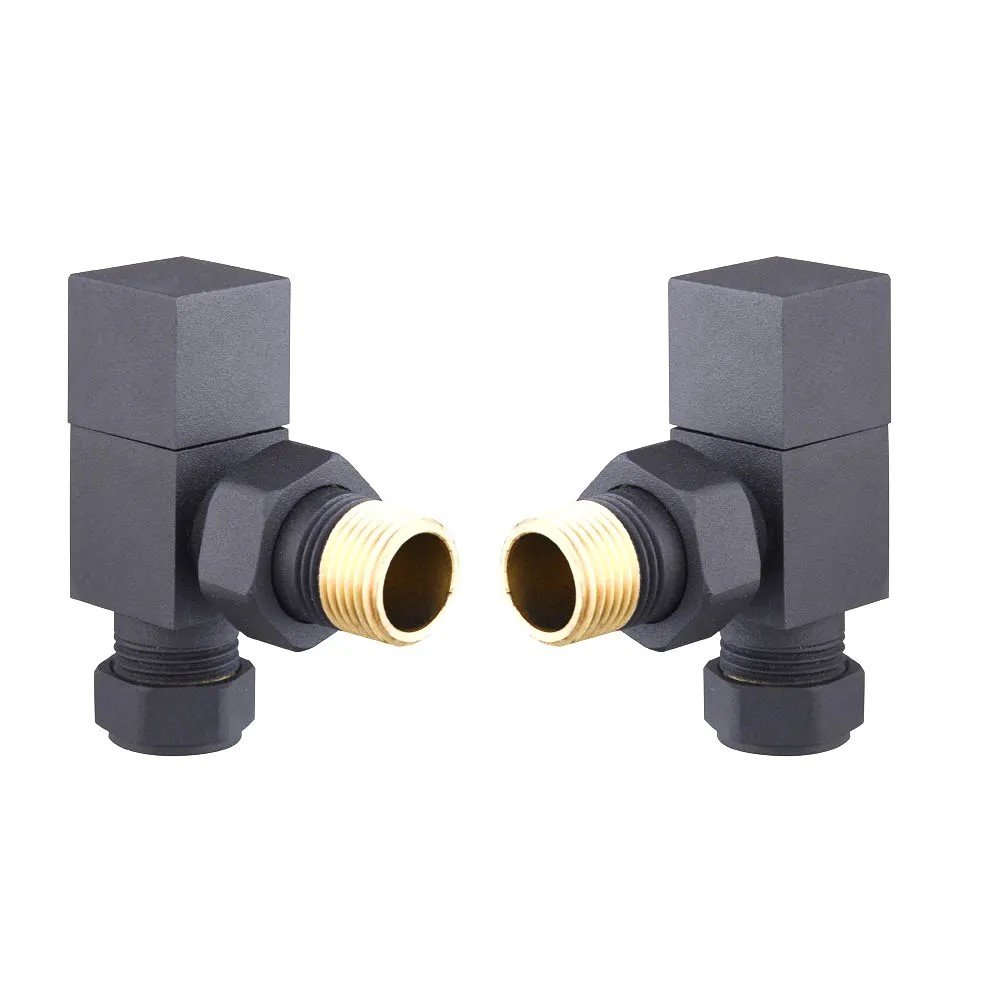
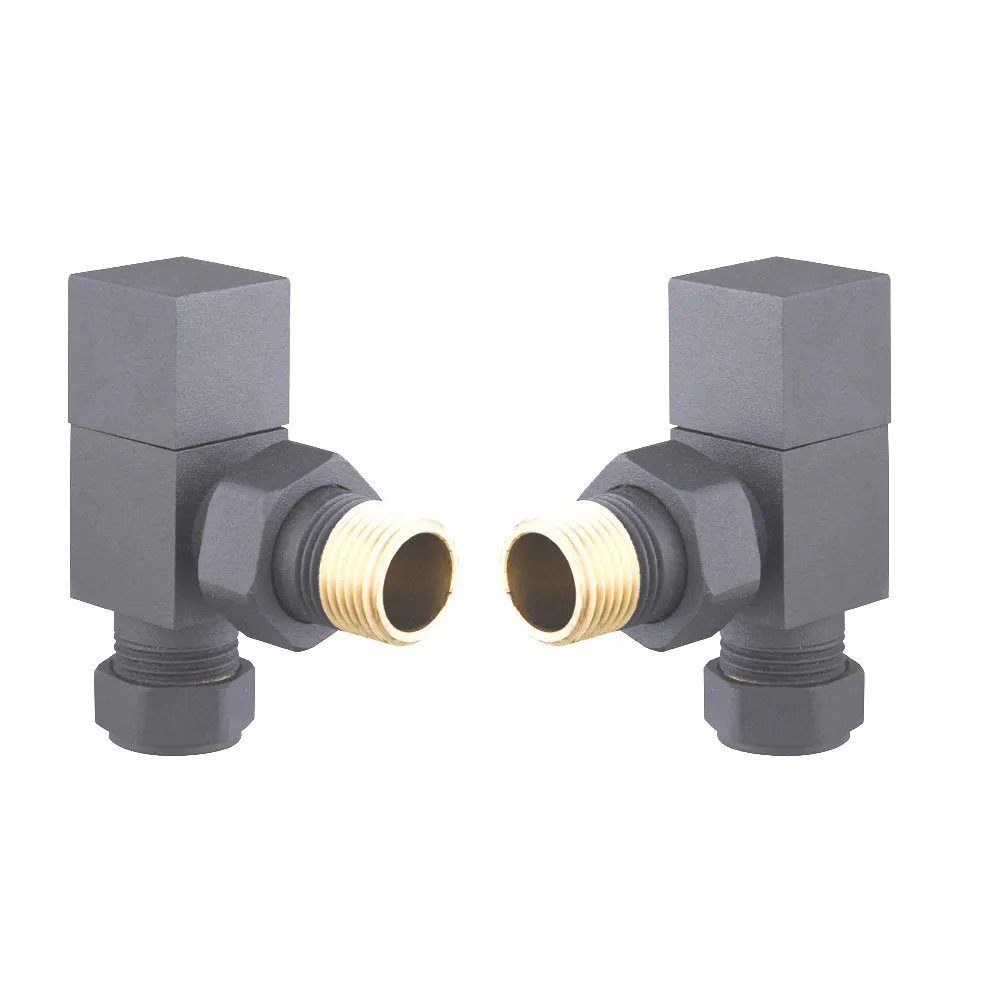
TRH Cuba Angled Manual Valve Set Anthracite

In stock

Original price was: £63.00.Current price is: £37.00. inc. VAT and Delivery
    Add to basket
    More Details

    TRH Cuba Angled Manual Valve Set Basalt Grey

    In stock

    Original price was: £63.00.Current price is: £37.00. inc. VAT and Delivery
    • 🛡️ Warranty: 2 Years
    Add to basket
    More Details

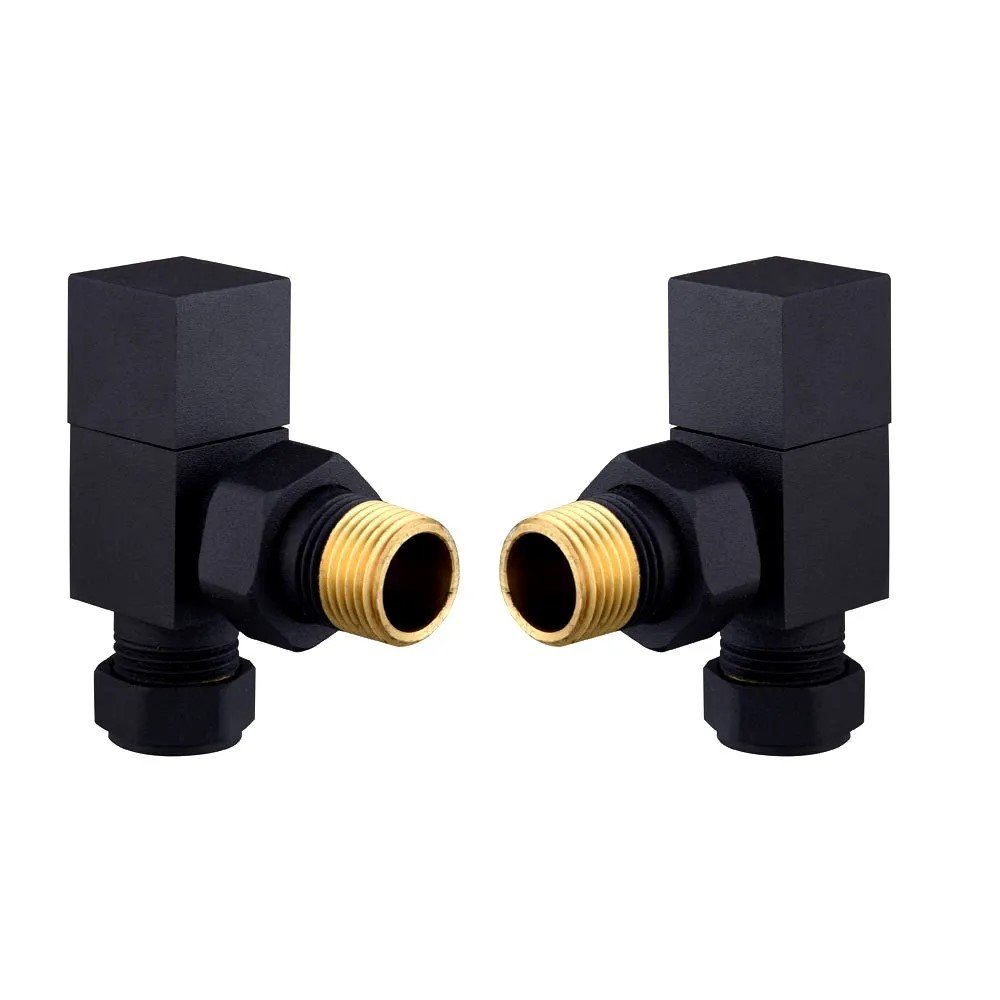
    TRH Cuba Angled Manual Valve Set Black

    In stock

    Original price was: £63.00.Current price is: £37.00. inc. VAT and Delivery
    • 🛡️ Warranty: 2 Years
    Add to basket
    More Details

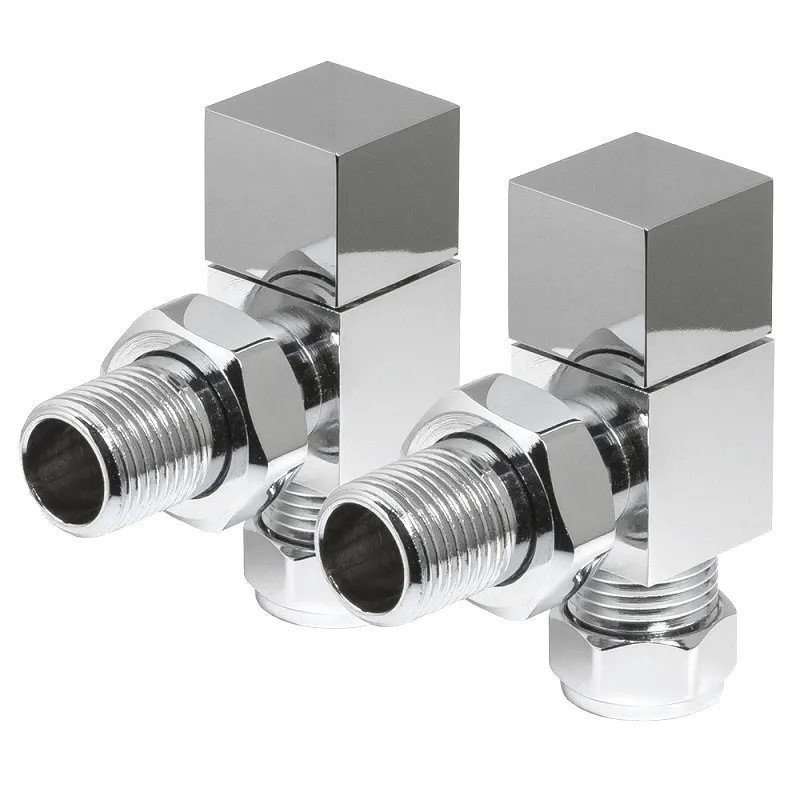
    TRH Cuba Angled Manual Valve Set Chrome

    In stock

    Original price was: £63.00.Current price is: £37.00. inc. VAT and Delivery
    • 🛡️ Warranty: 2 Years
    Add to basket
    More Details

    What Is a Lockshield Valve?

    A lockshield valve performs a different job from a TRV or manual valve.

    It is normally fitted at the opposite end of the radiator and is used when balancing the central heating system.

    Imagine a house with several radiators. The radiator closest to the boiler may receive hot water more quickly than one further away. Without proper balancing, some radiators can become very hot while others take much longer to warm up.

    The lockshield valve allows the water flow through individual radiators to be adjusted so the heating system can operate more evenly. Once correctly set, it is generally left alone rather than adjusted every day.

    In simple terms:

    TRV: Controls room temperature

    Manual valve: Controls the radiator by hand

    Lockshield: Helps balance the heating system

    That distinction is important because a lockshield isn't intended to be used like a TRV.

    Do I Need Both a TRV and a Lockshield Valve?

    In a typical radiator installation, you'll have two valves, one at each end.

    One is the control valve, which can be:

    • A thermostatic radiator valve
    • A manual radiator valve

    The other is normally the lockshield valve.

    Some products are supplied as a complete valve set. For example, The Radiator Hub's Kensington TRV set includes both the TRV head and lockshield.

    If you're buying valves separately, check exactly what is included before ordering. This can save you from buying a TRV and then discovering that you still need a compatible lockshield.

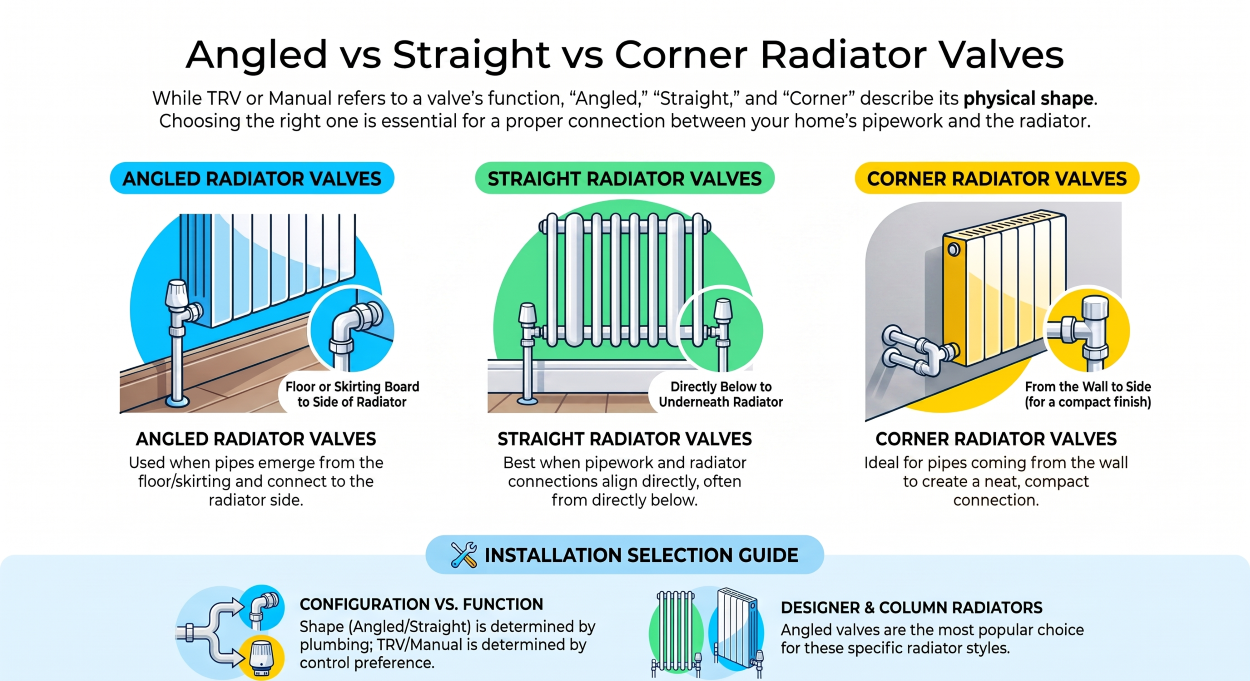
    Angled vs straight vs corner radiator valves installation guide showing different pipe and radiator connection options

    Angled vs Straight vs Corner Radiator Valves

    This is another area where homeowners often choose the wrong product.

    TRV vs manual vs lockshield describes what the valve does.

    Angled vs straight vs corner describes the valve's physical configuration.

    The correct configuration depends mainly on your pipework and radiator connection points.

    Angled radiator valves    

    Angled valves are commonly used where pipework comes up from the floor or skirting board and connects to the radiator at the side.

    They are a popular choice for many column and designer radiators.

    Straight radiator valves

    Straight valves are suitable where the pipework and radiator connection line up more directly, such as certain installations where pipework comes from below and the radiator connection is underneath.

    Corner radiator valves

    Corner valves can be useful when pipework comes from the wall and you want the valve to create a compact, neat connection.

    The Radiator Hub's product guidance follows these same principles: valve choice depends on where the pipework comes from and where the radiator connections are located.

    Tip: Don't choose a valve shape based on appearance alone. Check your pipework configuration first, or ask your plumber to confirm which type you need.

    Should You Choose TRV or Manual Radiator Valves?

    The right valve depends on how you want to control your radiator.

    Choose a TRV if you:

    • Want automatic temperature control
    • Need different temperatures in different rooms
    • Want to reduce unnecessary heating

    Choose a manual valve if you:

    • Prefer simple temperature control
    • Like a traditional appearance
    • Don't need to adjust the temperature often

    When replacing several radiators, consider how the valves will work with your overall heating system.

    What About the Lockshield Valve?

    A lockshield valve has a different role from a TRV or manual valve:

    • TRV/manual valve: Controls the radiator's temperature
    • Lockshield valve: Helps balance the heating system
    • System balancing: Can improve heat distribution between radiators

    If some radiators heat much faster than others, the system may need balancing. If you're unsure about adjusting the lockshield, contact a qualified heating professional.

    Choosing the Right Finish

    Once you've chosen the valve type and configuration, the finish is the final detail that brings the radiator installation together.

    Consider these popular combinations:

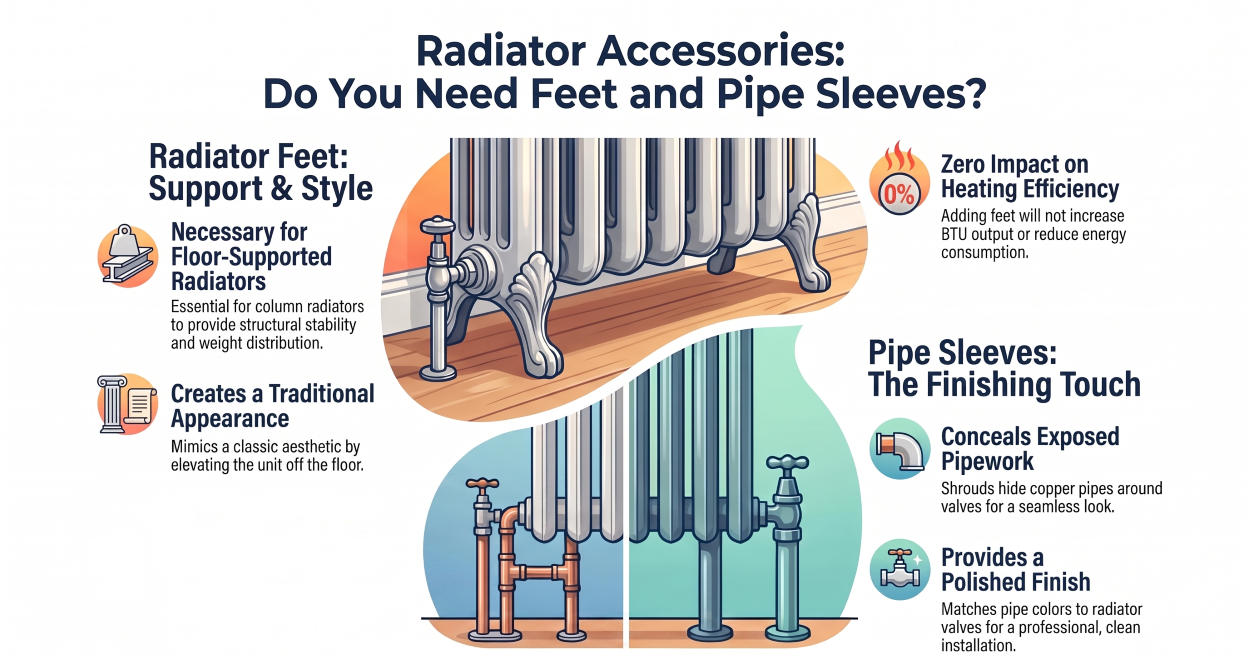
    • White radiators:Chrome, white or brass valves

    • Anthracite radiators: Anthracite, black or chrome valves

    • Black radiators: Matt black, chrome or brass valves

    • Raw metal radiators:Chrome, pewter or brass valves

    • Traditional column radiators:Antique brass, polished brass or pewter valves

    You can either match the valve finish to the radiator for a seamless look or choose a contrasting finish to create more visual interest.

    • Don't forget the pipework:

      Matching pipe sleeves can help complete the overall look.

    • Keep the style consistent:

      Consider the radiator, valves and pipe sleeves together when choosing finishes.

    • Think about the room:

      Metallic finishes can suit traditional interiors, while black or anthracite often works well in modern spaces.

    Don't Forget Radiator Size

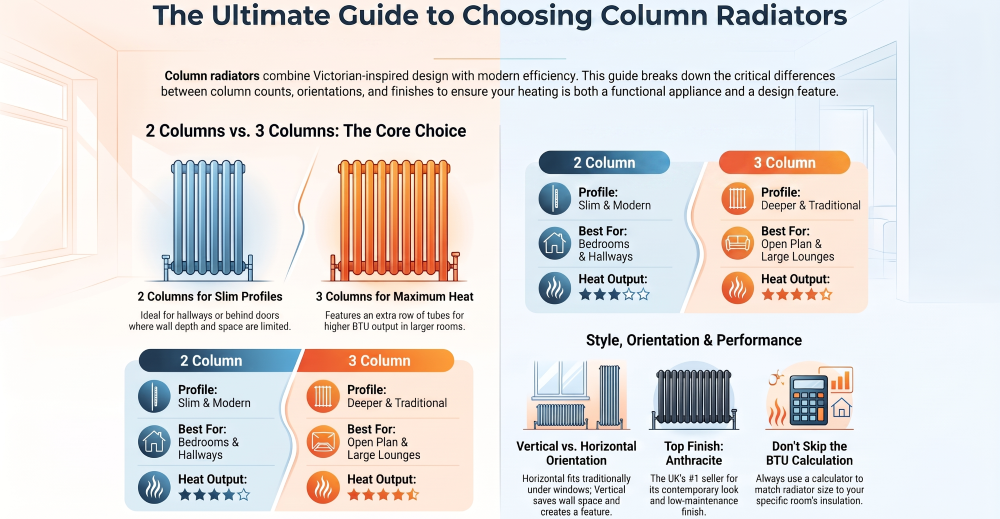
    The right valve won't compensate for an incorrectly sized radiator. Before buying a column radiator or designer radiator, check the required heat output for your room.

    Use the BTU Calculator to estimate your heating requirement before choosing your radiator.Top of Form

    Frequently Asked Questions

    What is the difference between a TRV and a manual radiator valve?

    A TRV automatically responds to room temperature and adjusts the flow of hot water through the radiator. A manual radiator valve is adjusted by hand and does not automatically regulate the room temperature.

    What does a lockshield valve do?

    A lockshield valve is used to adjust and balance water flow through the radiator as part of the central heating system. It is normally set during installation or balancing and isn't intended for everyday adjustment.

    Do I need a TRV and a lockshield valve?

    For a typical radiator installation, you normally have a control valve, either a TRV or manual valve, plus a lockshield valve at the other end. Some valve sets include both components, so always check the product specification.

    Which radiator valves do I need for a column radiator?

    The valve configuration depends on your pipework and radiator connection positions. The Radiator Hub recommends checking whether you need angled, straight or corner valves based on the installation.

    Are angled or straight radiator valves better?

    Neither is universally better. The correct choice depends on how your pipework approaches the radiator and where the radiator connections are located.

    When should I use corner radiator valves?

    Corner valves can be a good option where pipework comes from the wall and you want a compact connection. Always check the radiator's connection position before ordering.

    Can I use TRVs on column radiators?

    Yes. TRVs can be used with many column radiators. The key is choosing a compatible valve connection, configuration and finish.

    Do radiator valves come with a radiator?

    Not necessarily. Many radiators on The Radiator Hub have valves sold separately, allowing you to choose the style, configuration and finish you want.

    What size radiator valves do I need?

    Many UK radiator installations use standard 15mm pipe connections, but you should always check the radiator and valve specifications before ordering. Some The Radiator Hub valve products, including the Kensington set, use a 15mm compression pipe connection.

    Should radiator valves match the radiator?

    They don't have to, but matching or complementary finishes can give the installation a more finished appearance. For example, anthracite valves can complement an anthracite column radiator, while antique brass can work particularly well with traditional radiators.

    Can I replace manual radiator valves with TRVs?

    It may be possible, but changing radiator valves involves working with the heating system and water connections. If you're unsure about the installation, use a qualified heating professional.

    Why is one radiator hotter than another?

    Uneven heating can sometimes be caused by system balancing, which is one of the reasons lockshield valves are used. Other heating-system issues can also cause uneven temperatures, so persistent problems should be checked by a heating professional.

    Final Thoughts

    Choosing radiator valves doesn't need to be complicated.

    Start with how you want to control the radiator. If you want automatic room temperature control, a TRV is usually the obvious choice. If you prefer simple manual adjustment, a manual radiator valve may be more suitable.

    Then look at the pipework and radiator connections to decide whether you need an angled, straight or corner configuration.

    Finally, choose a finish that works with your radiator and the rest of the room.

    For column radiators in particular, the right valves can make the difference between an installation that simply works and one that looks properly finished.

    Leave a Reply

    Your email address will not be published. Required fields are marked *