Blog
Why Is My Radiator Leaking from the Valve? Causes and How to Fix It

Why Is My Radiator Leaking from the Valve?
A few drops of water around a radiator valve might not look serious, but even a small leak deserves attention. Left untreated, it can damage flooring, stain skirting boards and cause further problems with your heating system.
The first step is to find out where the water is coming from. It might be escaping around the valve spindle, appearing where the valve connects to the radiator, or collecting around the pipe joint. Each problem has a different possible cause, so replacing the valve straight away may not be necessary.
If you have noticed your radiator valves leaking, this guide explains what to look for, which repairs may be needed, and when to contact a plumber.
Why Are My Radiator Valves Leaking?
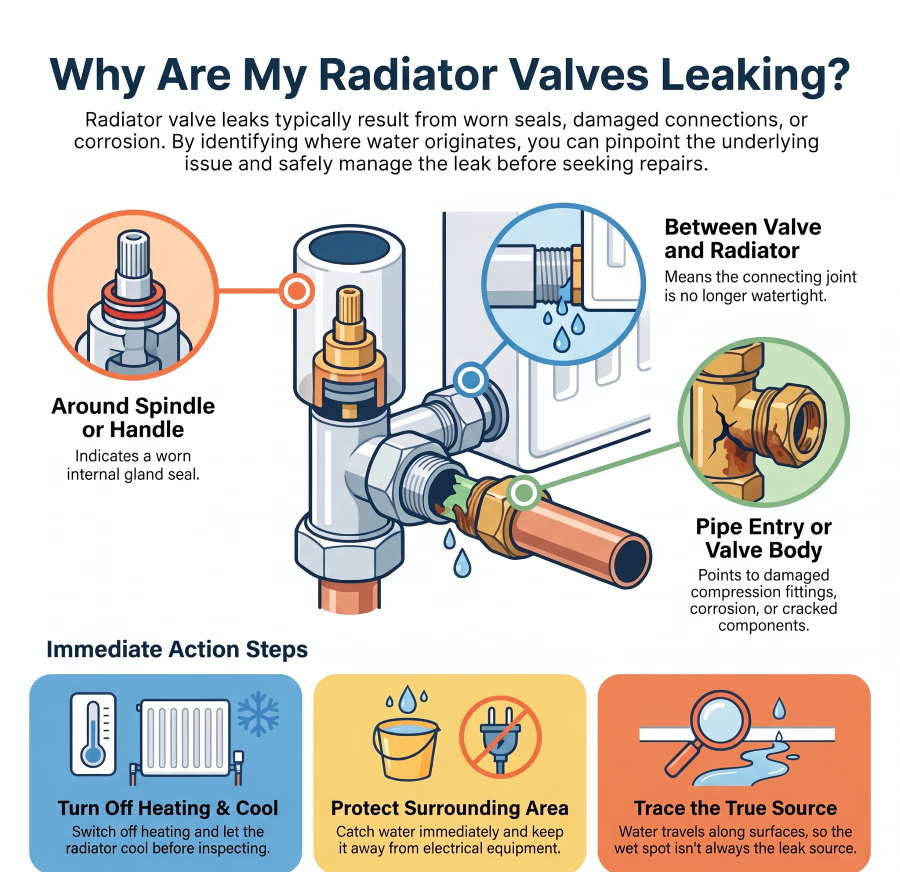
Radiator valves can leak due to worn seals, damaged connections, corrosion, or general wear. The problem may develop gradually as the heating system warms up and cools down. It can also appear after a radiator has been removed, replaced or repositioned.
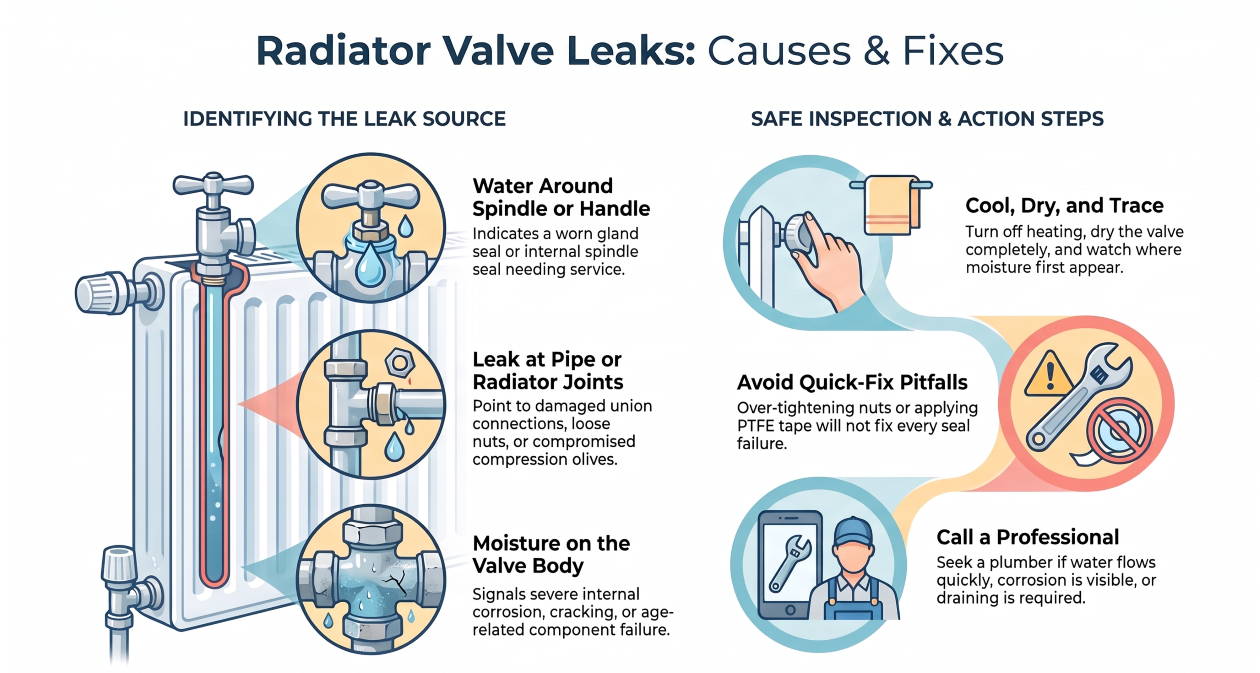
The location of the water can provide a useful clue:
- Around the spindle or handle: The internal gland seal may be worn.
- Between the valve and radiator: The connecting joint may no longer be watertight.
- Where the pipe enters the valve: The compression fitting or olive may be damaged.
- On the valve body: Corrosion, cracking or component damage could be responsible.
Water can travel along the outside of a valve before dripping onto the floor, so the wettest spot is not always the source of the leak.
If you discover an active leak, switch off the heating and let the radiator cool before inspecting it. Protect the surrounding area and keep water away from electrical equipment. If water is escaping quickly, seek professional help promptly.
Common Causes of a Leaking Radiator Valve
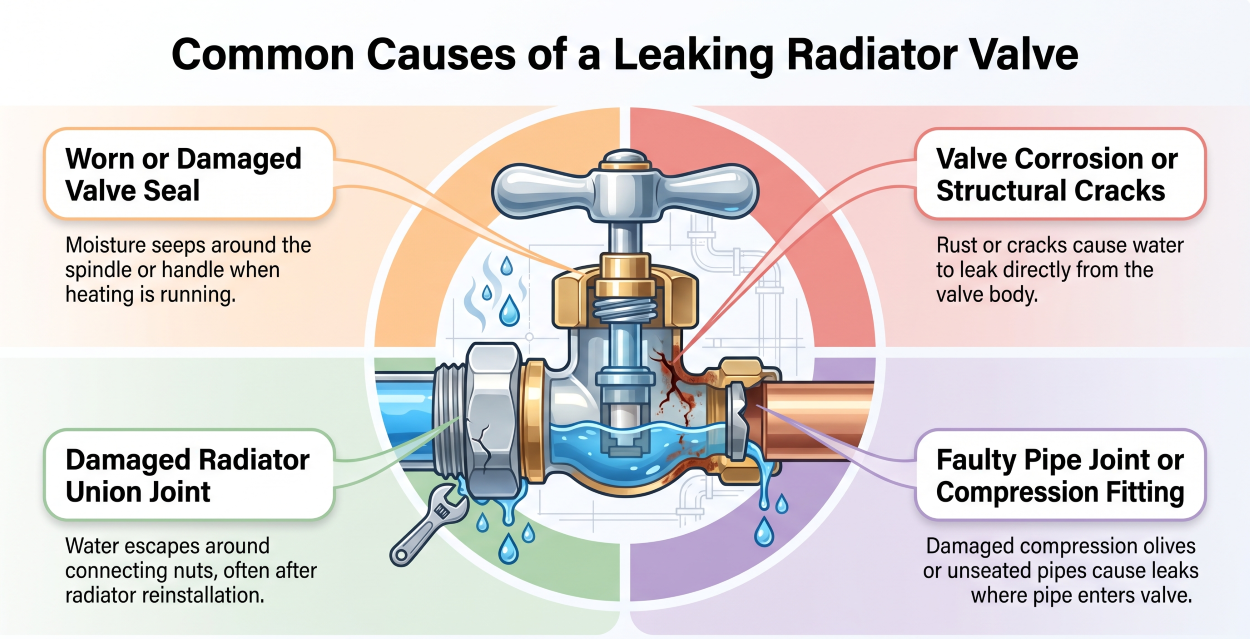
1. A Worn or Damaged Valve Seal
Seals inside radiator valves help prevent water from escaping around moving parts and connections. Over time, these seals can deteriorate and allow moisture to seep through.
You may notice water around the spindle or beneath the valve handle, particularly when the heating is running. This can indicate a worn gland seal, although water may also be running down from another connection.
What to do: Allow the radiator to cool, dry the outside of the valve, and check where moisture first appears. Depending on the valve design, the seal may be serviceable, or the valve may need replacing.
Avoid dismantling the valve unless you understand its construction and the correct safety procedure.
2. A Leak at the Radiator Connection
The valve connects to the radiator through a joint often called a union connection. If its sealing surfaces are damaged or no longer watertight, water may escape around the connecting nut.
This can happen after a radiator has been removed and refitted, especially if the joint was disturbed during the work.
What to do: Look for moisture where the valve joins the radiator. Do not tighten the connection while the system is hot or pressurised. The correct repair depends on the fitting, and adding PTFE tape will not necessarily solve the problem.
If the leak continues, a plumber can inspect the joint and determine whether it needs repairing or replacing.
3. A Faulty Pipe Joint
Sometimes the valve itself is fine, but water escapes where the pipe enters it.
Many radiator valves use compression fittings containing a small metal ring called an olive. This helps create a watertight seal around the pipe. A damaged olive, incorrectly seated pipe, or faulty fitting can allow water to escape.
What to do: Check whether the water first appears around the pipe connection. Repairing it may require isolating the radiator or draining part of the heating system, depending on the installation.
Avoid repeatedly tightening the nut, as excessive force can damage the fitting or pipework. A plumber can inspect the connection and replace faulty parts where necessary.
4. Corrosion or a Damaged Radiator Valve
Radiator valves can deteriorate over time, particularly in older heating systems. Rust, visible cracks or persistent water seepage directly from the valve body may indicate that the valve is damaged and needs replacing.
What to do: If you notice significant corrosion, cracks, or water leaking directly from the valve body, arrange an inspection by a qualified plumber or heating engineer. They can assess the damage and determine whether the valve can be repaired or needs replacing.
How to Find Where Your Radiator Valve Is Leaking
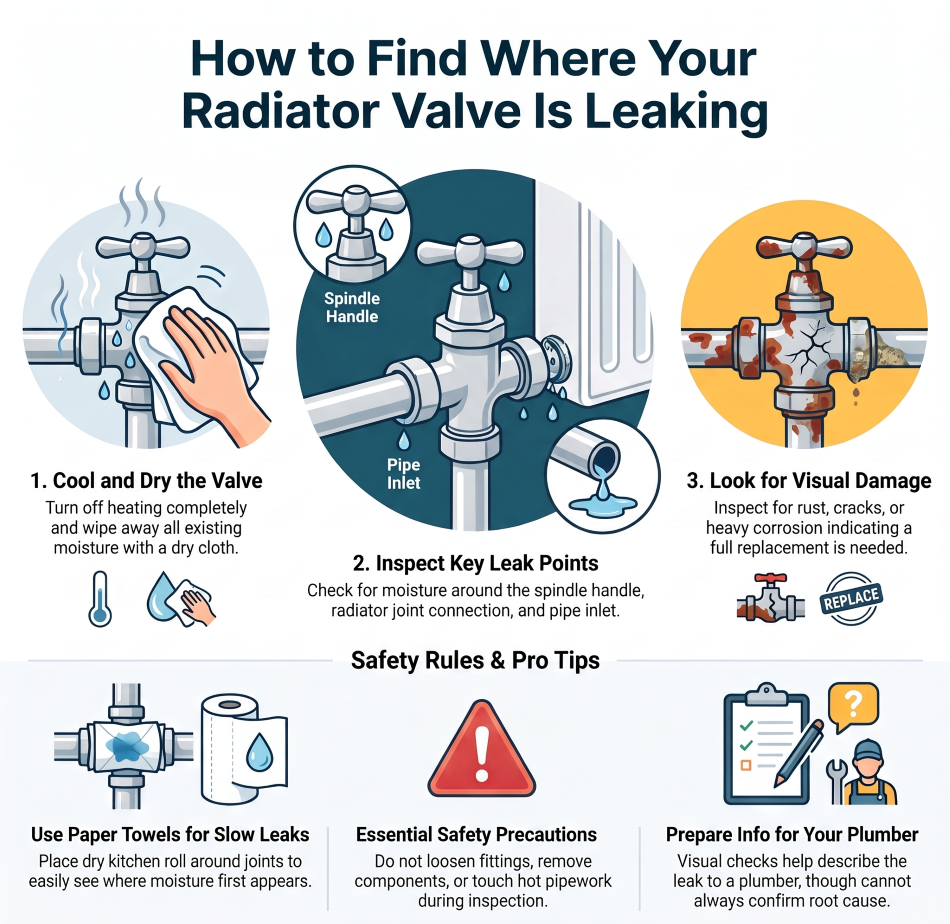
You can carry out a basic visual inspection without taking the valve apart.
- Turn off the heating: Let the radiator and valve cool completely.
- Dry the valve: Use a cloth or kitchen roll to remove existing moisture.
- Check the spindle: Look for water around the handle or beneath the valve head.
- Inspect the radiator joint: Check where the valve connects to the radiator.
- Check the pipe joint: Look for moisture where the pipe enters the valve.
- Look for damage: Rust, cracks, or heavy corrosion may indicate that replacement is needed.
If the leak is slow, dry kitchen roll can help you see where moisture first appears. Do not loosen fittings, remove valve components or touch hot pipework while investigating.
These checks can help you describe the problem to a plumber, but they cannot confirm the cause in every case.
Can You Fix a Leaking Radiator Valve Yourself?
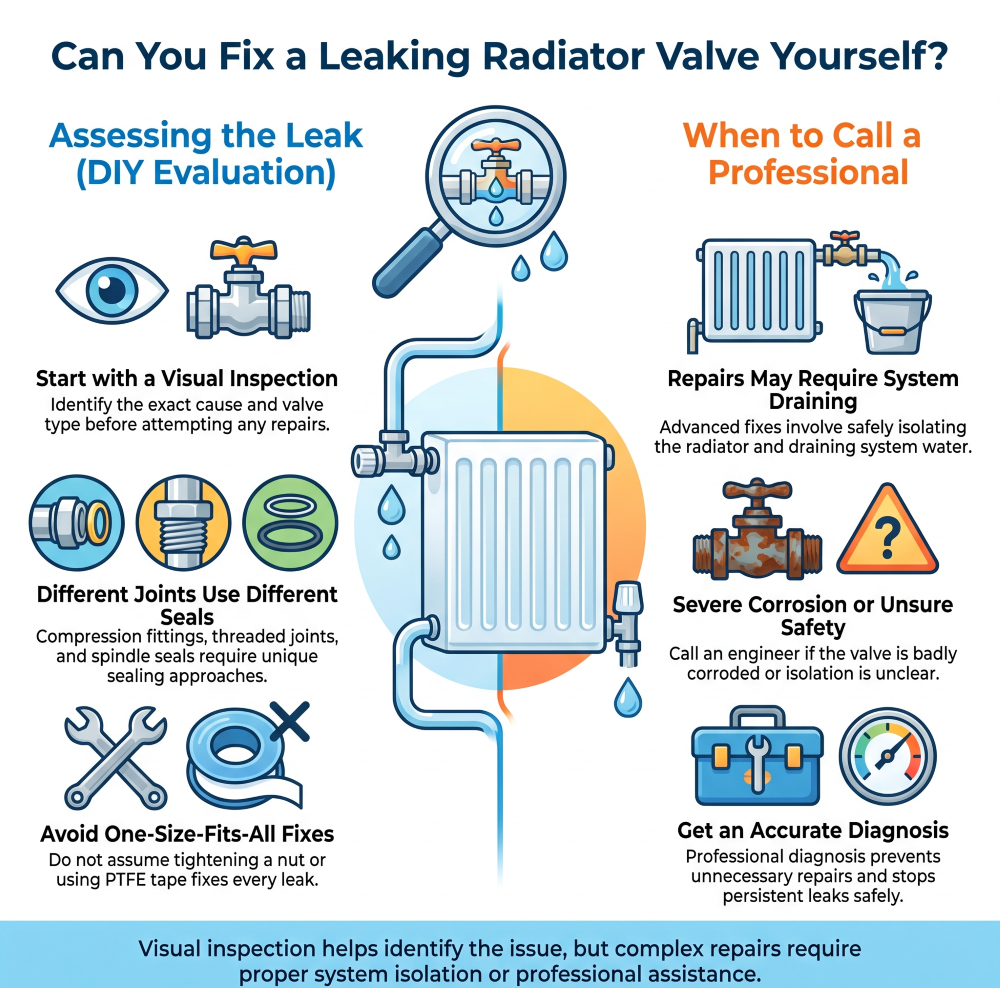
That depends on the cause of the leak, the valve design, and your plumbing experience.
A visual inspection is usually a sensible starting point. More involved repairs may require isolating the radiator, draining water from the system, and replacing seals or fittings. The correct procedure depends on the installation.
Do not assume that tightening a nut or applying PTFE tape will stop every leak. Compression fittings, threaded joints and spindle seals use different sealing arrangements.
If the leak continues, the valve is badly corroded, or you are unsure how to isolate the system safely, contact a qualified plumber or heating engineer. Getting the cause diagnosed correctly can help avoid unnecessary repairs.
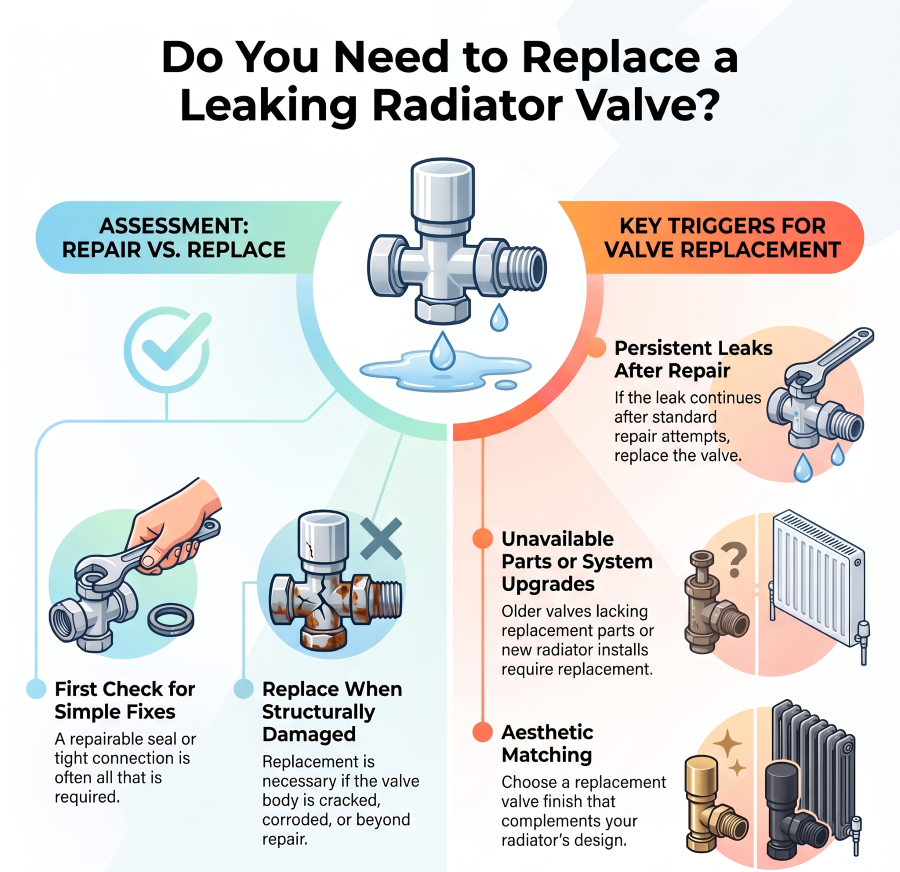
Do You Need to Replace a Leaking Radiator Valve?
Not every leaking radiator valve needs replacing. A repairable seal or connection may be all that is required. Replacement is more likely to be appropriate when the valve body is cracked, badly corroded, or beyond repair.
Consider replacement if:
- The valve body is visibly damaged.
- The leak continues after an appropriate repair.
- Suitable parts are unavailable for an old or faulty valve.
- You are installing a new radiator.
- You want the valve finish to complement your radiator.
The Radiator Hub offers a range of radiator valves and accessories.
Choosing the Right Radiator Valve
Choosing the right radiator valve depends on your pipework layout, radiator connections, and preferred level of temperature control. Our radiator valves guide explains the different types and what to consider when choosing a replacement.
Angled Radiator Valves
Angled radiator valves are commonly used when pipes rise from the floor and connect to radiator inlets positioned at the side. They change the direction of the connection between the pipe and radiator.
Browse our angled radiator valves to compare available styles.
Corner Radiator Valves
Corner radiator valves provide a compact, angled connection for compatible radiator and pipework arrangements. Check the connection orientation and dimensions before ordering to ensure the valve suits your installation.
Straight Radiator Valves
Straight radiator valves are suitable for installations where the pipe and radiator connections align without requiring an angled turn. Check your existing pipework layout before purchasing.
Thermostatic Radiator Valves (TRVs)
Thermostatic radiator valves (TRVs) allow you to control individual room temperatures by regulating the flow of hot water through the radiator. If a TRV leaks, identify the source before deciding whether the valve, a seal, or another component needs replacing.
Manual Radiator Valves
Manual radiator valves let you adjust the flow of hot water by turning the valve by hand. They are a straightforward option for homeowners who prefer direct control over their radiator settings.
Lockshield Valves
Lockshield valves help balance the heating system by regulating water flow through individual radiators. They are usually fitted at the opposite end from the main control valve and are generally adjusted during system balancing rather than for everyday temperature changes.
Before ordering a replacement, check the valve type, connection size, pipe position, and available space. If your radiator valve is leaking, identify the cause first, as the problem may involve a worn seal or pipe connection rather than the valve itself.
Explore the full range of radiator valves and accessories at The Radiator Hub to find a suitable option for your radiator and pipework.
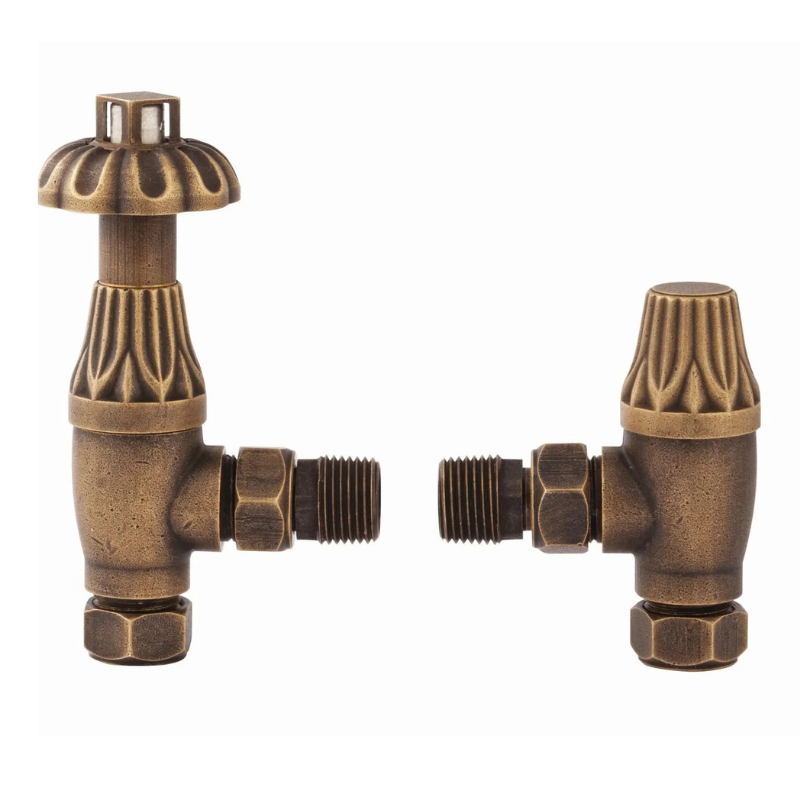
TRH Buckingham Ornate Angled TRV Set Antique Brass
In stock
- 🛡️ Warranty: 2 Years
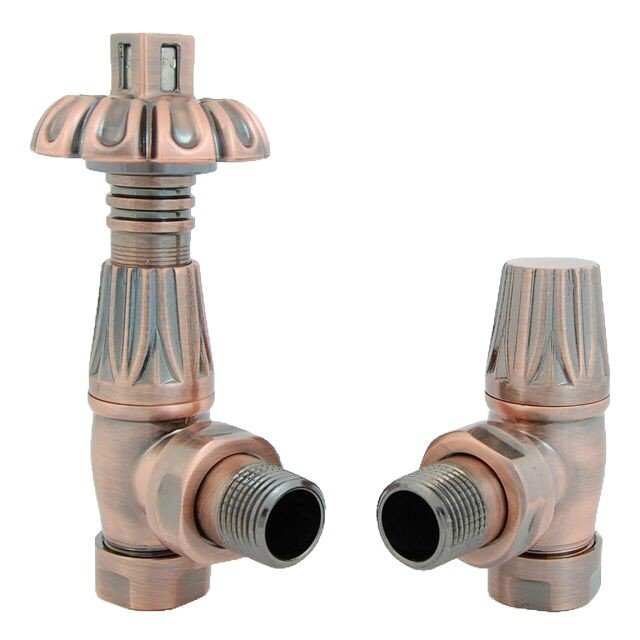
TRH Buckingham Ornate Angled TRV Set Antique Copper
In stock
- 🛡️ Warranty: 2 Years

TRH Buckingham Ornate Angled TRV Set Chrome
In stock
- 🛡️ Warranty: 2 Years
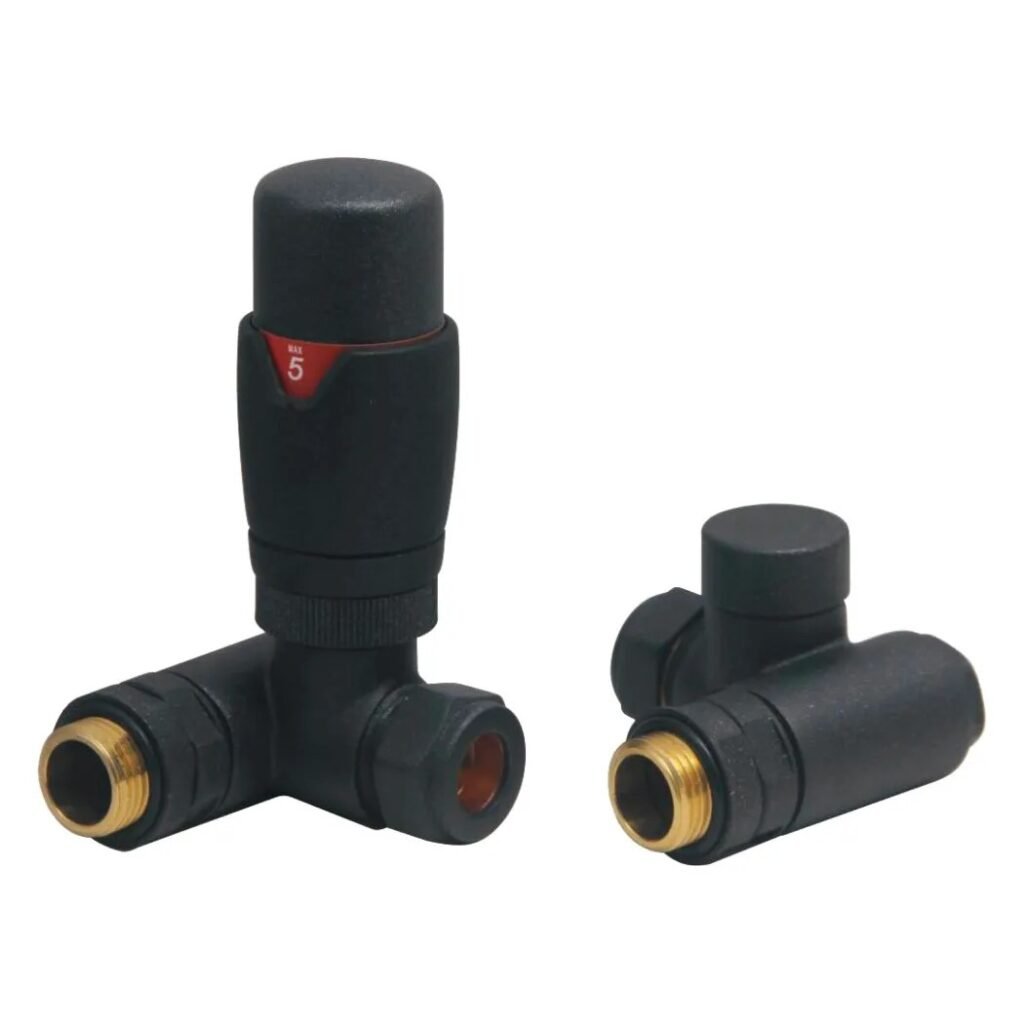
TRH Contemporary Dual Fuel Corner TRV Set Anthracite
In stock
- 🛡️ Warranty: 2 Years
How Much Does It Cost to Fix a Leaking Radiator Valve in the UK?
The cost depends on the source of the leak, whether the valve can be repaired and how much work is needed to access the connection.
A simple repair may cost less than replacing the complete valve. More involved work might require draining part of the heating system, replacing fittings or repairing damaged pipework. Labour charges also vary by location.
When requesting a quote, ask whether it includes replacement parts, labour, any call-out charge and draining or refilling the system where required. It is also worth confirming that the system will be checked for leaks after the repair.
A proper diagnosis can help prevent unnecessary replacement costs.
How to Help Prevent Radiator Valve Leaks
Although radiator valves wear over time, a few simple checks can help you spot problems early.
- Check for damp patches: Look around valves and pipe connections during routine household checks.
- Watch for corrosion: Rust and persistent deposits may indicate deterioration.
- Avoid forcing stiff valves: Have difficult-to-operate valves checked rather than applying excessive force.
- Check after radiator work: Look for leaks after a radiator has been removed, replaced or repositioned and the system has been safely recommissioned.
- Choose compatible parts: Make sure replacement valves suit the radiator and pipework.
- Act promptly: Even a slow drip can damage flooring and nearby furnishings.
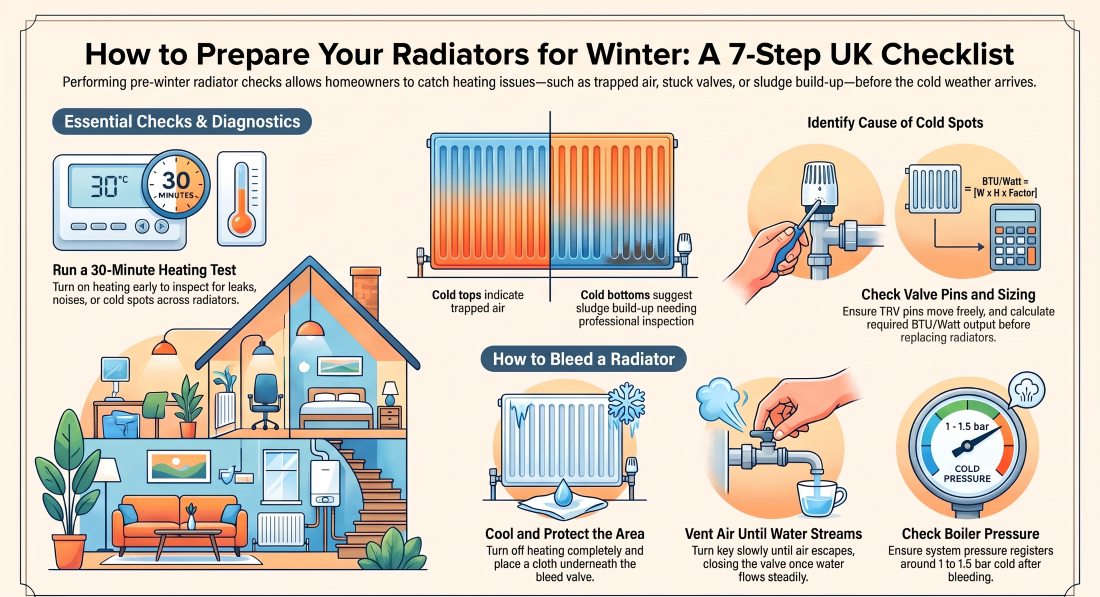
For more seasonal maintenance advice, read our guide to preparing radiators for winter.
When Should You Call a Plumber?
Contact a plumber or heating engineer if water is escaping quickly, the leak keeps returning, the valve is badly corroded or you cannot identify the source. Professional help is also advisable if the repair requires draining the system and you are unsure how to do it safely.
If your boiler pressure repeatedly drops and you suspect a leak, arrange an inspection rather than continually topping up the system without identifying the cause.
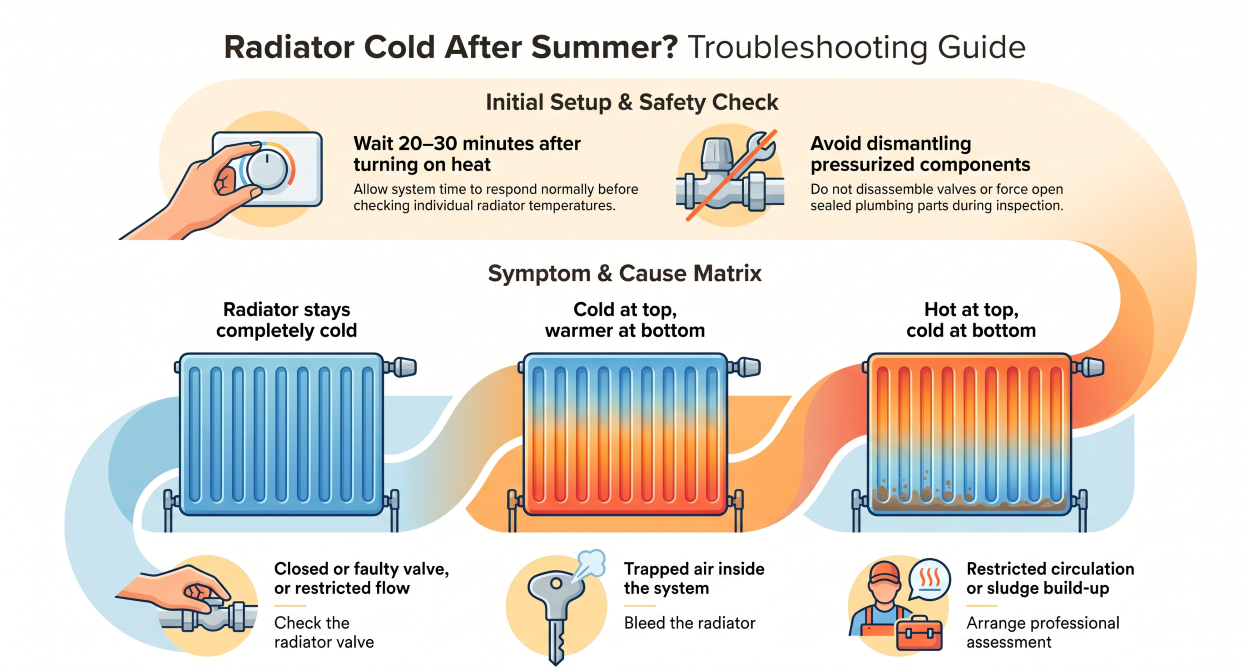
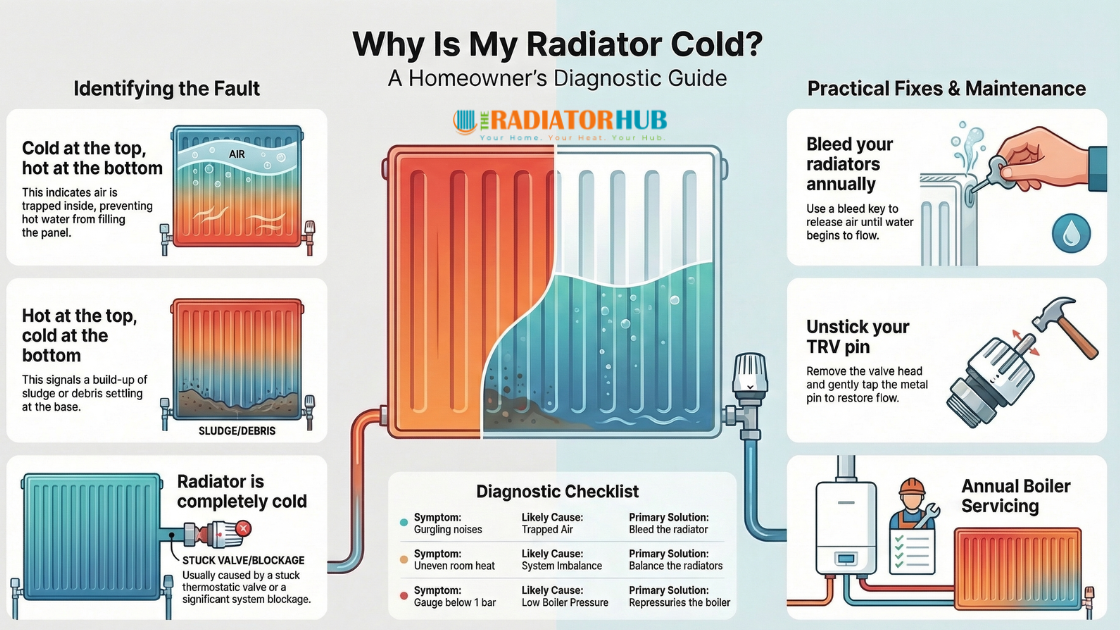
If your radiator is also struggling to heat up, read our guide on why your radiator may not be heating up after summer for possible causes and troubleshooting advice.
If your radiator valve needs replacing or you have a wider radiator problem, professional radiator installation in Chorley and Preston can help ensure your radiator and connections are fitted correctly.
If water reaches electrical equipment, avoid touching wet electrical equipment and seek appropriate assistance immediately.
Frequently Asked Questions
Why are my radiator valves leaking water?
Common causes include worn seals, damaged compression fittings, faulty connections, and corrosion. Check where the water first appears without dismantling the valve, and arrange an inspection if the leak continues.
Why is my radiator valve leaking from the top?
A leak around the top may indicate a worn spindle seal or gland packing. However, water can travel down from another connection, so check where the moisture first appears.
Why does my radiator valve leak when the heating is on?
Heating and cooling cause components to expand and contract. This can make an existing weakness in a seal or connection more noticeable. Note when the leak occurs and tell the plumber what you have observed.
Can PTFE tape stop a radiator valve leaking?
Not in every situation. PTFE tape is suitable for certain threaded joints, but it will not reliably fix worn spindle seals, damaged valve bodies or every compression fitting. The correct repair depends on the joint and the source of the leak.
Does a leaking radiator valve mean I need a new radiator?
Usually, no. A faulty valve can often be repaired or replaced while the radiator remains serviceable. A new radiator may be worth considering if the radiator body itself is leaking or badly corroded.
Will a leaking radiator valve cause boiler pressure to drop?
It can. In a sealed heating system, escaping water may contribute to a drop in boiler pressure. Repeated pressure loss should be investigated to identify the underlying cause.
Final Thoughts
A radiator leaking from the valve does not automatically mean you need a new radiator. The key is to identify where the water is coming from before deciding what needs repairing or replacing.
Worn seals, faulty connections and damaged valve bodies can produce similar symptoms but require different solutions. Start with a careful visual inspection, allow the radiator to cool, and avoid dismantling pressurised fittings.
If you need a replacement, explore The Radiator Hub’s radiator valves and accessories and check compatibility before ordering. If you are unsure about the cause or the repair, a qualified plumber or heating engineer can help you choose the right solution.