Blogs, Radiator Buying Guides

Horizontal vs. Vertical Designer Radiators: Which Suits Your Wall Space?

Horizontal and vertical designer radiators compared for different wall spaces

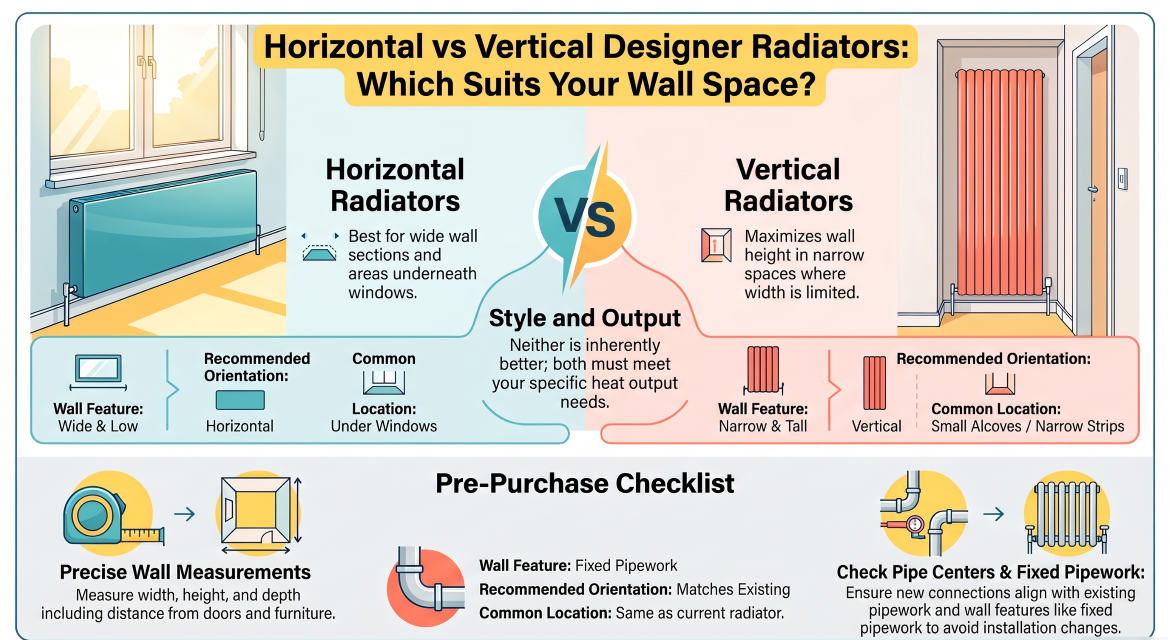
Choosing a new designer radiator is not just about finding a style you like. The radiator also needs to fit the wall, work with your existing pipework and provide enough heat for the room.

That is why one of the first decisions to make is whether a horizontal or vertical designer radiator is the better option.

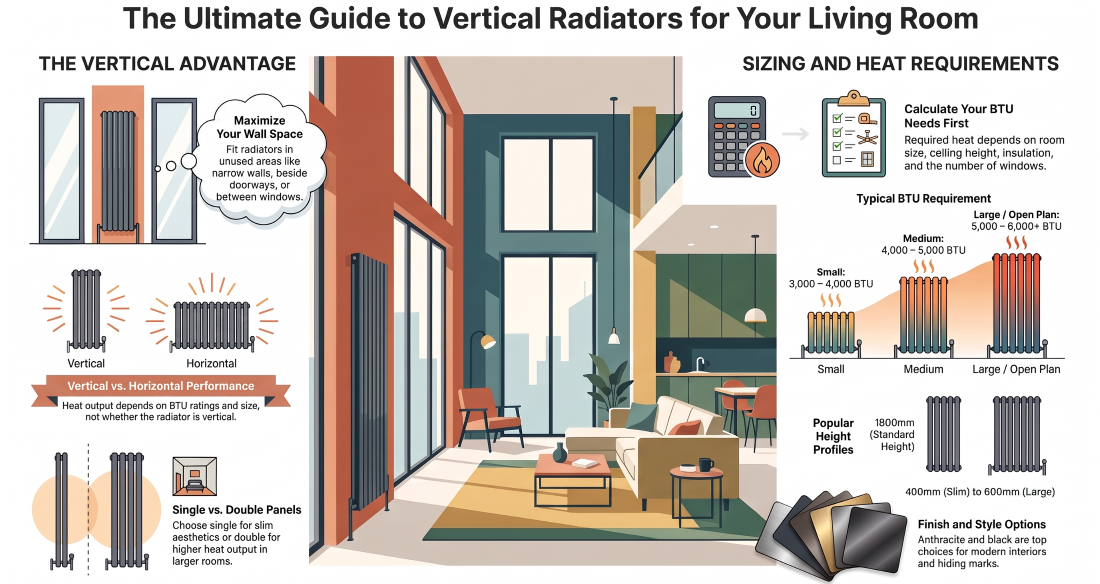
A horizontal radiator uses more wall width but less height, while a vertical radiator makes better use of wall height. Neither is automatically better. The right choice depends on the space you have available, the heat output you need and how you want the radiator to look in the room.

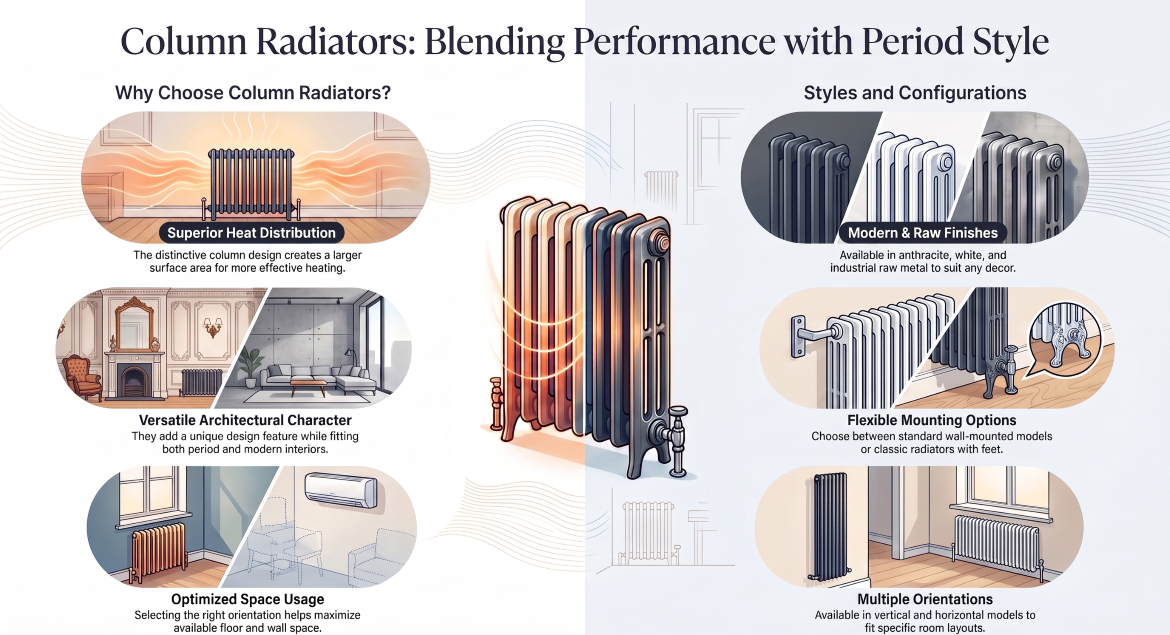
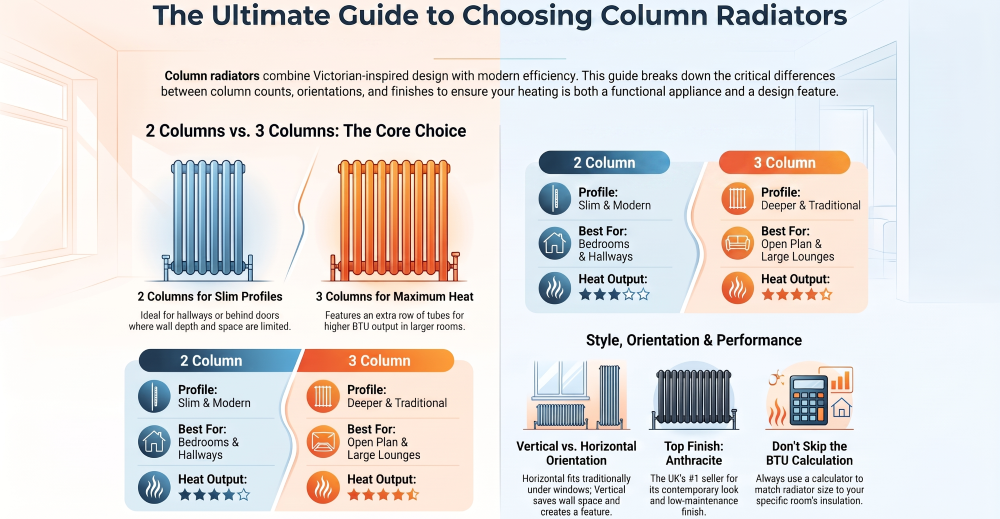
If you are also considering column radiators, you can compare the two orientations in our Vertical vs Horizontal Radiators Guide before making your choice.

Measuring wall space for a horizontal or vertical designer radiator

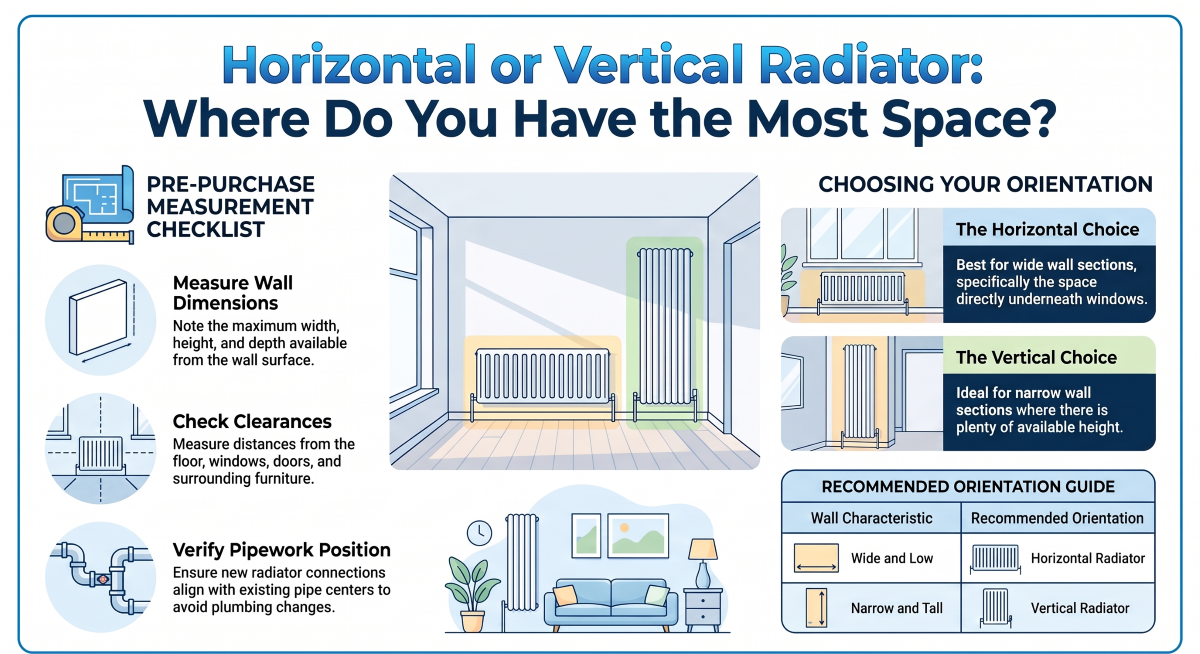
Horizontal or Vertical Radiator: Where Do You Have the Most Space?

Before looking at finishes or designs, get the tape measure out.

Measure:

  • The maximum wall width available
  • The available height
  • The distance from the floor
  • The position of your existing pipework
  • The space around doors, windows and furniture
  • The depth available from the wall

This can quickly tell you which orientation makes more sense.

If you have a wide section of wall underneath a window, a horizontal designer radiator may be the simplest choice. If you only have a narrow section of wall but plenty of height, a vertical designer radiator can make better use of the available space.

It is also worth checking the radiator's pipe centres before ordering. A radiator that physically fits the wall may still require pipework changes if the connections do not line up with your existing installation.

Horizontal designer radiator fitted on a wide wall

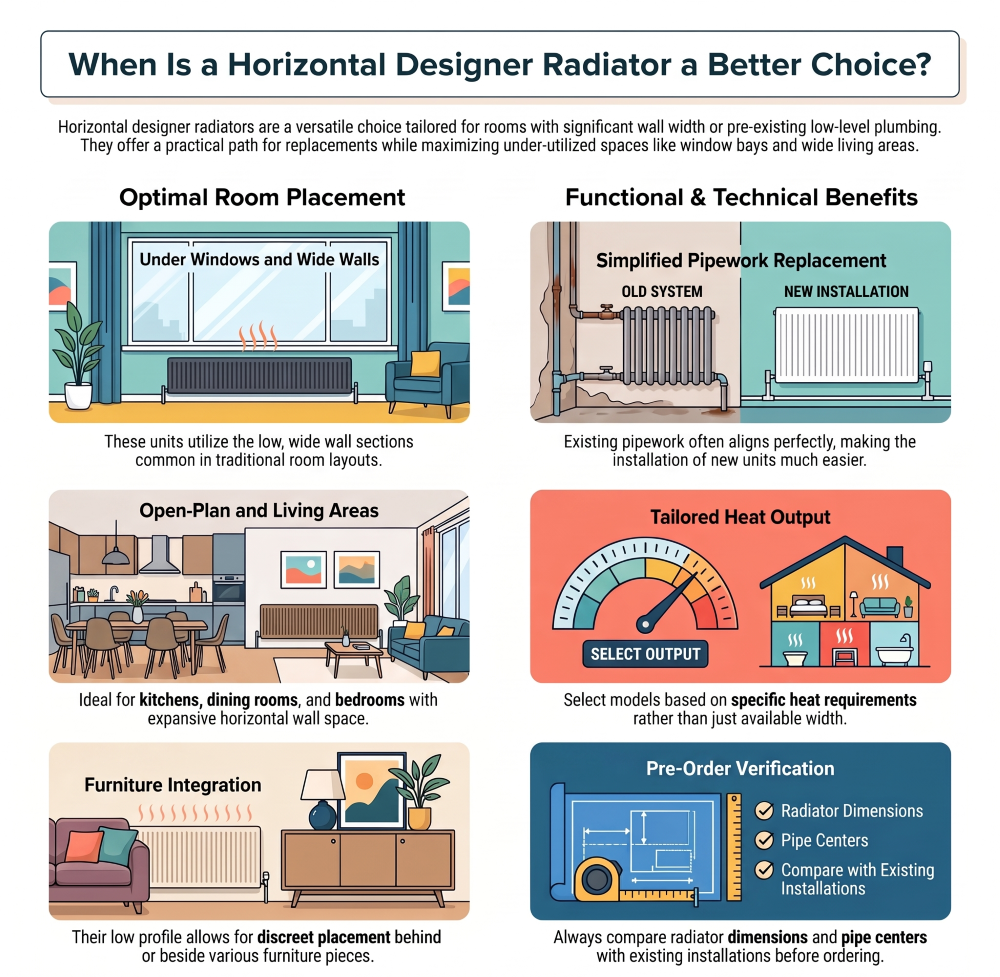
When Is a Horizontal Designer Radiator a Better Choice?

Horizontal radiators are a good fit for rooms with a wide, low wall space. They are often used under windows, along living room walls, in bedrooms and in open-plan areas where there is plenty of horizontal space.

They can also make sense when replacing an existing horizontal radiator, as the current pipework may already be in a suitable position.

The Radiator Hub offers horizontal designer radiators in a range of widths, so you can choose a size that suits both your available wall space and the heat your room needs.

Before buying, check the radiator's size, pipe centres and BTU output to make sure it will fit properly and provide enough heat.

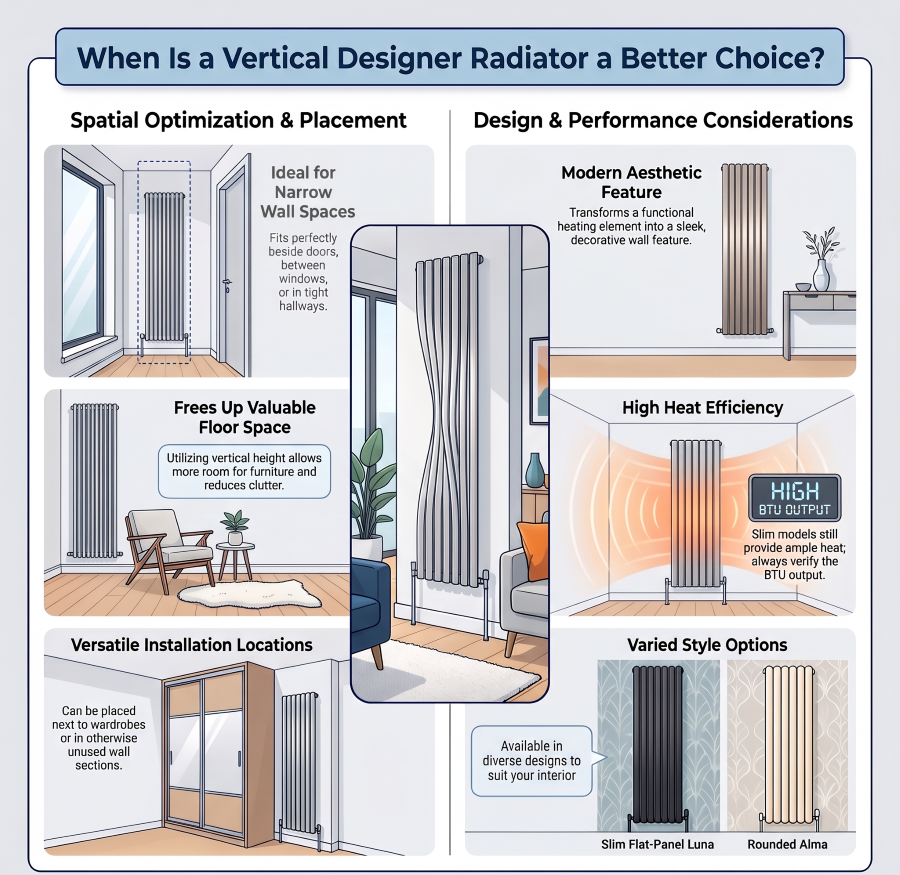
When Is a Vertical Designer Radiator a Better Choice?

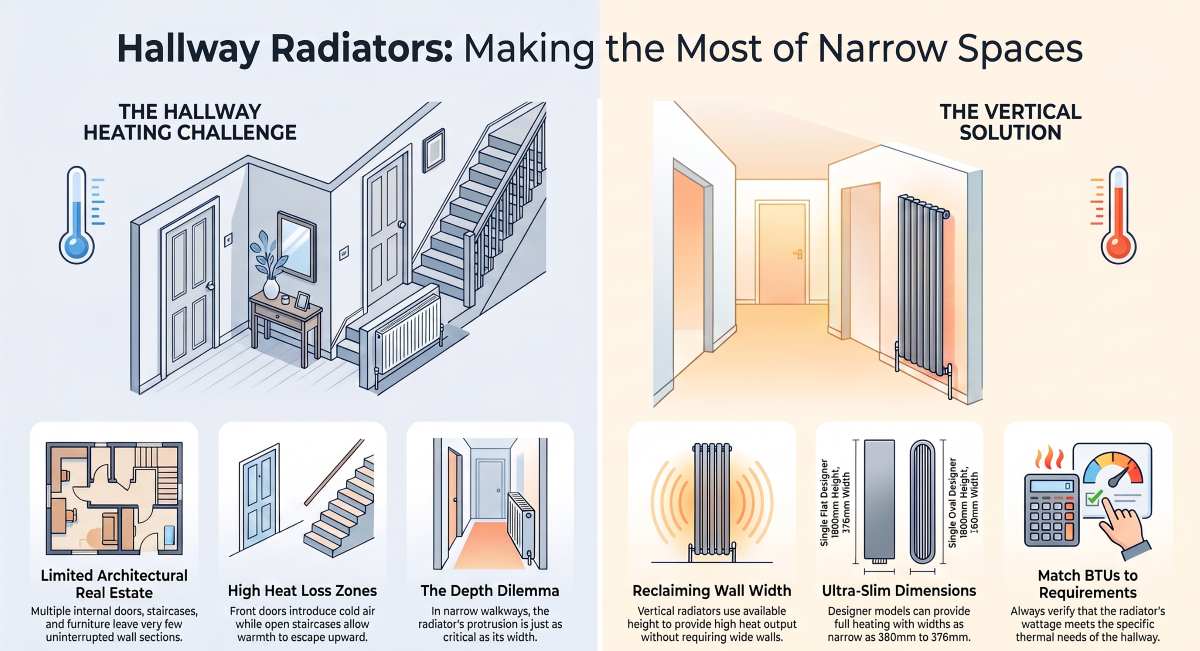
A vertical designer radiator is a useful option when you have limited wall width but plenty of height. It can fit neatly beside a door, between windows, next to a wardrobe or in a hallway where a horizontal radiator may be too wide.

Using the wall height can free up valuable space for furniture and make the room feel less crowded. It can also add a simple, modern feature to an otherwise unused section of wall.

The Radiator Hub offers vertical radiators in different styles, including slim flat-panel Luna models and rounded Alma designs. If you’re comparing different vertical options, our Vertical Designer Radiators UK Guide covers the key points to consider.A slim radiator can still provide plenty of heat, so always check the BTU output against your room's heating requirements before buying.

Vertical designer radiator fitted on a narrow wall

What About Double Panel vs Single Panel Radiators?

This is another important consideration.

A single-panel radiator has a simpler profile and can be a good option where wall depth is limited. A double-panel radiator has more surface area and can provide a higher heat output from a similar overall width or height.

However, do not choose a double radiator simply because you assume it will be better.

The correct choice depends on the BTU requirement of your room and the dimensions available.

If you have limited wall width but plenty of height, a double vertical radiator may provide the additional output you need without requiring a very wide radiator.

Flat Panel or Oval Designer Radiator?

Once you have decided between horizontal and vertical, there is another decision: the design.

Flat Panel Radiators

Flat-panel designer radiators have a clean, simple appearance. They work particularly well in modern and minimalist interiors where you want straight lines and an understated finish.

The Luna range is an example of this style.

Oval Radiators

Oval tube radiators have a softer appearance, with rounded tubes rather than a flat front.

The Alma range is a good example. It can work well when you want the radiator to become more of a feature rather than simply blend into the wall.

The choice is mostly down to personal taste and the style of your room. Both can provide effective heating when correctly sized.

Don't Forget the Radiator Depth

Wall width and height are not the only measurements that matter.

Check the radiator's depth as well, particularly if it will be installed:

  • Behind a door
  • Beside a sofa
  • Near a walkway
  • In a narrow hallway
  • Close to kitchen units
  • Beside furniture

A radiator that fits the wall may still be inconvenient if it projects too far into the room.

You should also check where the valves will sit and whether there is enough clearance to operate them comfortably.

Can You Replace a Horizontal Radiator With a Vertical One?

Sometimes, yes, but it should not be treated as a direct like-for-like replacement.

Changing from horizontal to vertical can change the position of the pipe connections. Your plumber may need to alter the existing pipework before the new radiator can be installed.

Before ordering, check:

  1. Radiator height and width
  2. Depth
  3. Pipe centres
  4. Wall-to-pipe measurement
  5. Valve position
  6. Required BTU output
  7. Wall construction and fixing requirements

If you are unsure, ask your installer to check the measurements before purchasing.

Quick Guide: Horizontal vs Vertical Designer Radiators

Your situation

Better option

Wide wall with limited height

Horizontal

Narrow wall with plenty of height

Vertical

Radiator under a wide window

Horizontal

Narrow hallway

Vertical

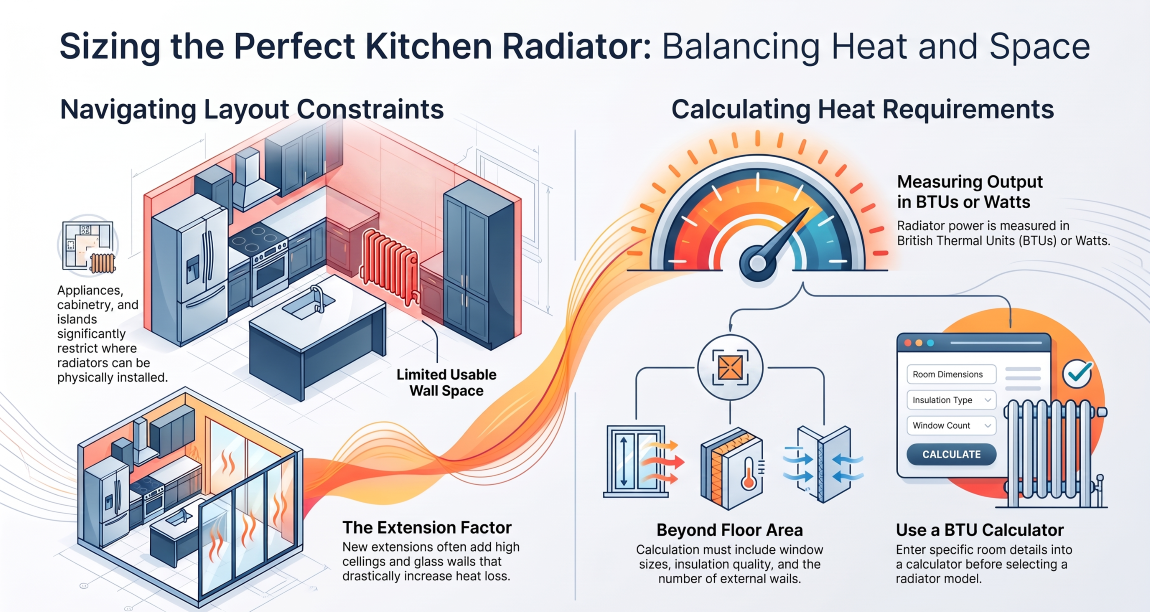
Kitchen with limited free wall space

Vertical

Long living room wall

Horizontal

Wall beside a wardrobe

Vertical

Modern feature wall

Either

Replacing an existing horizontal radiator

Usually horizontal, depending on pipework

Want to use unused wall height

Vertical

Frequently Asked Questions

Is a vertical radiator better than a horizontal radiator?

Neither is automatically better. A vertical radiator is often more practical where wall width is limited, while a horizontal radiator can be easier to fit on a wide, low wall. The correct heat output is more important than the orientation.

Yes. A vertical radiator can be a useful option when floor and wall space are limited. Measure the available wall carefully and make sure the radiator provides enough BTU for the bedroom.

You can in many installations, but the pipework may need to be changed. Check the pipe centres and valve positions before ordering and ask your plumber to confirm the installation requirements.

Yes. Vertical designer radiators can work particularly well in living rooms where horizontal wall space is occupied by furniture, windows or other features. Choose the radiator based on the room’s required heat output rather than its appearance alone.

They usually take up less wall width because they use more height. They do not necessarily have a smaller overall footprint, so check both the radiator dimensions and depth before ordering.

They can be a practical choice for narrow hallways because they make use of vertical wall space. However, radiator depth and the position of doors and walkways should also be considered.

Yes, provided it has the appropriate heat output for the room. Orientation itself does not determine how much heat a radiator provides.

There is no single size that suits every room. Calculate the required BTU based on the room’s dimensions, insulation, windows and other factors, then choose a radiator that meets or exceeds that requirement.

The correct valve depends on the radiator design and connection arrangement. Always check the product specifications and confirm the valve type and position with your installer.

So, Which Radiator Should You Choose?

There is no universal winner between horizontal and vertical designer radiators.

If you have more width than height, a horizontal radiator may be the easiest fit. If you have limited wall width but plenty of height, a vertical radiator can make better use of the space.

But don't stop at dimensions. Before buying, check the BTU output, radiator depth, pipe centres, valve position and available wall space.

If you are still deciding, compare the full range of Horizontal Designer Radiators and Vertical Designer Radiators, then use the BTU Calculator to work out the heat output your room actually needs.

Leave a Reply

Your email address will not be published. Required fields are marked *