Blogs, Radiator Buying Guides

Why Does My House Get Cold So Quickly After the Heating Goes Off?

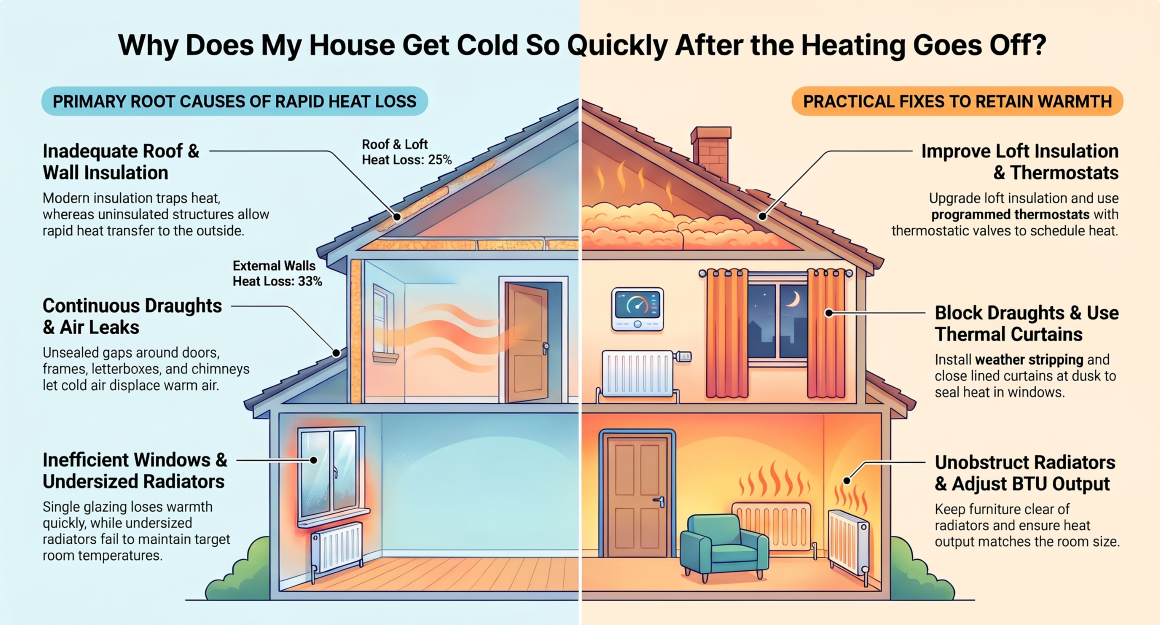
Why does my house get cold so quickly – common causes of heat loss in homes

Have you ever switched off your central heating, only to find your home feeling cold again an hour or two later? It's frustrating, especially in winter, when you want your home to stay comfortable without keeping the heating on constantly.

Some houses hold onto warmth much better than others. If your home cools quickly after the heating switches off, the problem may have more to do with insulation, draughts, windows, or how heat moves around your property than with the radiators themselves.

The good news is that there are several things you can check before considering expensive heating improvements. Understanding where your home is losing heat is a good place to start.

Why Does Your House Lose Heat So Quickly?

Your home naturally loses heat when the temperature outside is lower than it is indoors. However, some properties lose warmth much faster because of poor insulation, gaps around windows and doors or other areas where heat can escape.

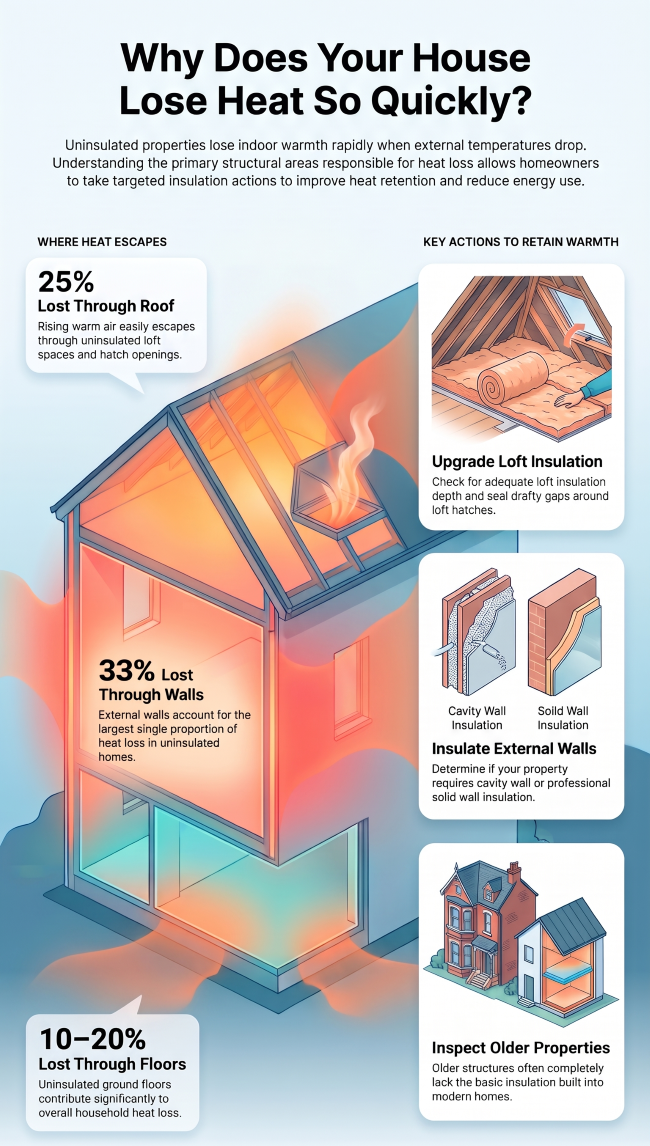
According to the Energy Saving Trust, a typical uninsulated home loses around 25% of its heat through the roof, 33% through the walls and 10–20% through the floor. These figures are indicative, as actual heat loss varies depending on the property’s construction and condition.

So, what could be making your home lose heat so quickly?

Poor Loft and Wall Insulation

If your home has inadequate insulation, it can be difficult to keep rooms warm once the heating switches off.

Loft insulation helps slow down heat escaping through the roof, while cavity wall or solid wall insulation can reduce heat loss through external walls.

Older properties are particularly worth checking, as some have little or no insulation compared with modern homes.

What can you do?

  • Check whether your loft insulation is adequate.
  • Find out whether your property has cavity wall insulation.
  • Consider professional advice about insulating solid walls.
  • Check for gaps around loft hatches and other openings.

Improving insulation can help your home retain warmth for longer and reduce the amount of heating needed to maintain a comfortable temperature.

Why does my house get cold so quickly – common causes of heat loss in homes

Why Does Your House Lose Heat So Quickly?

Your home naturally loses heat when the temperature outside is lower than it is indoors. However, some properties lose warmth much faster because of poor insulation, gaps around windows and doors, or other areas where heat can escape.

According to the Energy Saving Trust, a typical uninsulated home loses around 25% of its heat through the roof, 33% through the walls and 10–20% through the floor. These figures are indicative, as actual heat loss varies depending on the property's construction and condition.

So, what could be making your home lose heat so quickly?

Poor Loft and Wall Insulation

If your home has inadequate insulation, it can be difficult to keep rooms warm once the heating switches off.

Loft insulation helps slow down heat escaping through the roof, while cavity wall or solid wall insulation can reduce heat loss through external walls.

Older properties are particularly worth checking, as some have little or no insulation compared with modern homes.

What can you do?

  • Check whether your loft insulation is adequate.
  • Find out whether your property has cavity wall insulation.
  • Consider professional advice about insulating solid walls.
  • Check for gaps around loft hatches and other openings.

Improving insulation can help your home retain warmth for longer and reduce the amount of heating needed to maintain a comfortable temperature.

Draughts Around Windows and Doors

Have you ever noticed a cold breeze near a closed window or underneath a door?

Small gaps can allow warm air to escape while letting colder air enter. Over time, this makes it harder for your home to maintain a comfortable temperature.

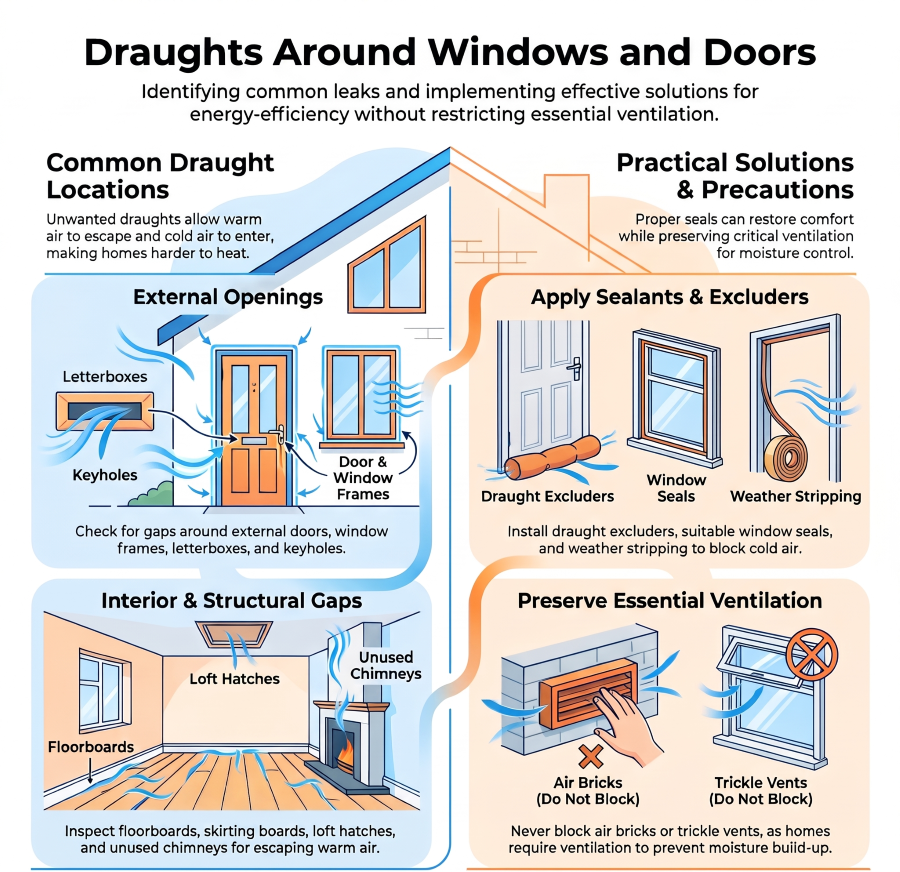
Common places to check include:

  • Gaps around external doors and window frames.
  • Letterboxes and keyholes.
  • Gaps between floorboards and skirting boards.
  • Loft hatches.
  • Unused chimneys.

What can you do?

Draught excluders, suitable window seals and weather stripping can help reduce unwanted air movement.

However, don't block intentional ventilation openings, such as air bricks or trickle vents. Your home still needs adequate ventilation to manage moisture and condensation.

Draughts around windows and doors causing heat loss in homes.
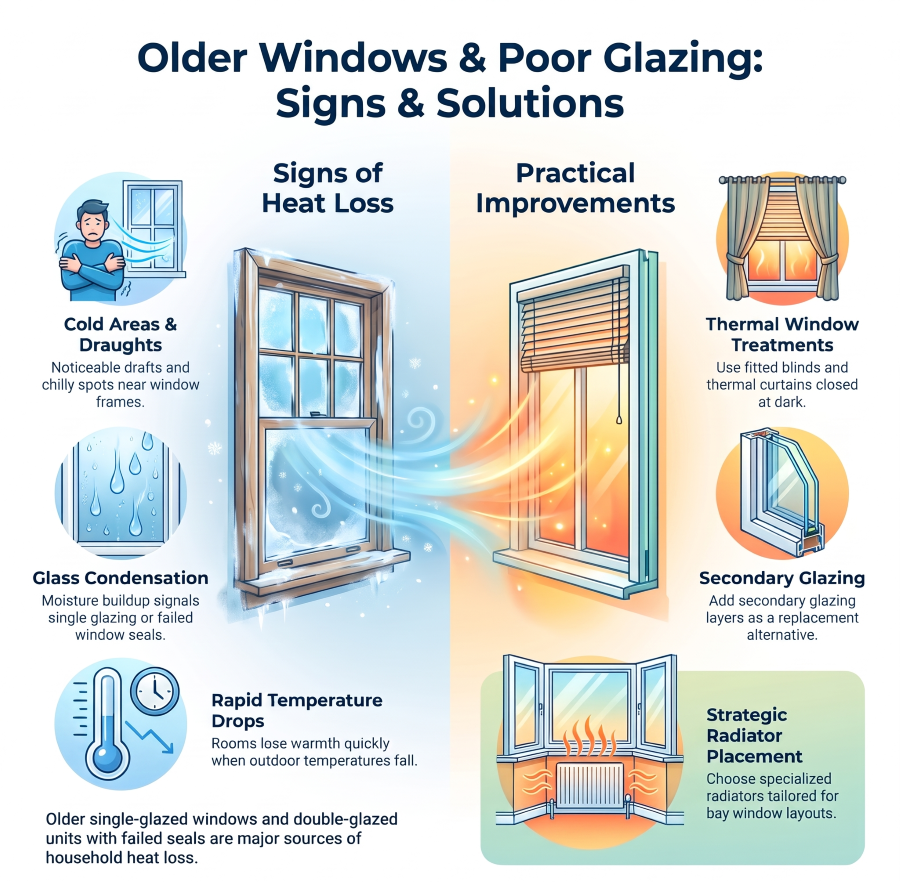
Older single-glazed and double-glazed windows contributing to heat loss in homes.

Older Windows and Poor Glazing

Windows can be another reason your home loses warmth quickly.

Single-glazed windows generally offer less insulation than modern double or triple glazing. Older double-glazed units may also have failed seals, which can affect their performance.

You might notice:

  • Cold areas near windows.
  • Condensation forming on the inside of the glass.
  • Draughts around window frames.
  • Rooms feeling colder when the temperature drops outside.

What can you do?

If replacing your windows isn't currently an option, there are smaller improvements worth considering.

Thermal curtains, properly fitted blinds and secondary glazing can help reduce heat loss. Closing curtains when it gets dark can also help your rooms feel more comfortable during colder evenings.

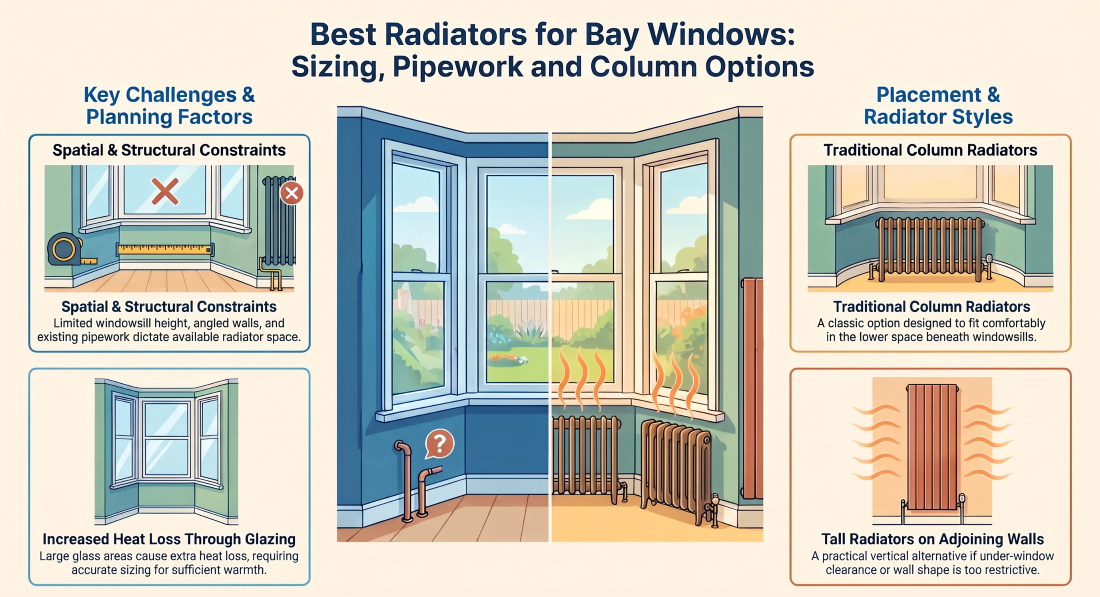
If you have a bay window, choosing a suitable radiator can also be important when working with limited wall space. Read our guide to the best radiators for bay windows for advice on radiator styles, sizing and positioning.

Cold Floors and External Walls

Sometimes, the problem isn’t obvious because there isn’t a noticeable draught.

Uninsulated floors, particularly suspended timber floors above an unheated space, can contribute to heat loss. Cold external walls can also make a room feel uncomfortable even when the air temperature is reasonably warm.

This is one reason why some older houses feel particularly chilly during winter.

What can you do?

  • Use rugs on exposed wooden or stone floors.
  • Check whether your ground floor has suitable insulation.
  • Look into insulating floors above unheated garages or spaces.
  • Get professional advice if you suspect significant heat loss through external walls.

Your Home’s Layout and Construction

Not every property holds onto heat in the same way.

A modern, well-insulated home may maintain a comfortable temperature for longer than an older property with solid walls, high ceilings and several exposed external surfaces.

Room size and layout also matter. Large open-plan spaces can be harder to keep warm because there is more space to heat and potentially more external wall or glazing area.

Some building materials can also store heat and release it gradually. This is known as thermal mass.

However, thermal mass alone doesn’t determine how warm a home stays. Insulation, draughts and the overall construction of the property are also important.

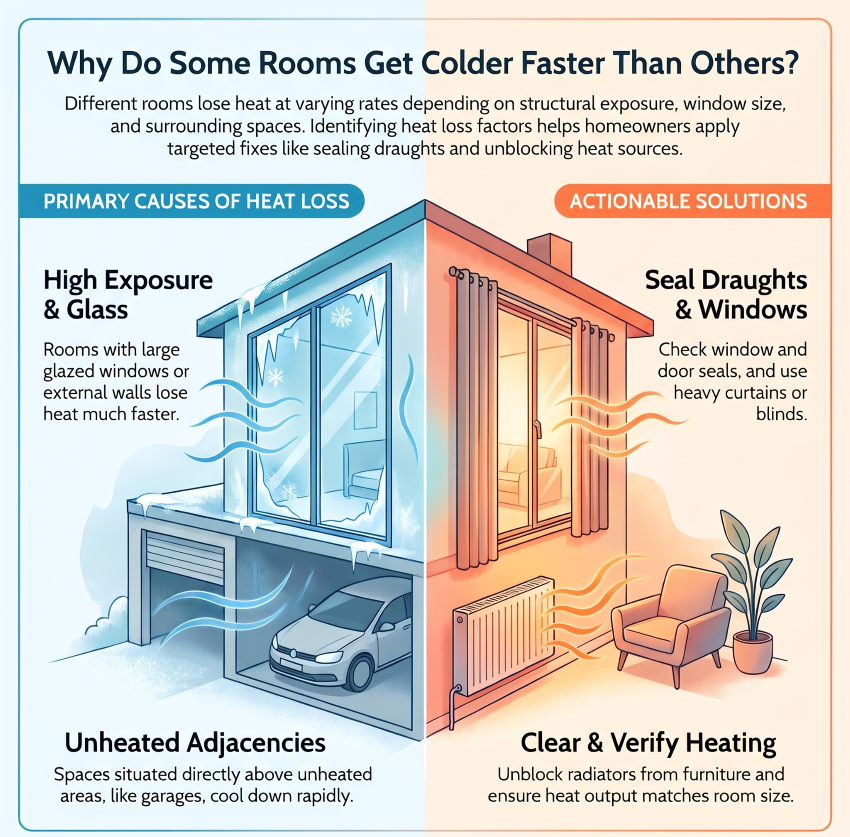
Rooms losing heat at different rates due to windows, insulation and external walls.

Why Do Some Rooms Get Colder Faster Than Others?

Have you noticed that your living room stays comfortable while your bedroom or conservatory becomes cold much sooner?

This is quite common. Different rooms can lose heat at different rates depending on their position, insulation, and exposure to outside temperatures.

For example, a room with large windows, an external wall or a floor above an unheated garage may cool down faster than an internal room surrounded by other heated spaces.

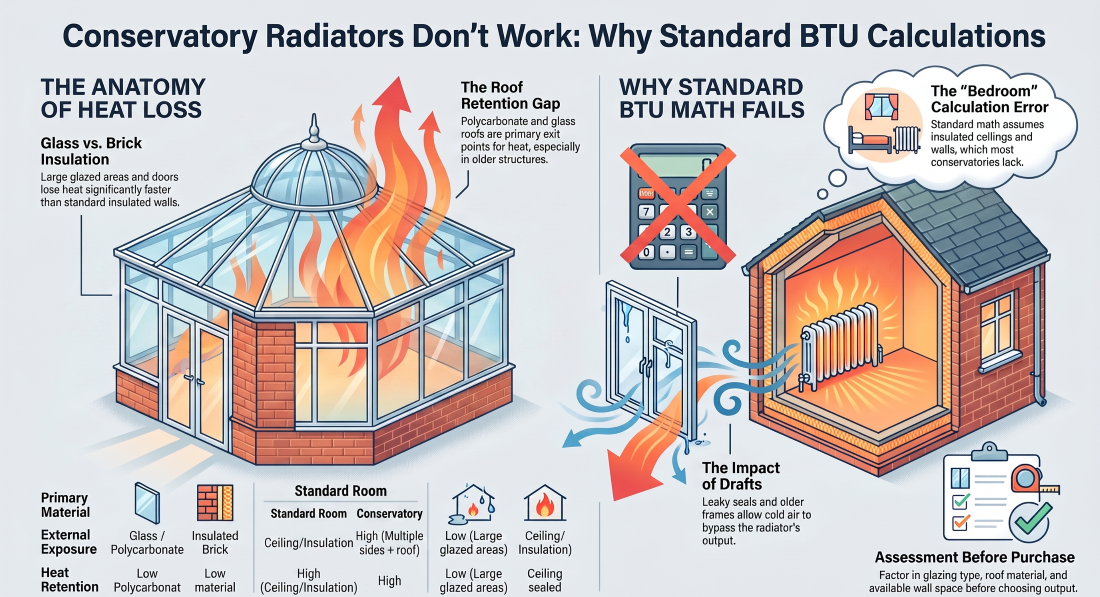
Conservatories can also be difficult to keep warm because of their large glazed areas.

What can you do?

  • Check for draughts around windows and external doors.
  • Use suitable curtains or blinds to reduce heat loss.
  • Check whether the room has adequate insulation.
  • Make sure furniture isn't blocking the radiator.
  • Consider whether the radiator provides enough heat for the room.

If you're looking for suitable heating options for a conservatory, take a look at our Conservatory Radiator Guide.

Are Your Radiators Suitable for Your Room?

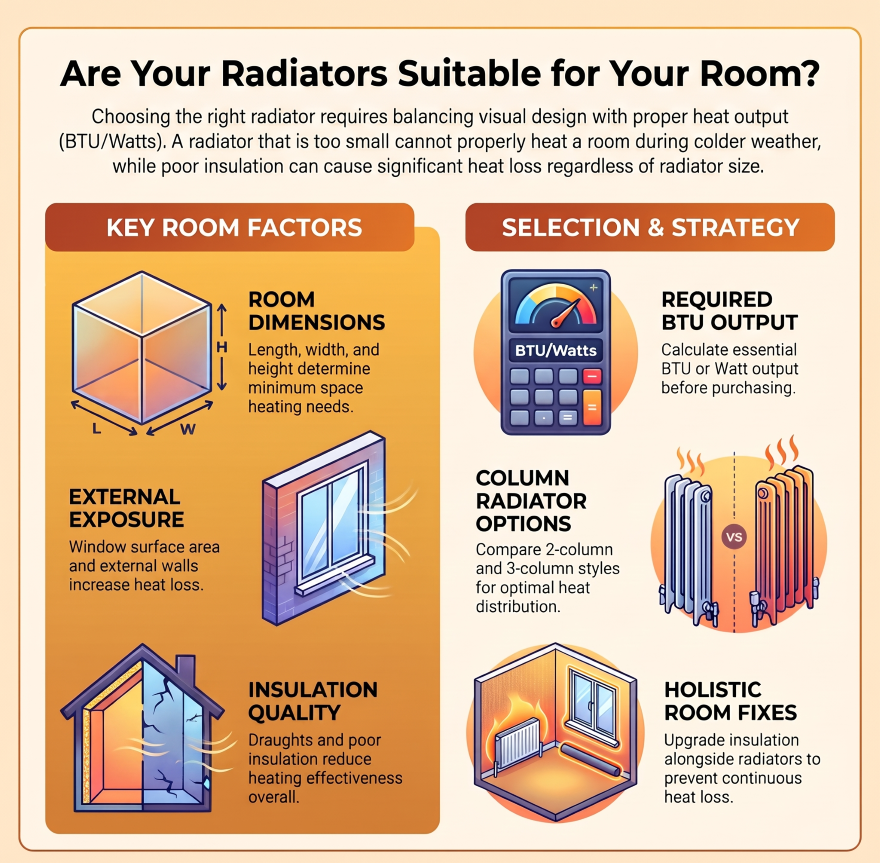
Your radiator plays an important role in heating your home, but choosing the right size and heat output is just as important as choosing a design you like.

If a radiator is too small for the room, it may struggle to bring the space up to a comfortable temperature, particularly during colder weather.

Before replacing a radiator, consider:

  • The room’s length, width and height.
  • The number and size of windows.
  • The amount of external wall space.
  • The insulation levels.
  • The radiator’s stated BTU or Watt output.

A radiator BTU calculation can help you estimate the heat output your room needs.

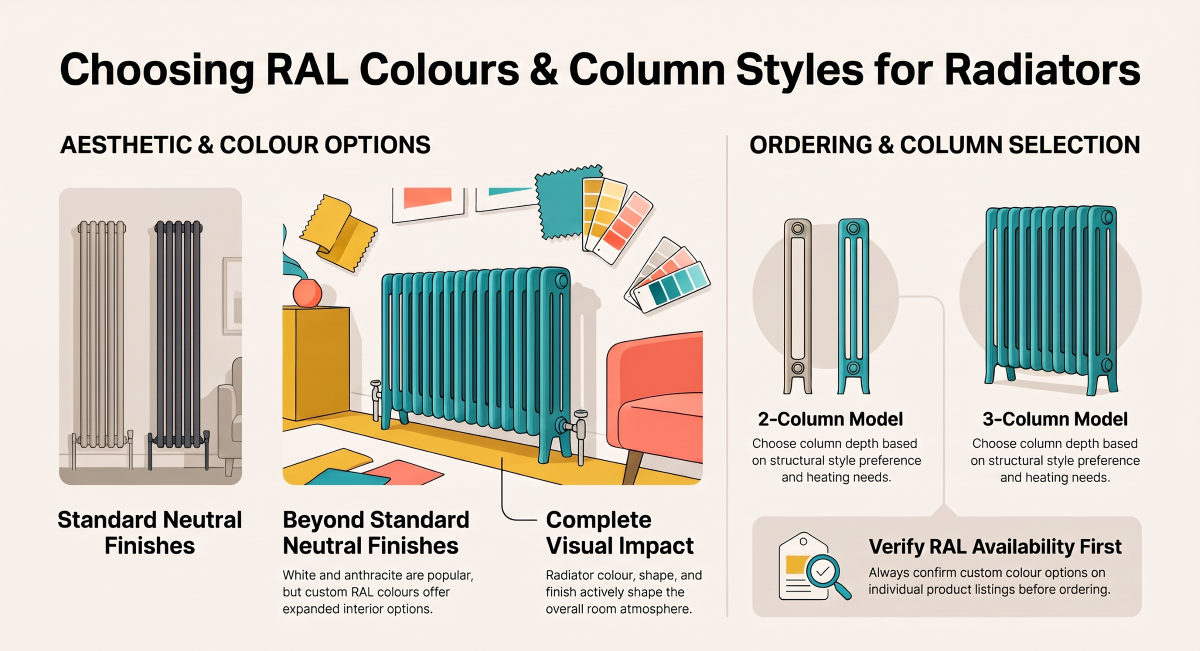
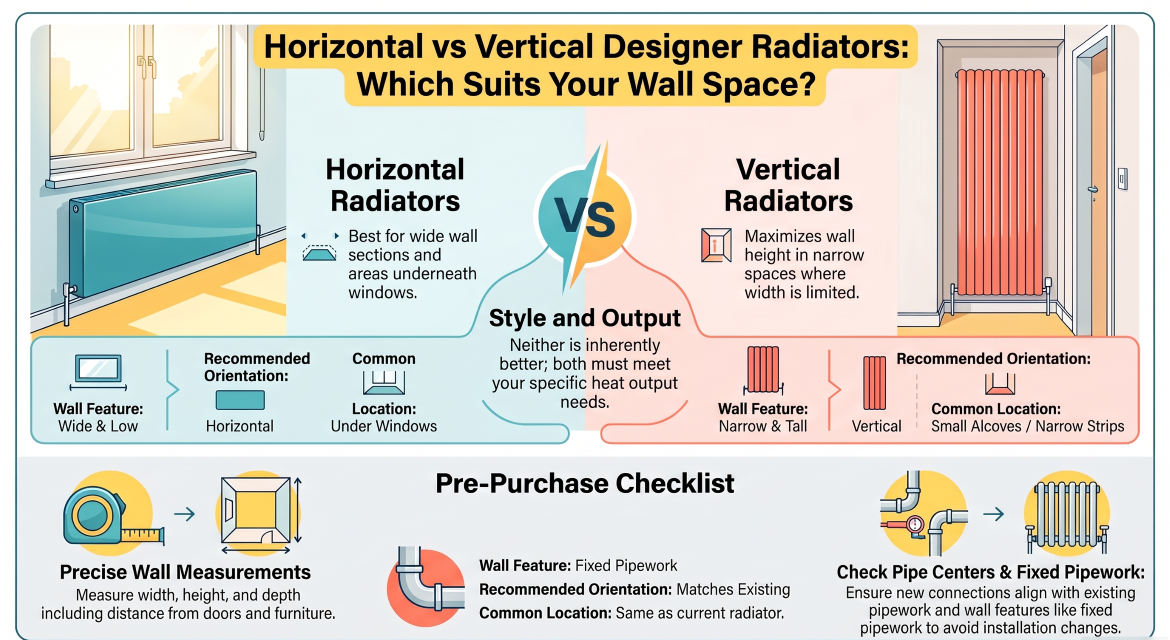
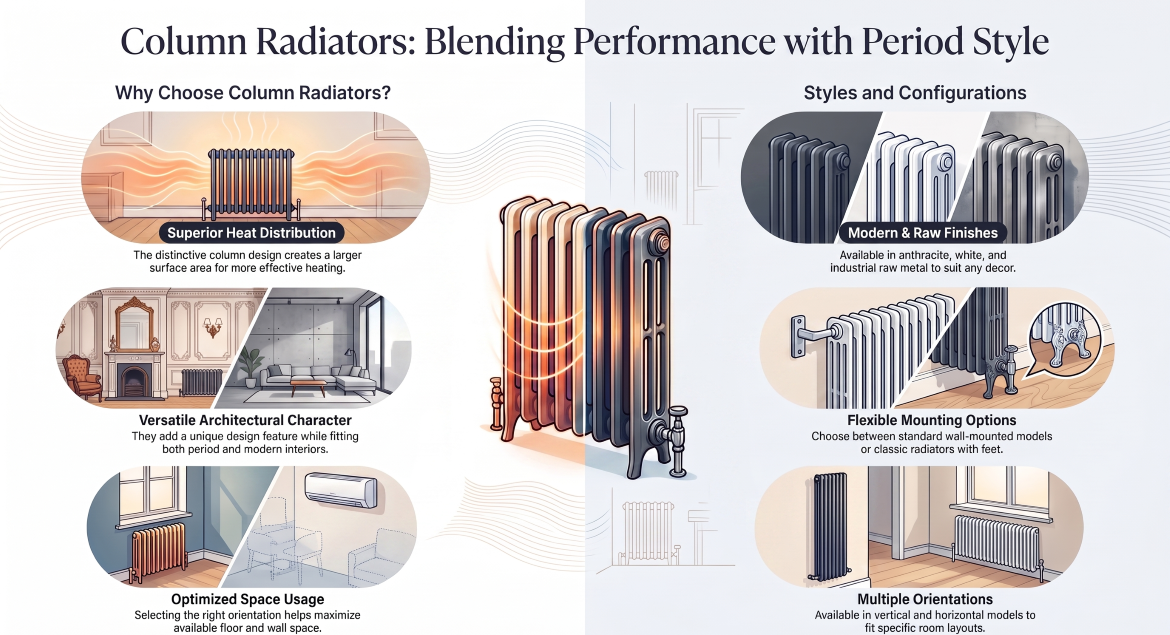
If you’re considering a radiator upgrade, explore our column radiators, including 2 column radiators and 3 column radiators.

You can also read our Column Radiator Buying Guide to compare styles, configurations, and factors to consider before buying.

Remember that replacing a radiator won’t automatically solve heat loss caused by poor insulation or draughts. It’s important to look at the room as a whole.

Choosing the right radiator size and BTU output to heat a room efficiently.

Heating Controls and Your Daily Routine

Your heating schedule can also affect how comfortable your home feels.

If the heating switches off before rooms have reached a comfortable temperature, you may notice the house becoming cold sooner.

Using a timer, room thermostat and thermostatic radiator valves (TRVs) can help you manage heating around your daily routine.

Rather than constantly changing the thermostat, consider setting your heating to come on before you need it and adjusting the temperature to suit your household.

Not sure which radiator valves are suitable for your heating system? Our Radiator Valves Guide explains the differences between TRVs, manual valves and lockshield valves.

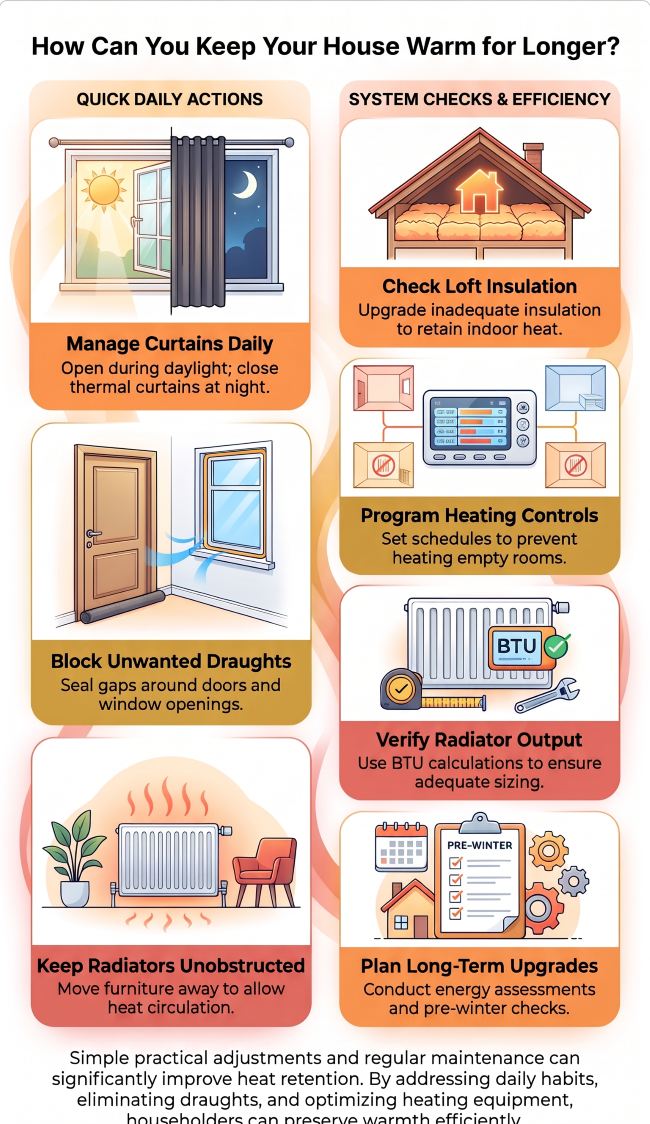
How Can You Keep Your House Warm for Longer?

There are several simple ways to help your home retain heat without spending money on major improvements.

1. Close curtains in the evening

Thermal or lined curtains can reduce heat loss through windows. Open them during the day to let in natural sunlight.

2. Reduce unwanted draughts

Check doors and windows for gaps. Use suitable draught excluders and window seals where needed.

3. Check your loft insulation

Good loft insulation helps prevent heat escaping through the roof and keeps your home warmer for longer.

4. Keep radiators unobstructed

Avoid placing large furniture or long curtains in front of radiators so warm air can circulate freely.

5. Use suitable heating controls

A properly programmed heating system helps maintain comfortable temperatures while avoiding unnecessary heating.

6. Check your radiator output

Make sure your radiators provide enough heat for each room. Our BTU Calculator can help estimate the output needed.

7. Prepare your heating system

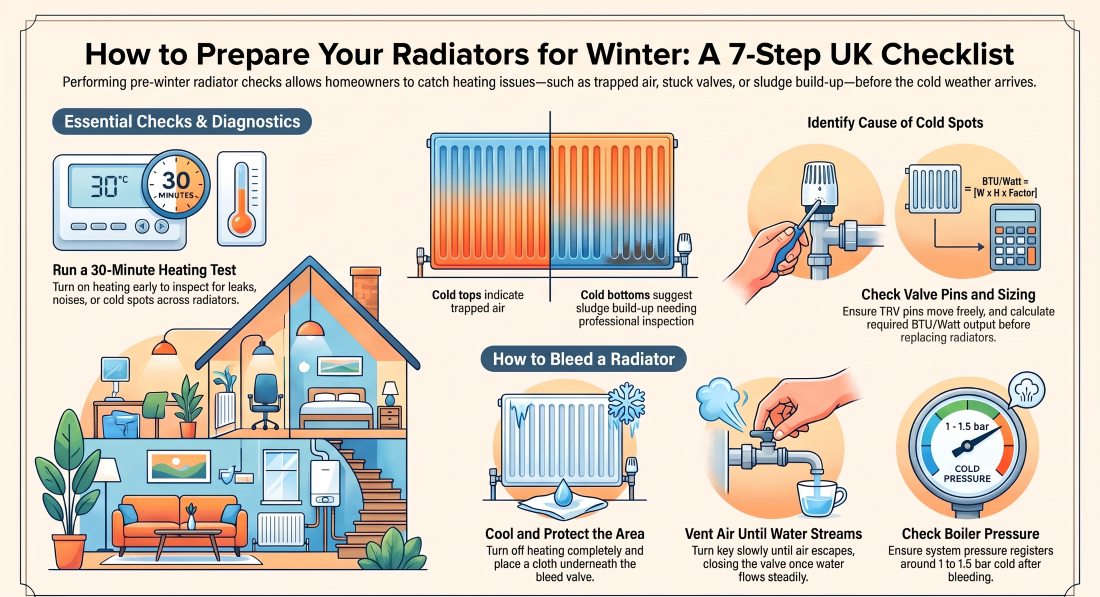
If your home continues to lose heat quickly, consider improvements to insulation and glazing. Our guide on how to prepare your radiators for winter also covers useful checks before the colder months.

Simple ways to keep your house warm for longer and reduce heat loss during winter.

Frequently Asked Questions

Why does my house get cold an hour after the heating goes off?

Your home may be losing heat through poorly insulated walls, lofts, floors or windows. Draughts can also allow warm air to escape and cold air to enter. The speed at which a property cools down depends on its construction, insulation and outside temperature.

There isn't a fixed amount of time. A well-insulated property may retain warmth for several hours, while a draughty or poorly insulated home can become noticeably colder much sooner. Outdoor temperatures and the building's construction also make a difference.

This could be due to inadequate insulation, draughts, cold external walls or radiators that don't provide enough heat for the room. It's worth checking the overall heat loss rather than automatically turning up the thermostat.

Yes. Closing curtains and blinds after dark can help reduce heat loss through windows. Thermal or lined curtains may offer additional insulation, particularly around older windows.

Not necessarily. It depends on your property, heating system and how you use your home. For many conventional central heating systems, using a timer to heat your home when needed is a practical approach. Suitable heating controls can help you manage temperatures around your daily routine.

New radiators can improve comfort if your existing ones are undersized or unsuitable for the rooms. However, they won't prevent heat escaping through poorly insulated walls, windows, or roofs. Addressing heat loss is equally important.

Your home continues to lose heat throughout the night, particularly when outdoor temperatures drop. Poor insulation, draughty windows, and exposed external walls can make this more noticeable. Checking these areas may help your home retain warmth for longer.

It depends on the radiator's construction, water content, mass and operating temperature. Some column radiators store more heat than lightweight panel models, but this doesn't necessarily mean the room will stay warm for significantly longer. The property's insulation and heat loss have a much greater influence on overall comfort.

Keep Your Home Comfortable This Winter

If your house gets cold soon after the heating switches off, it’s worth finding out where the warmth is going before spending money on a new heating system.

Start with the basics: check your insulation, look for draughts, pay attention to your windows, and make sure your radiators provide enough heat for each room.

Small improvements can make a difference, while larger insulation or heating upgrades may be worth considering if your property continues to lose heat quickly.

If you’re planning to replace an existing radiator, explore The Radiator Hub’s collection of designer radiators to find a style and heat output that suits your home.

Leave a Reply

Your email address will not be published. Required fields are marked *