Blog
Best Living Room Radiators for Large Windows: Sizing, Position and Column Options

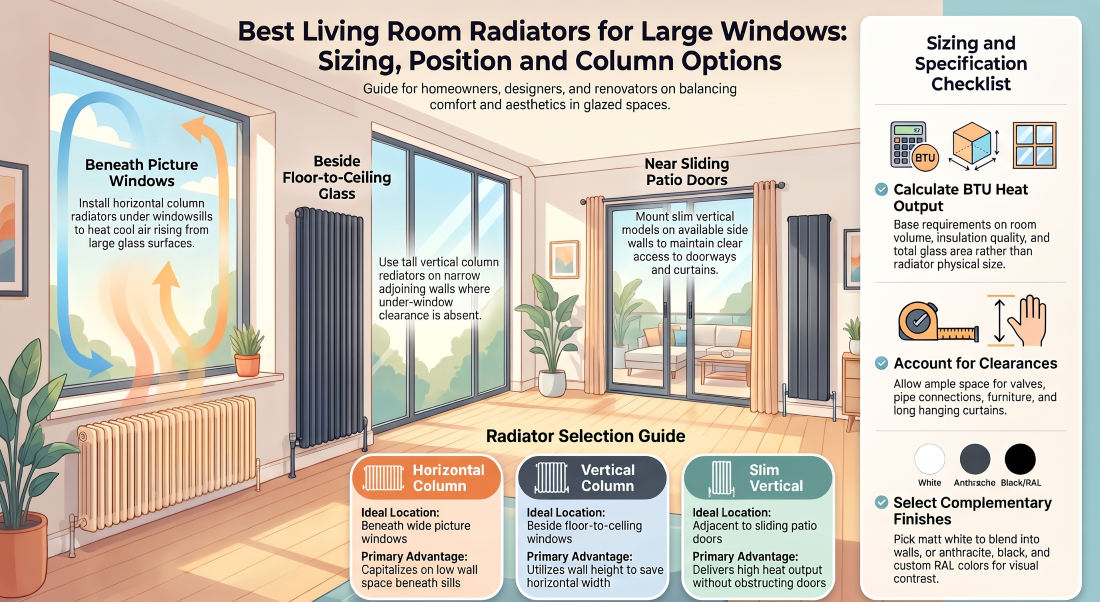
Large windows can transform a living room. They bring in natural light, create a feeling of space, and provide lovely views of the garden. However, they can also make choosing the right radiator a little more challenging.
Perhaps you have floor-to-ceiling windows with very little wall space, wide patio doors that take up most of one side of the room, or a low windowsill that makes fitting a traditional radiator difficult.
Finding the right radiator takes some planning. You need a design that fits the available space, provides enough heat and works with the layout of your living room.
In this guide, we look at the best radiator options for living rooms with large windows, where to position them, and how column radiators can help when conventional radiator locations are not practical.
Why Can Large Windows Make Living Rooms Harder to Heat?
Windows can be a significant source of heat loss, particularly when the glazing or frames are older or poorly insulated.
Even with modern double or triple glazing, a large glazed area can affect a room’s overall heating requirements. You may notice that the space near the windows feels cooler during winter, especially when the heating first comes on.
Large windows can also limit where a radiator can be installed.
For example:
- Floor-to-ceiling windows leave little or no wall space underneath.
- Sliding patio doors need enough clearance to open and close properly.
- Low windowsills can restrict the height of a radiator.
- Long curtains may hang over a radiator and restrict airflow.
- Large sofas and other furniture can limit the remaining installation space.
The answer is not necessarily to buy the biggest radiator available. It is to work out how much heat the room needs and find a suitable position for it.
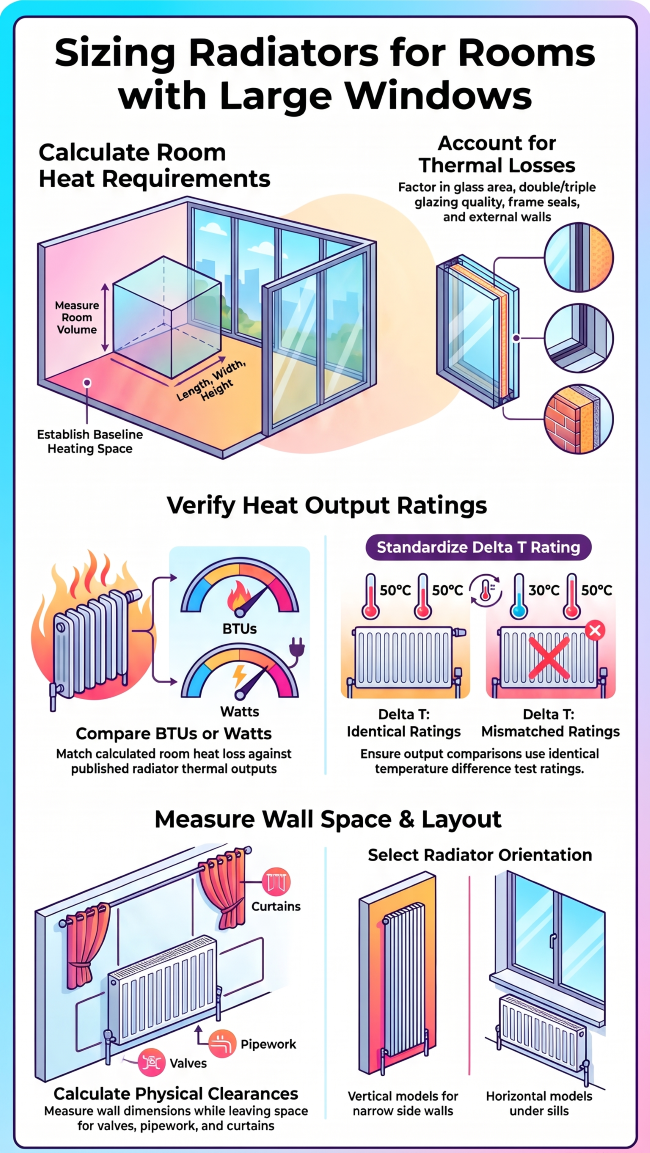
How to Choose the Right Radiator Size for Large Windows
Choosing the correct radiator size is important for keeping a living room with large windows warm and comfortable. The radiator must provide enough heat to suit the room's requirements.
Consider the Room's Heat Requirements
Measure the length, width, and height of your living room. Also consider:
- The size of the windows and patio doors.
- Whether the glazing is single, double,e or triple.
- The number of external walls.
- The quality of insulation.
- Ceiling height and room layout.
Rooms with large windows and poor insulation may require more heating.
Check the BTU or Watt Output
Radiator output is measured in BTUs or watts. Use a BTU calculator to estimate your room's heating needs, then compare the output of suitable radiators.
For a more accurate result, consider a heat-loss calculation, particularly for rooms with extensive glazing.
Always compare radiator outputs using the same Delta T rating.
Measure the Available Wall Space
Measure the height, width,th and depth of the installation area. Remember to allow space for radiator valves, pipe connections, curtains and furniture.
A vertical radiator can suit narrow wall spaces beside windows, while a horizontal model may fit neatly beneath a wide windowsill.
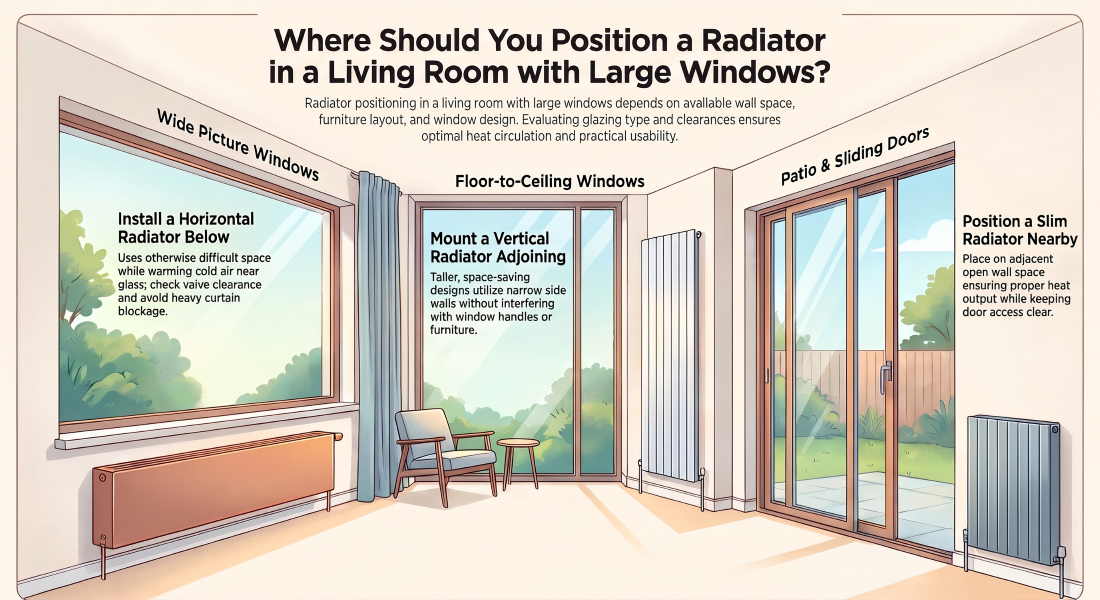
Where Should You Position a Radiator in a Living Room with Large Windows?
There is no single position that works for every living room. The layout of the windows, furniture, pipework, and available wall space will all influence the decision.
Here are three common situations to consider.
Beneath Wide Picture Windows
If your living room has a wide picture window with enough space underneath, a horizontal radiator could be a practical option.
This position makes use of an area that might otherwise be difficult to furnish. It can also help provide warmth near the glazing.
Before choosing a model, measure the distance between the floor and the windowsill. Check that there is enough room for the radiator, valves, and any required installation clearances.
If you have long curtains, consider where they will hang when closed. Curtains covering a radiator can restrict the movement of warm air around the room.
For more advice on radiator placement around windows, see our guide to the best radiators for bay windows.
Beside Floor-to-Ceiling Windows
Floor-to-ceiling windows can look impressive, but they leave very little room for a radiator underneath.
In this situation, a suitable section of adjoining wall may be a better option.
A vertical column radiator can work particularly well where horizontal wall space is limited. Its taller shape allows you to make use of a narrower area without taking up as much width.
Check that the radiator will not interfere with window handles, curtains, blinds,s or nearby furniture.
Near Patio or Sliding Doors
Patio and sliding doors often take up a large part of the living room wall, leaving fewer options for traditional radiator placement.
If there is not enough space underneath or beside the doors, look at the remaining walls.
A slim vertical radiator may be suitable for a narrow section of wall, provided it has enough heat output for the room.
Avoid positioning a radiator where it restricts access to the doors or creates problems with curtains and furniture.
The final position should be based on the room’s heating requirements as well as practical installation considerations.
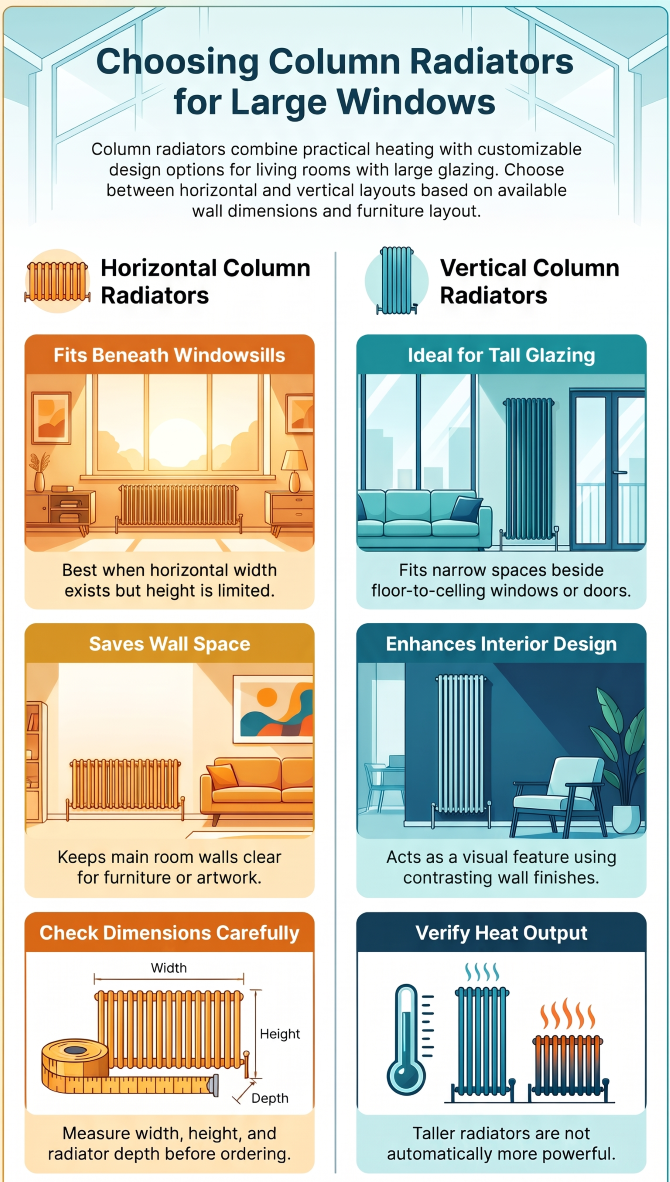
Are Column Radiators a Good Choice for Living Rooms with Large Windows?
Column radiators combine effective heating with a stylish design. Available in different sizes, configurations, and finishes, they can suit living rooms with limited wall space.
Horizontal Column Radiators
Horizontal column radiators are ideal when you have more wall width than height. They can fit neatly beneath suitable windowsills.
Consider them if:
There is enough space beneath the window.
The windowsill limits radiator height.
You want to keep other walls free for furniture.
Check the radiator's width, height, and depth before ordering.
Vertical Column Radiators
Vertical column radiators are a practical option when large windows limit horizontal wall space. Their taller, narrower design works well beside windows and patio doors.
Consider them if:
You have floor-to-ceiling windows.
There is limited space beneath the windowsill.
You have a narrow section of available wall.
Remember to check the BTU output before choosing, as a taller radiator does not automatically provide more heat.
Explore The Radiator Hub's column radiator collection to compare available designs and finishes.
Should You Use More Than One Radiator in a Large Living Room?
Some living rooms have awkward layouts that make heating with a single radiator more difficult.
For example, a long living room may have a large glazed area at one end and a separate seating or dining area further along. Depending on the room's heat-loss requirements, two radiators in suitable positions may provide a more balanced arrangement.
However, adding another radiator is not automatically the answer.
Before deciding, consider:
- The overall size and shape of the room.
- The total heat output required.
- Where the windows and external walls are located.
- Available wall space and existing pipework.
- The cost and complexity of installing another radiator.
If two radiators are chosen, their combined heat output should be suitable for the room. A heating professional can help assess the most appropriate arrangement.
Choosing a Column Radiator Finish for Your Living Room
Once you have worked out the size and position, you can think about the finish.
Large windows often make a living room feel brighter, so your radiator can either blend into the interior or become a feature.
Here are some finishes worth considering:
Matt white: A versatile choice for neutral interiors. It works particularly well if you want the radiator to blend into a light-coloured wall.
Anthracite: A popular darker finish that creates contrast against pale walls and can complement modern furniture.
Black: A bold option for homeowners who want their radiator to stand out.
RAL colours: A good option if you want to coordinate your radiator with a particular wall colour, furniture finish, or interior scheme.
Think about the overall appearance of the room rather than choosing a finish simply because it is currently popular.
Common Mistakes to Avoid When Choosing a Radiator for Large Windows
A few checks before purchasing can help you avoid unnecessary problems.
- Choosing by appearance alone: Always check the radiator's heat output rather than assuming a larger-looking model will provide enough warmth.
- Ignoring curtain clearance: Long curtains can cover part of a radiator and restrict airflow.
- Forgetting window and door access: Make sure the radiator does not interfere with handles, sliding doors or walkways.
- Measuring only the wall width: Allow for radiator valves, pipe connections and installation clearances.
- Overlooking existing pipework: Check pipe centres and connection positions before replacing an existing radiator.
- Assuming all column radiators perform alike: Heat output varies according to the model, dimensions, material and column configuration.
Taking accurate measurements before ordering can save time and help you choose a radiator that suits your living room.
Frequently Asked Questions
What is the best radiator for a living room with large windows?
The best option depends on the room's heat requirements and available wall space. A horizontal column radiator may suit a wide window with enough space underneath, while a vertical column radiator can work well beside floor-to-ceiling glazing.
Should a radiator go underneath a large window?
It can be a suitable position, particularly where the window is a source of heat loss. However, modern glazing gives homeowners more flexibility. Consider the room layout, available space, and heating requirements before deciding.
What radiator works best beside patio doors?
A slim vertical radiator may be suitable if there is a clear section of wall beside the doors. Check its dimensions, heat output, and clearance before purchasing.
Do large windows mean I need a bigger radiator?
Not necessarily. Large windows can increase a room's heat requirements, but the correct radiator size depends on several factors, including glazing performance, insulation, room dimensions and external walls. A heat-loss calculation is a good way to establish the required output.
Are column radiators suitable for large living rooms?
Yes, provided the selected radiator has sufficient heat output. Larger living rooms may need a larger model or more than one radiator, depending on the room's layout and heat-loss requirements.
Can I put a radiator near floor-to-ceiling windows?
Yes, if there is a suitable installation position and the radiator does not obstruct access, curtains or window fittings. An adjoining wall may be a practical alternative when there is no space beneath the glazing.
How do I know whether one or two radiators are better?
It depends on the room's size, shape, heat output requirement and layout. Two smaller radiators may be useful in a long or awkwardly shaped living room, while one correctly sized radiator may be enough for a more compact space.
Find the Right Living Room Radiator for Your Home
Large windows can make a living room feel open and inviting, but they are worth considering carefully when planning your heating.
The right radiator should fit the available space, provide enough heat and work with the way you use the room.
A horizontal column radiator can make good use of the space beneath a suitable window, while a vertical design offers another option when floor-to-ceiling glazing or patio doors limit your choices.
Before ordering, measure the installation area, check the pipe connections, and compare the heat output of suitable models.
Explore The Radiator Hub's column radiator collection to find a design that complements your living room.