Blog
Moving a Radiator to Another Wall: Pipework, Positioning and What to Consider

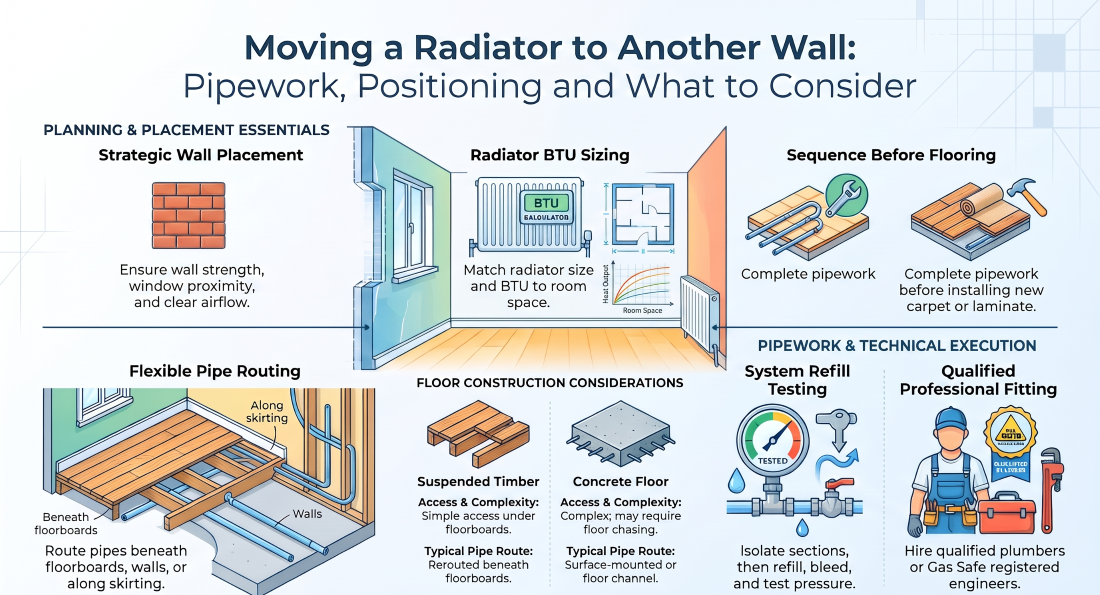
Yes, you can usually move a radiator to another wall, but you’ll often need to extend or reroute the existing pipework. The amount of work depends on how far you move the radiator, the type of flooring, and how easily you can access the pipes.
Moving a radiator can make a surprising difference to the way a room looks and feels. Perhaps you’re making space for a new sofa, fitting wardrobes, changing the layout or simply finding that your existing radiator is in the wrong place.
Whatever the reason, it’s worth planning the move before work begins. The new position needs to suit the room, the pipework has to reach it, and the radiator still needs to provide enough heat.
Here’s what to consider before moving a radiator to another wall, including pipework options, flooring, and installation.
Can You Move a Radiator to Another Wall?
In most homes, yes. A radiator doesn’t have to stay in its original position, provided there is a suitable place to install it and the heating pipes can be connected.
The amount of work involved depends largely on how far you want to move it. Shifting a radiator a short distance along the same wall may only require minor pipework adjustments. Moving it to the opposite wall or another room is usually more involved because the flow and return pipes need a new route.
It’s also worth checking whether the new wall can support the radiator securely, particularly if you’re choosing a larger or heavier model.
For a central-heating radiator, use a qualified plumber or heating professional to assess the pipework and ensure the system works properly afterwards. If the work involves gas appliances or gas pipework, it must be carried out by a Gas Safe registered engineer.

1. Where Should You Put the Radiator?
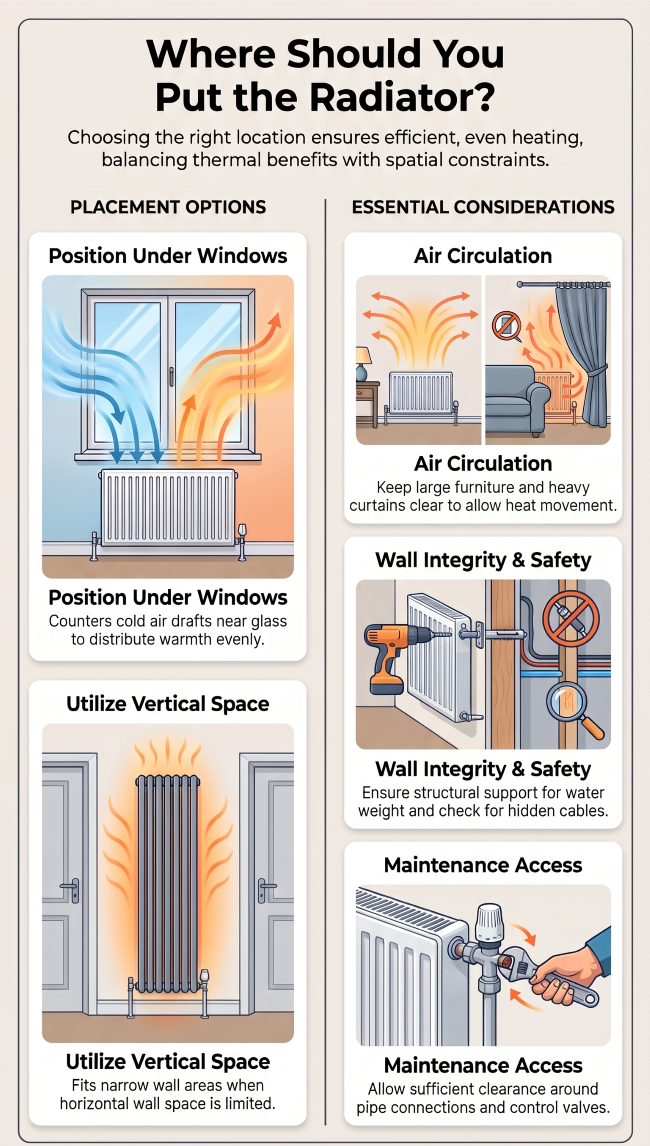
The first decision is where the radiator will work best. Moving it simply to free up wall space might seem straightforward, but its new position can affect how evenly the room heats.
Radiators are often fitted beneath windows because they help counter cooler air around the glass. However, this isn't a fixed rule. The best position will depend on the room, its insulation and the available wall space.
Before choosing a new location, consider:
- Available wall space: Allow enough room for the radiator, valves, and pipe connections.
- Furniture and curtains: Avoid placing large furniture directly in front of the radiator, as this can restrict heat circulation.
- Windows and external walls: These areas can experience greater heat loss, so think about how the radiator will warm the room.
- Access to the valves: You should be able to reach the valves for adjustment and maintenance.
- Wall strength: A radiator becomes heavier when filled with water. Make sure the wall and fixings are suitable for its weight.
- Hidden pipes and cables: Check the wall before drilling or fixing new brackets.
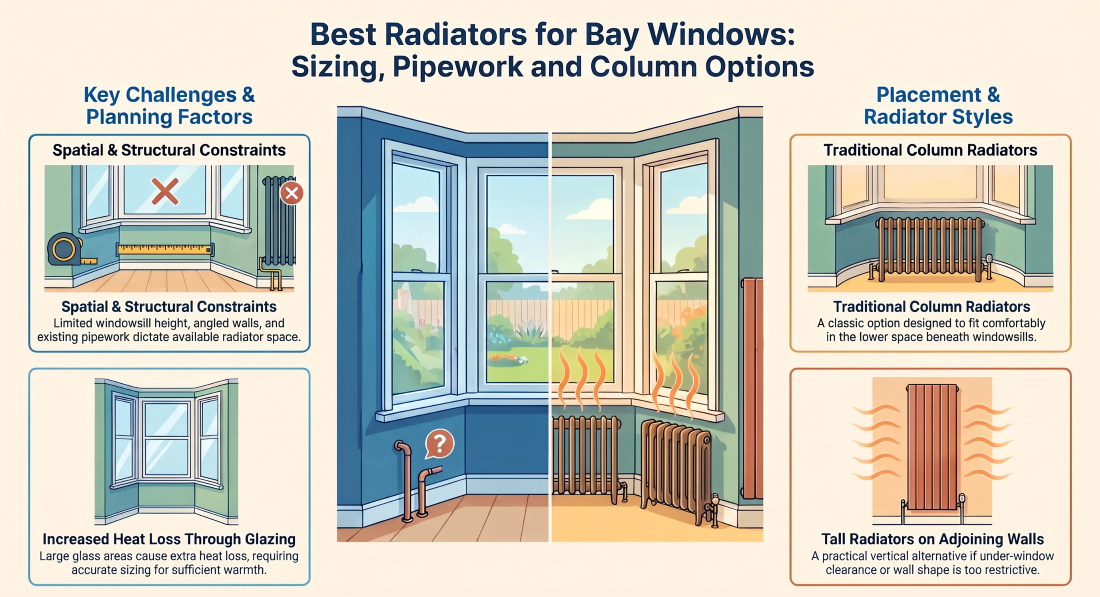
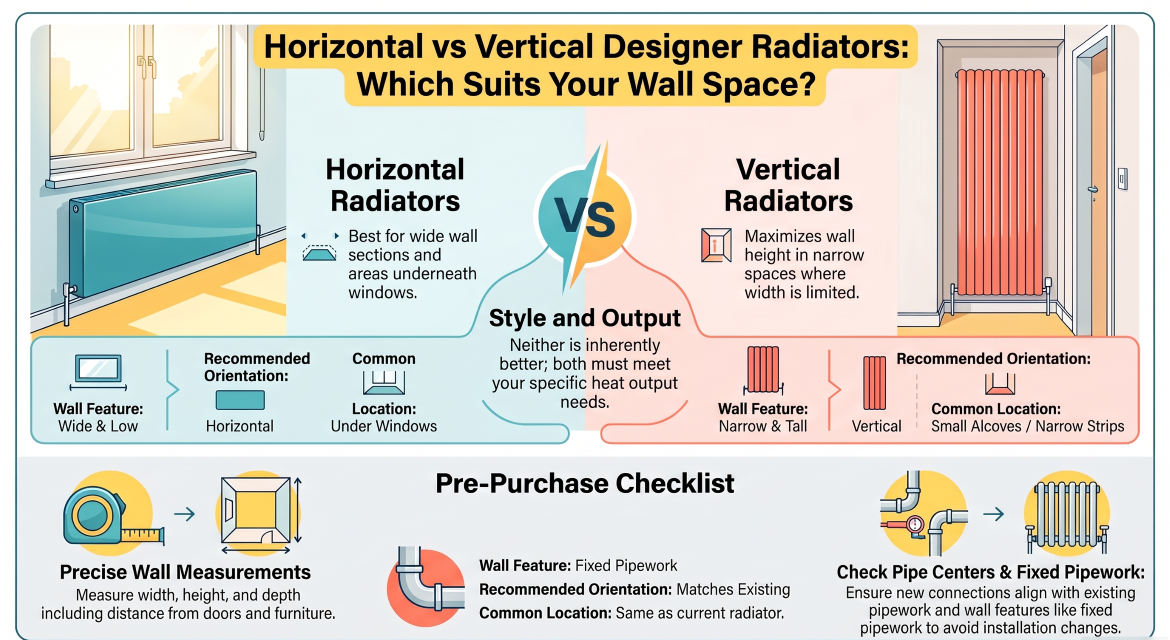
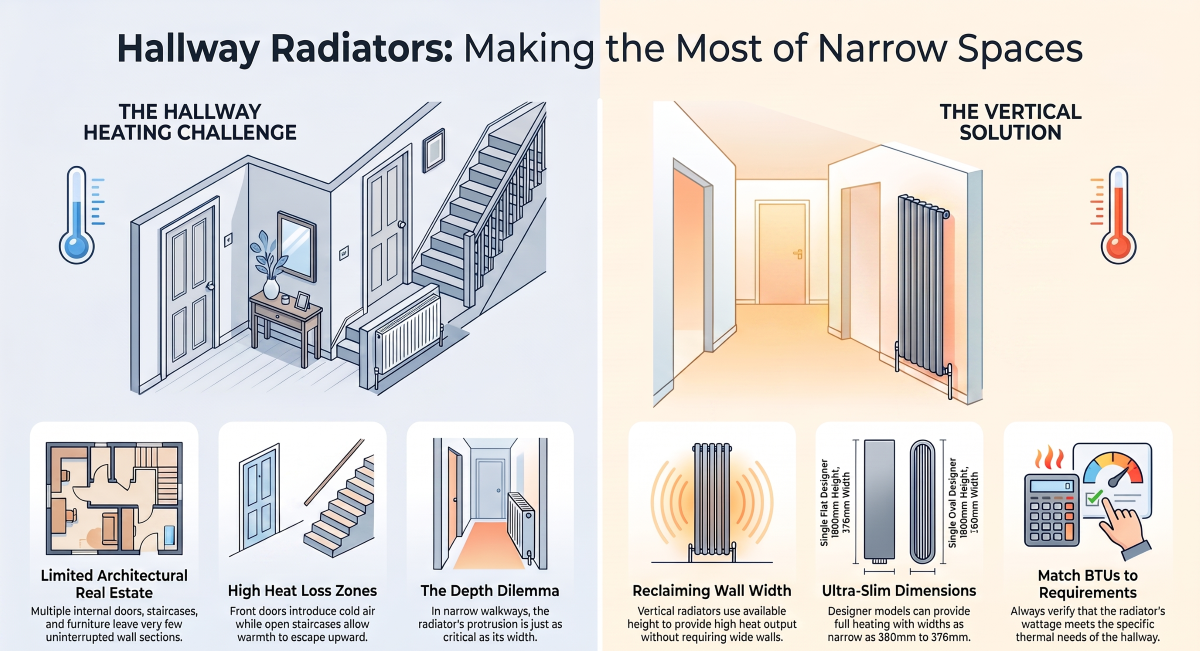
If you're moving a radiator because you don't have enough horizontal wall space, a vertical design could be worth considering. Browse our vertical column radiators for options that make use of narrower wall areas.
You may also find our guide to vertical vs horizontal radiators helpful when deciding which style will suit your room.
g elit. Ut elit tellus, luctus nec ullamcorper mattis, pulvinar dapibus leo.
2. Will You Need to Move the Radiator Pipes?
In most cases, moving a radiator to another wall means making some changes to the pipework. The existing connections may not reach the new position, so the plumber will need to extend, redirect or replace sections of pipe.
The best route depends on the layout of your home and how accessible the existing pipes are.
Common options include:
- Under the floorboards: Pipes can often be rerouted beneath suspended timber floors, provided there is suitable access.
- Through a wall: Pipework may be concealed within a suitable wall route, subject to the wall construction and safe installation requirements.
- Along the wall or skirting: Surface-mounted pipes can be a practical alternative where lifting floors or chasing walls isn’t suitable. You can give exposed pipework a neater finish with our radiator pipe sleeves.
- Using an existing service route: An existing route may be suitable, provided it has enough space and can be used safely.
Does Your Floor Type Make a Difference?
Yes. The type of flooring in your home can have a big effect on how easily a plumber can move radiator pipes.
Consideration | Suspended timber floor | Concrete floor |
Pipe access | Often accessible beneath floorboards | Usually more difficult if pipes are buried |
Common pipe route | Beneath the floorboards | Surface-mounted or through a suitable channel |
Extra work | Lifting and refitting floorboards | May involve chasing the floor or additional building work |
General complexity | Often simpler, depending on access | Can be more involved |
If you have suspended timber flooring, the plumber may be able to lift a few floorboards and run the new pipes underneath. The amount of disruption will depend on access and the existing pipe layout.
If you have a concrete floor, the job can be more complicated. Depending on the property, the pipes may need to run along the surface, be concealed using a suitable route or be installed in a channel cut into the floor. Cutting into concrete can involve additional labour and repairs afterwards.
It’s best to ask the plumber to inspect the floor and pipework before agreeing to a route.
One thing worth discussing is where any new pipe joints will be positioned. Avoid leaving joints hidden in inaccessible places wherever possible, as they can be difficult to inspect or repair if a leak develops.
3. Should You Move the Radiator Before Replacing the Flooring?
If you’re planning to move a radiator and replace the flooring, try to arrange the pipework first.
For example, if the pipes need to run beneath floorboards, sections of the floor may need to be lifted. Having new laminate, vinyl or carpet fitted beforehand could mean paying to lift and refit it.
The same applies to concrete floors. If a channel needs to be created for the pipes, agree on the route before the new flooring is installed.
Planning both jobs together can save unnecessary disruption and help avoid repeating work.

4. Should You Replace the Radiator at the Same Time?
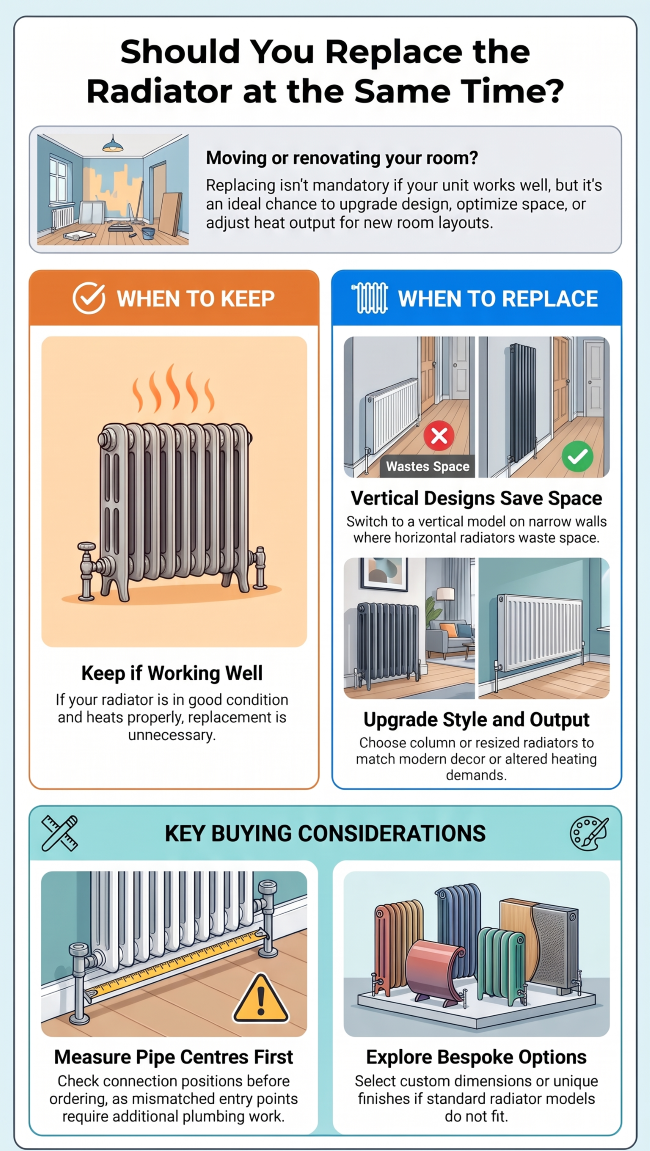
Not necessarily. If your existing radiator is in good condition and still heats the room properly, there may be no reason to replace it.
However, moving it can be a convenient opportunity to choose a different size or style, particularly if the room is being renovated.
For example:
- A vertical radiator may suit a narrow wall where a horizontal model would take up too much space.
- A column radiator can add character to a traditional or contemporary interior.
- A larger or smaller radiator may be more suitable if the room layout or heating requirements have changed.
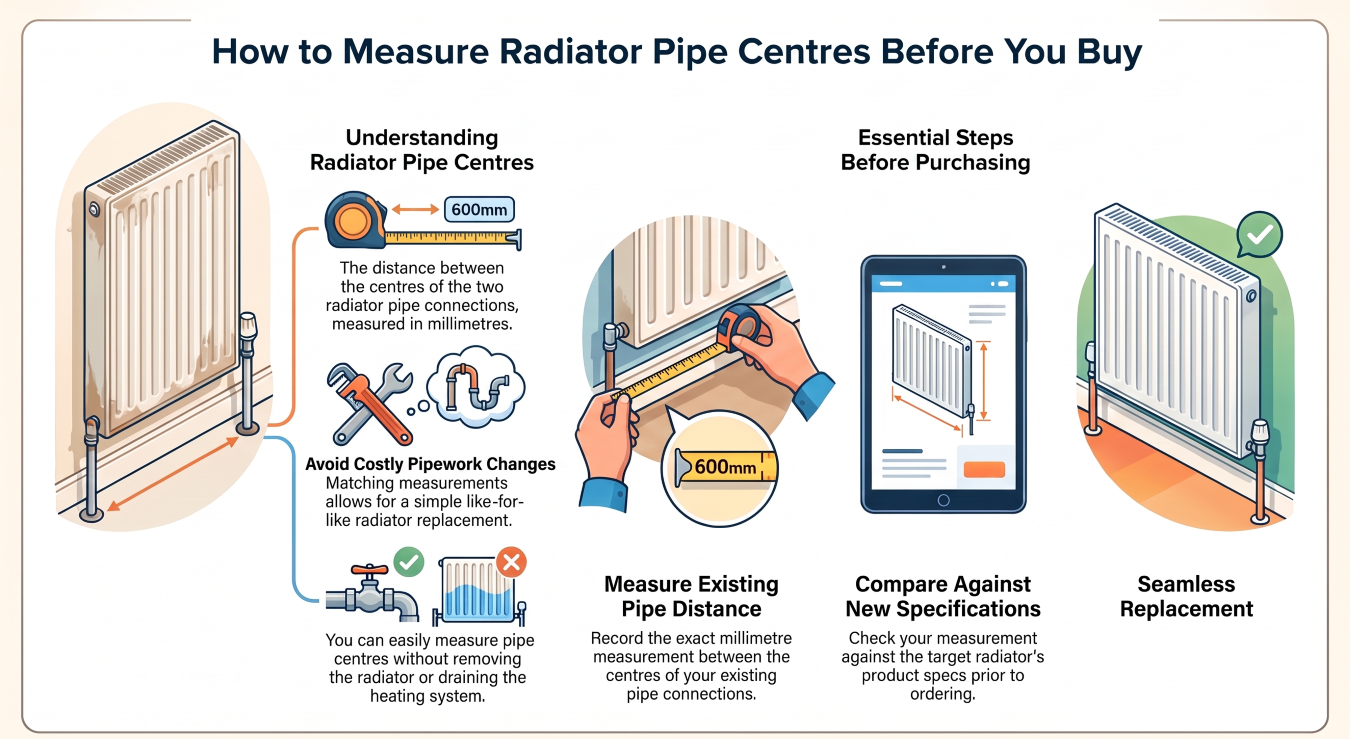
If you're choosing a replacement, check the new radiator's pipe centres before ordering. Different models can have different connection positions, which may mean further pipework adjustments.
Our guide on how to measure radiator pipe centres explains what to measure before buying.
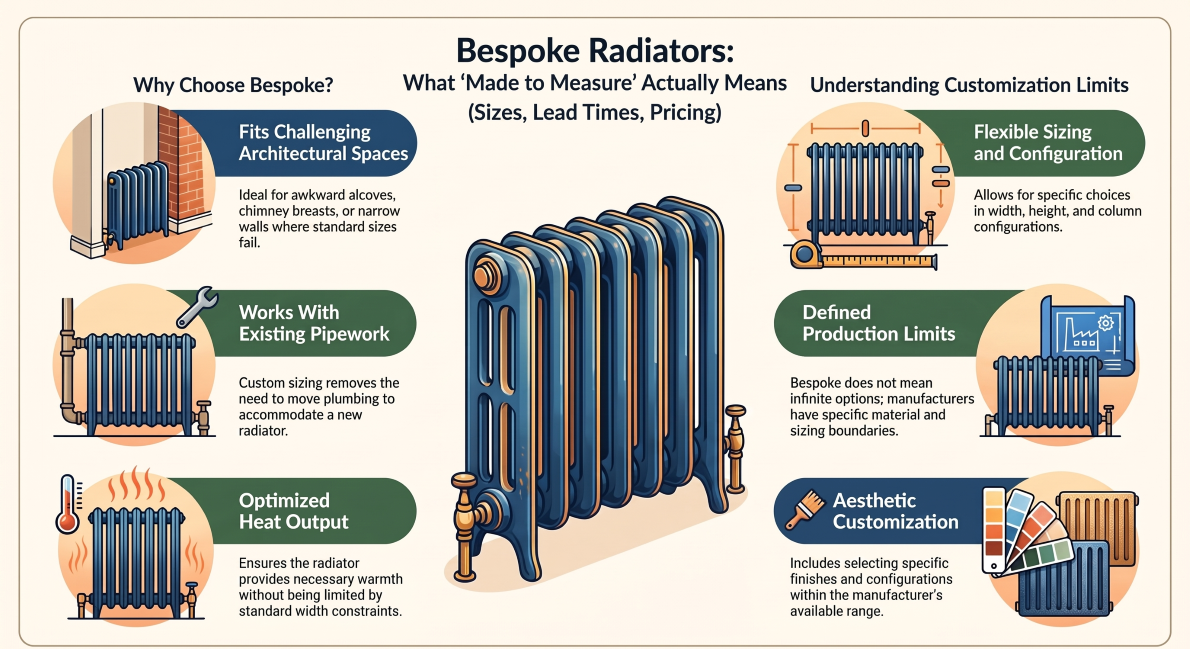
If you're looking for more size and colour options, explore made-to-order 2 column radiators, available in a range of configurations to suit different spaces.
5. Will the New Position Affect the Radiator’s Heat Output?
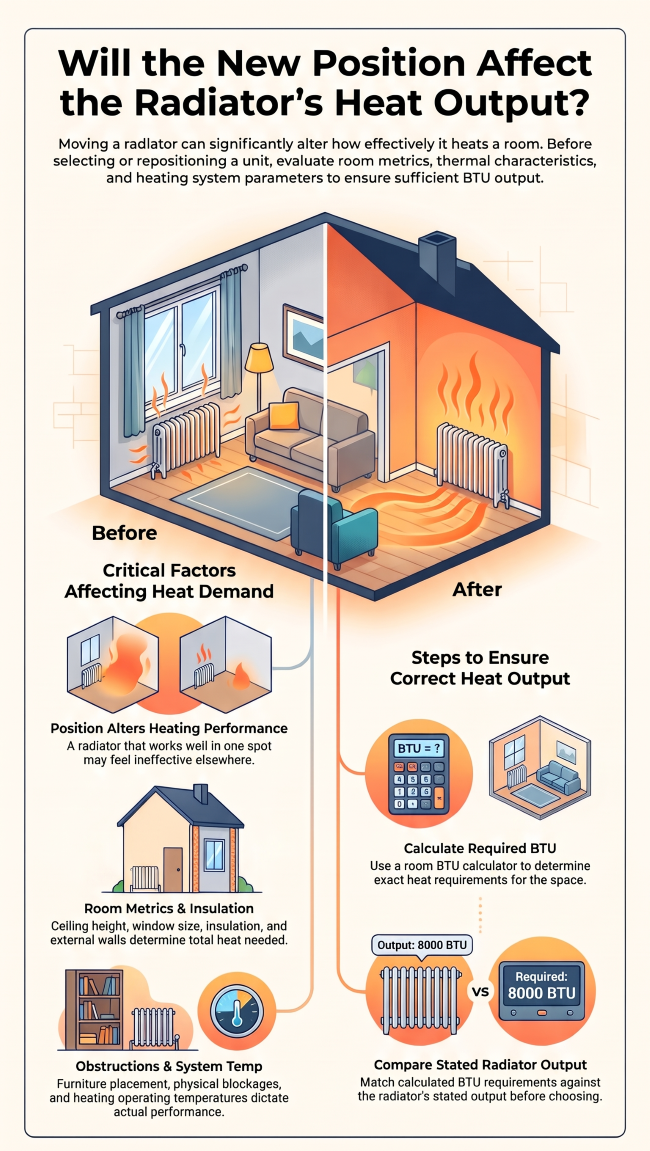
It can affect how the room feels, so don’t overlook this when planning the move.
A radiator that heated the room comfortably in its original position may not perform in quite the same way once it has been moved. The amount of heat the room needs depends on factors such as its size, insulation, windows and external walls.
Before choosing a new radiator, consider:
- The room’s length, width and ceiling height.
- The number and size of windows.
- How well the room is insulated.
- Whether it has one or more external walls.
- The position of furniture and other obstructions.
- The operating temperature of your heating system.
You can use our BTU calculator to estimate the heat output required for the room. Compare the result with the radiator’s stated output before making your choice.
If you’re not sure which size or style would be suitable, our guide to choosing the right radiator for your room is a useful place to start.

6. What Happens to the Old Radiator Pipe Connections?
Once the radiator has been moved, the original pipe connections may no longer be needed.
Depending on the existing installation, the plumber may remove the redundant pipework back to a suitable point or cap it using appropriate fittings. The important thing is that any unused connections are sealed properly and won’t create a leak risk.
It’s worth asking where the old pipes will be left. If they’re capped and hidden behind a wall or beneath the floor, make sure the arrangement is suitable and that any joints that may need future attention remain accessible.

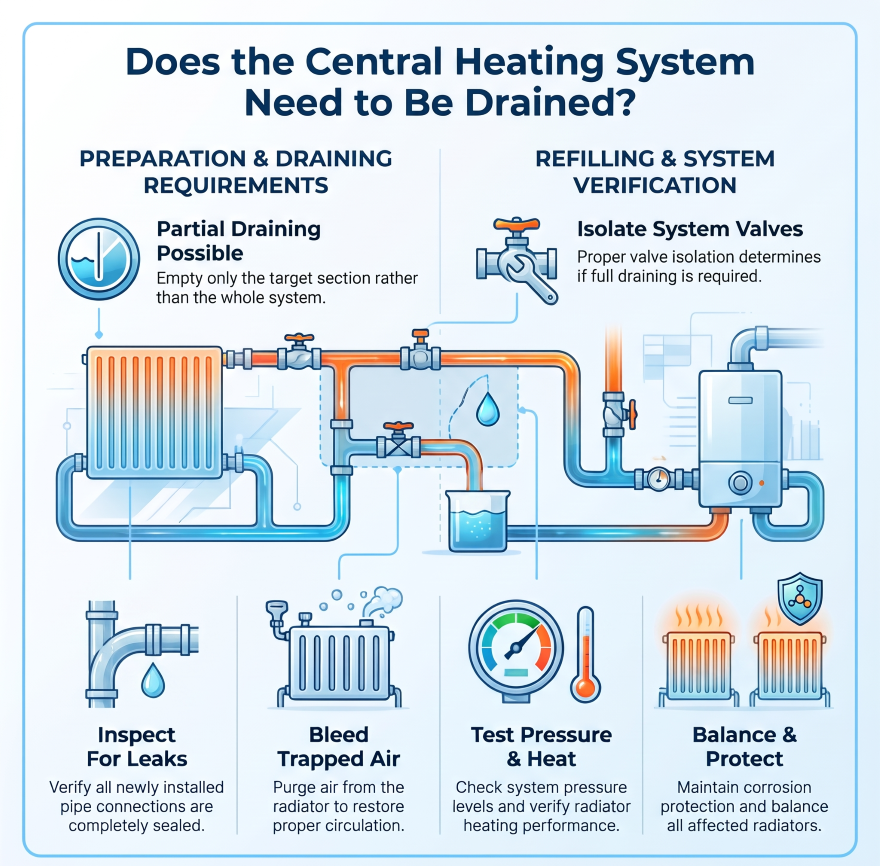
7. Does the Central Heating System Need to Be Drained?
The radiator and the relevant section of pipework will need to be isolated and emptied before the connections can be altered.
That doesn’t necessarily mean draining the whole central heating system. Depending on the system and whether the radiator valves can be isolated properly, the plumber may be able to drain only the relevant section.
Once the new pipework is connected, the installer should refill the system and check that everything is working as it should.
This usually includes:
- Checking all new connections for leaks.
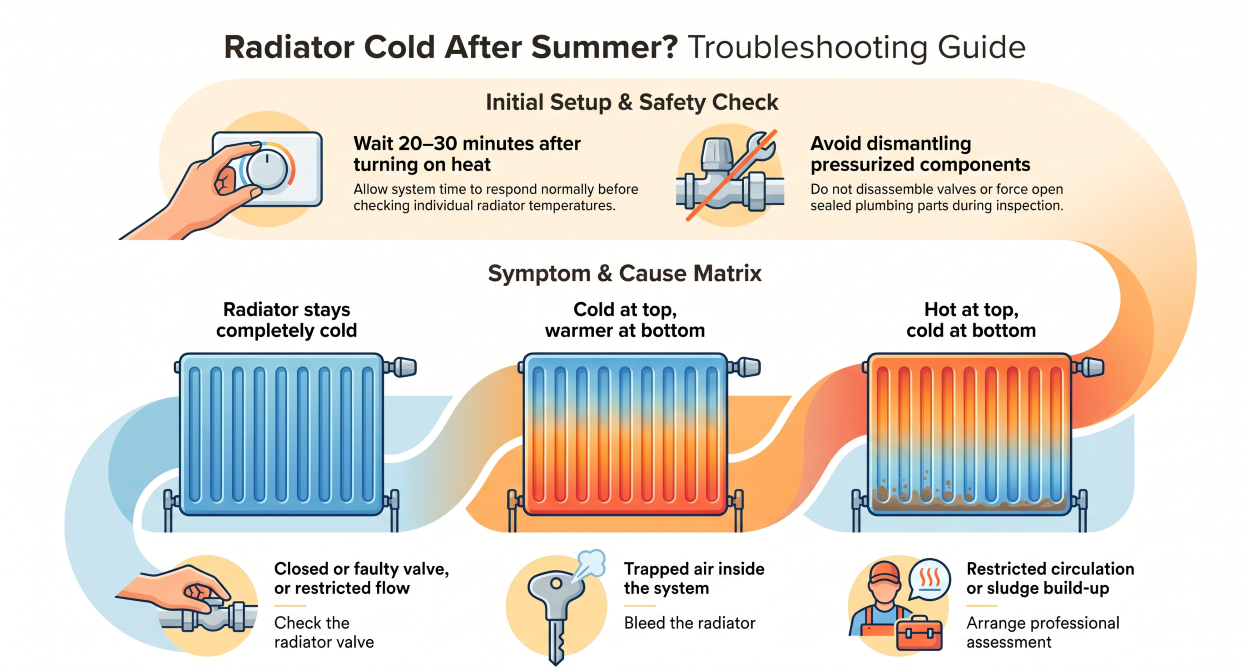
- Removing trapped air by bleeding the radiator.
- Checking the system pressure.
- Testing that the radiator heats correctly.
- Checking that suitable corrosion protection is maintained.
If other radiators are affected by the changes, the heating system may also need checking or balancing.
Planning Checklist: Before You Move a Radiator
A little preparation can make the job much easier. Before arranging the work, make sure you’ve considered:
- Where the radiator will be positioned.
- Whether the wall can support the radiator securely.
- How the existing pipes will reach the new position.
- Whether floorboards need lifting or a concrete floor needs altering.
- Whether you’ll keep the existing radiator or choose a replacement.
- Whether the new radiator has the right heat output.
- Whether new valves, brackets or fittings are needed.
- Whether flooring or decorating work should be completed afterwards.
- What is included in the plumber’s quote.
Frequently Asked Questions
Can moving a radiator affect other radiators in the house?
It can, particularly if changes to the pipework affect water flow around the heating system. Once the work is complete, the system should be checked to ensure all radiators are heating properly.
Can a radiator be installed on an internal wall instead of an external wall?
Yes. A radiator can be installed on an internal wall if there is enough space and the wall can support its weight. Its position should also allow heat to circulate freely around the room.
Will moving a radiator leave marks or damage on the original wall?
It can. Removing the old radiator brackets and pipe connections may leave holes, marks or damaged plaster. These areas may need filling, plastering and repainting once the radiator has been moved.
Can I move a radiator if there is fitted furniture in the room?
Yes, but fitted wardrobes, cupboards, and built-in furniture can limit your options. Make sure the new radiator position doesn't obstruct cupboard doors, restrict access, or prevent heat from circulating properly.
Does moving a radiator require building work?
Not always. Some radiator moves only require minor plumbing adjustments, while others may involve lifting floorboards, chasing walls or repairing plasterwork. It depends on the distance and the new pipework route.
Is it worth moving a radiator during a room renovation?
Yes. If you're already changing the room layout, replacing furniture or redecorating, it can be a convenient time to move a radiator. Planning the work together can help avoid disturbing newly finished walls and flooring.
Can a radiator be moved closer to a window?
Yes. A radiator can be positioned beneath a window if there is enough space for the radiator, valves and pipe connections. However, check the available wall space and make sure curtains or window fittings won't obstruct it.
Will I need new radiator brackets when moving it?
Possibly. Existing brackets may not match the fixing points or dimensions of the new position, particularly if you're changing the radiator model. Check the manufacturer's fixing requirements and use suitable brackets for the radiator and wall type.
Final Thoughts
Moving a radiator to another wall can be a worthwhile change if your current layout isn’t working for you. It can free up space, make furniture easier to arrange, and give you the chance to update the look of the room.
The main thing is to plan the pipework before deciding on the final position. Floor construction, access, radiator size and heat output can all affect the work involved.
If you’re thinking of replacing your radiator as part of the project, take a look at The Radiator Hub’s range of column radiators and vertical radiators. You can also use our BTU calculator to help work out the heat output your room needs.
If you need help choosing a suitable radiator, contact The Radiator Hub and our team will be happy to help.