Blog
Why Is My Radiator Making Noise? Common Causes Explained

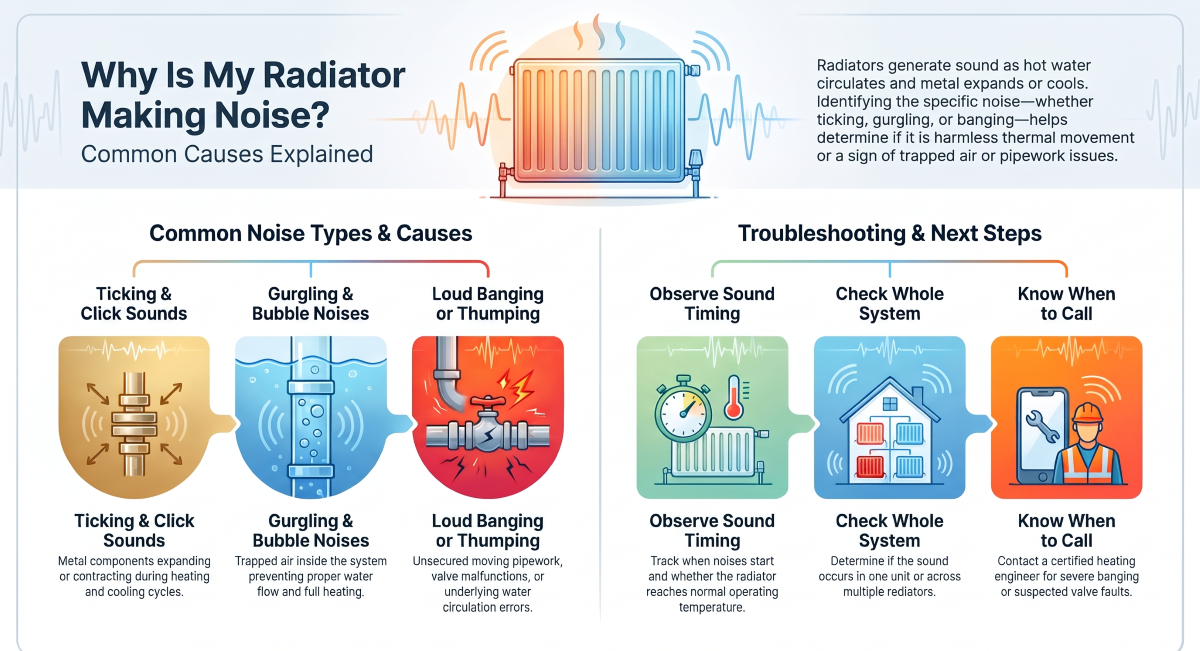
Have you ever switched on your heating, settled down for the evening, and suddenly noticed your radiator making strange noises? It might start ticking as it warms up, gurgling while the heating is running, or making a loud bang that seems to come from nowhere.
Some radiator noises are perfectly normal, while others can indicate a problem with your heating system. Understanding the difference can help you decide whether the sound is harmless or needs further investigation.
The type of noise, when it occurs, and whether it affects one radiator or several can all provide useful clues. In this guide, we explain the common causes of banging, gurgling, ticking, and whistling radiators, along with practical checks you can carry out and advice on when to call a heating engineer.
Why Is My Radiator Making Noise?
Radiators rely on hot water circulating through the heating system to warm your home. As the system heats up and cools down, changes in temperature and water flow can sometimes produce noticeable sounds.
Light ticking may be caused by metal components expanding as they warm up. Gurgling can indicate trapped air, while repeated banging may be related to moving pipework, a valve problem, or an issue with water circulation.
Before attempting any checks, pay attention to when the noise starts, how long it lasts, and whether the radiator heats up normally. These details can help you narrow down the possible cause.
Why Is My Radiator Making a Banging or Knocking Noise?
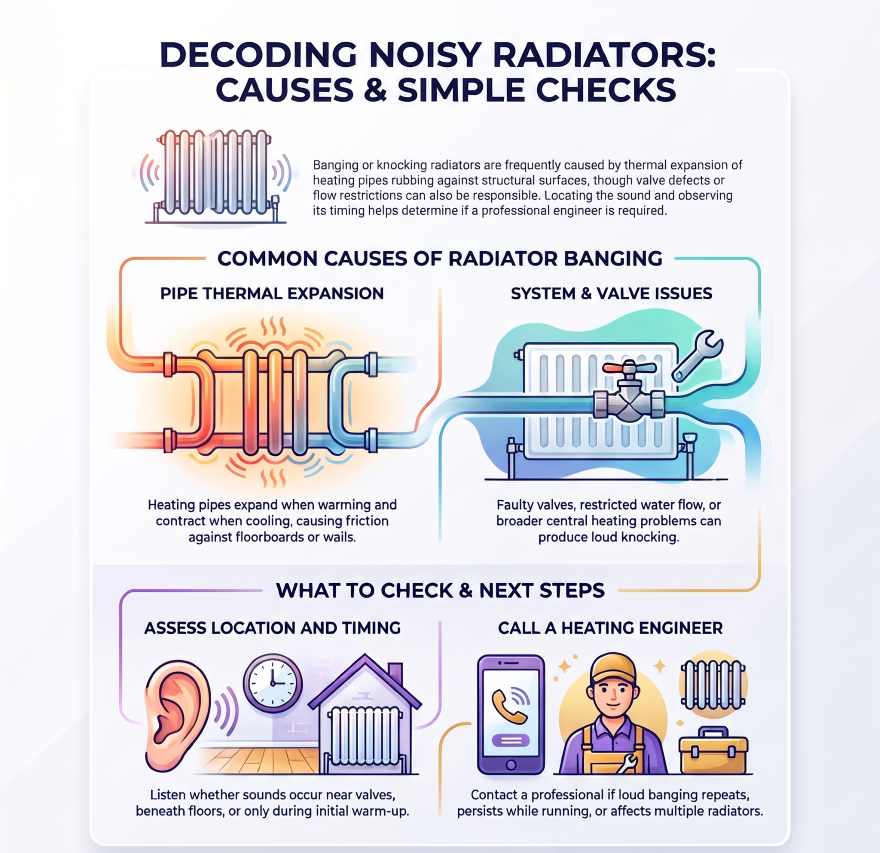
A radiator that bangs or knocks can be particularly annoying, especially when the sound travels through the walls or floor.
One possible cause is the movement of heating pipes as they warm up. Pipes expand when hot water passes through them and contract as they cool. If a pipe touches a floorboard, wall, or bracket, this movement can produce a knocking sound.
Other possible causes include a faulty valve, restricted water flow, or a problem elsewhere in the central heating system.
If you need to replace your radiator valves, explore our range of radiator valves to find options for your heating setup.
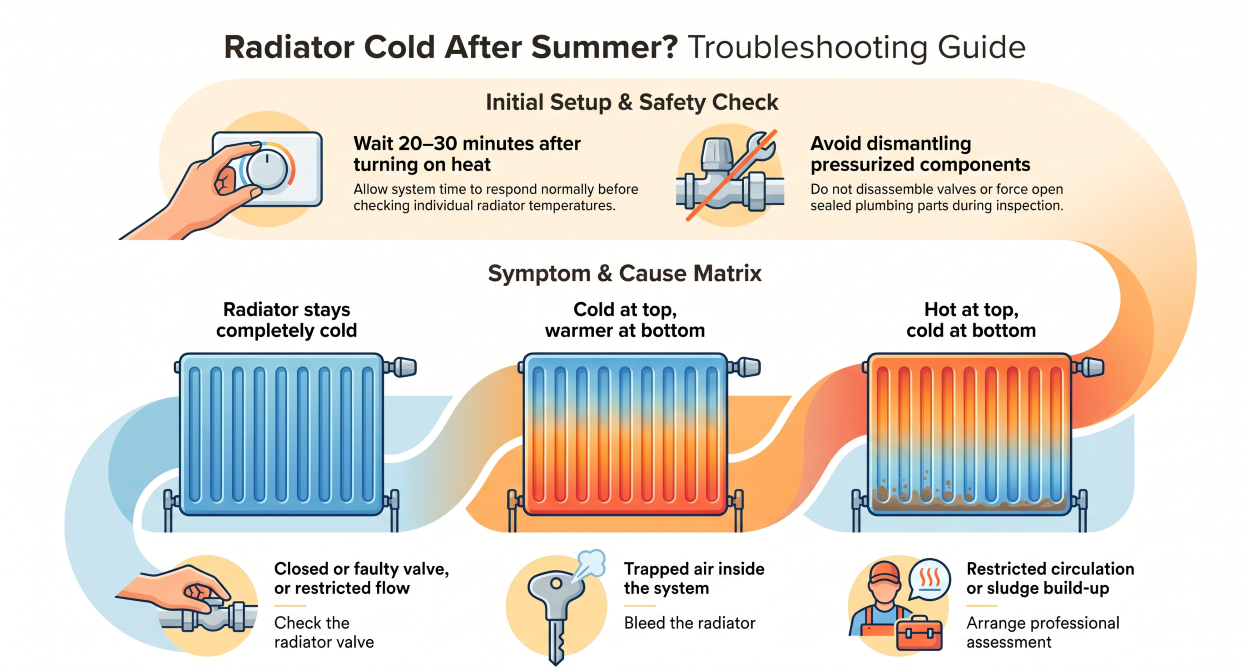
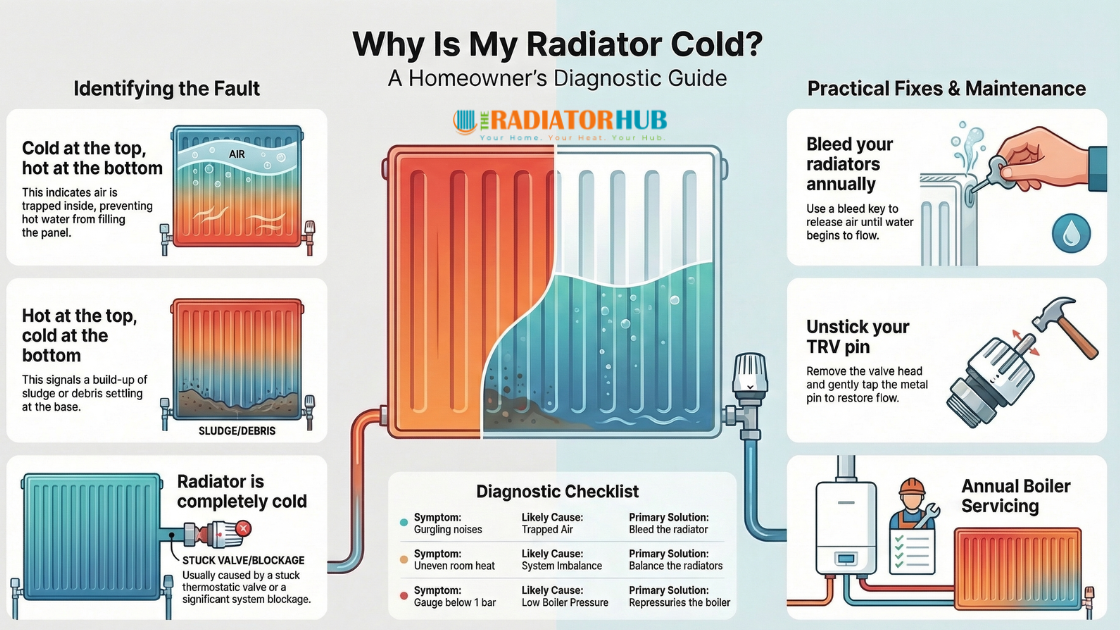
If your radiator is also struggling to heat up properly, read our guide to radiator troubleshooting for more information about common heating problems and their possible causes.
What Can You Check?
Start by listening carefully to identify where the noise seems to come from. Is it coming directly from the radiator, near one of the valves, or from beneath the floor?
Notice whether the banging happens only when the heating starts or continues while the system is running. Occasional knocking as pipes warm up may be caused by thermal expansion, but repeated loud banging should not automatically be dismissed as normal.
If the noise continues, becomes louder or affects several radiators, contact a qualified heating engineer. They can inspect the pipework, valves, and water circulation to establish the cause.
Why Is My Radiator Making a Gurgling Noise?
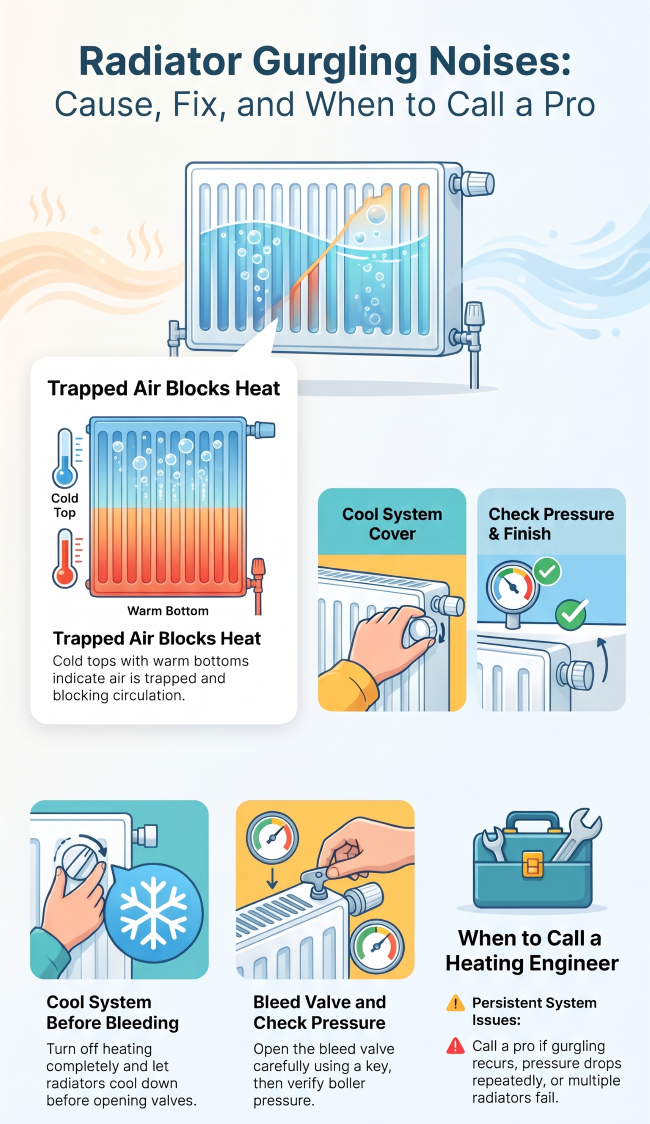
Gurgling often sounds like bubbling water moving around inside the radiator. One possible explanation is trapped air, which can interfere with normal water circulation.
You may also notice that the radiator does not heat evenly.
Could Your Radiator Need Bleeding?
If the top of the radiator is cold while the lower section becomes warm, trapped air could be responsible. Bleeding the radiator may help release the air and restore more even heating.
However, gurgling does not always mean that air is trapped inside the radiator. Water-flow problems and other heating system issues can produce similar symptoms.
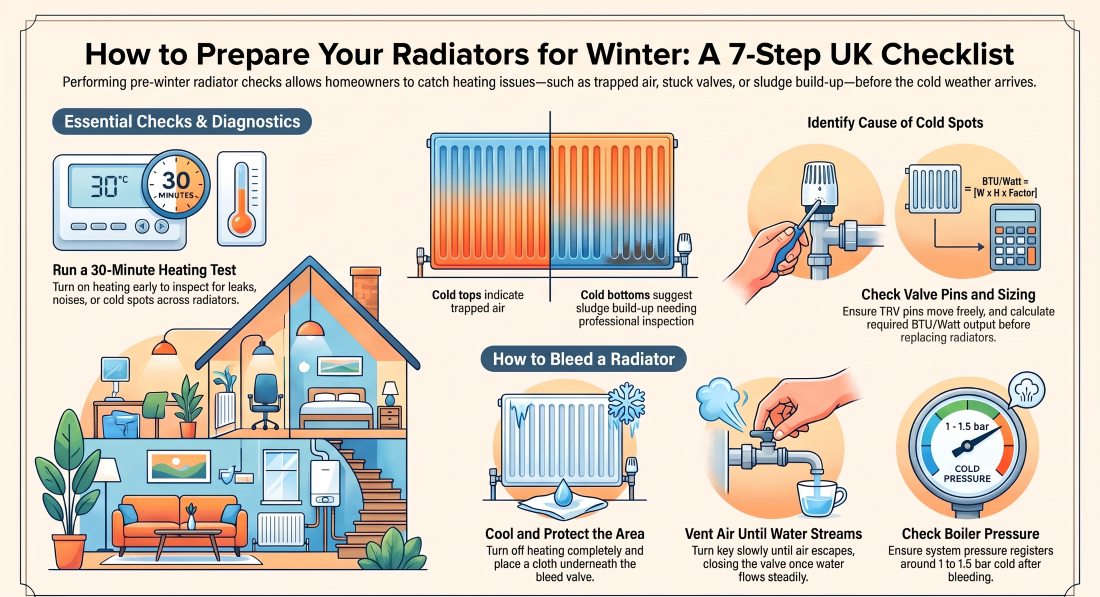
If you decide to bleed the radiator, switch off the heating and allow the radiator to cool before following the manufacturer’s instructions. Use the appropriate radiator key and open the bleed valve carefully. Check the boiler pressure afterwards if your system requires it, following the boiler manufacturer’s guidance.
If the gurgling keeps returning, the system repeatedly loses pressure, or several radiators develop the same problem, arrange for a heating engineer to investigate rather than repeatedly bleeding the radiators.
If you suspect trapped air is causing the noise, follow our step-by-step guide on how to bleed a radiator to learn how to release the air safely and improve heating performance.
Why Does My Radiator Make Ticking or Clicking Sounds?
A ticking or clicking radiator is often less concerning than one that repeatedly bangs.
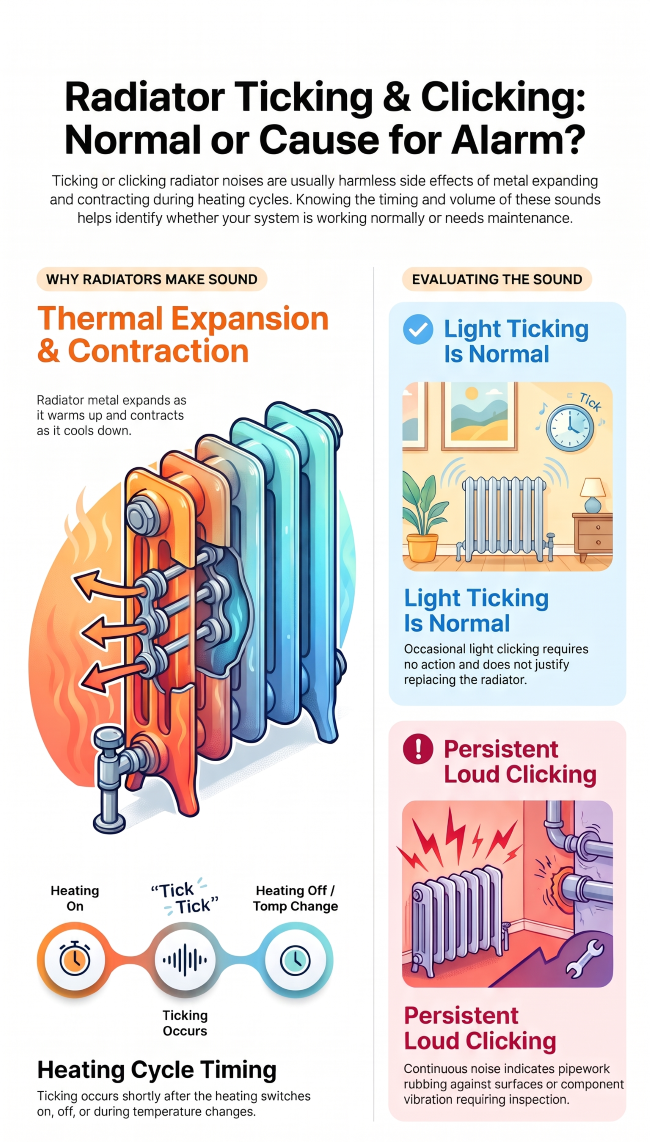
Radiators and their pipes change temperature throughout the heating cycle. As the metal warms up, it expands. When the heating switches off and the system cools, the metal contracts. This movement can produce small ticking or clicking sounds.
You may notice these noises:
- Shortly after the heating switches on.
- As the radiator begins to warm up.
- When the heating switches off.
- As the radiator and pipework cool down.
In many cases, occasional light ticking during these temperature changes is perfectly normal.
What If the Clicking Continues?
Louder or persistent clicking may indicate that pipes are rubbing against nearby surfaces or that a component is vibrating.
Try to identify whether the sound comes from the radiator itself or the surrounding pipework. If it continues throughout the heating cycle or is accompanied by other unusual symptoms, arrange a professional inspection.
There is generally no reason to replace a radiator simply because it makes occasional clicking noises as it heats up.
Why Is My Radiator Whistling or Hissing?
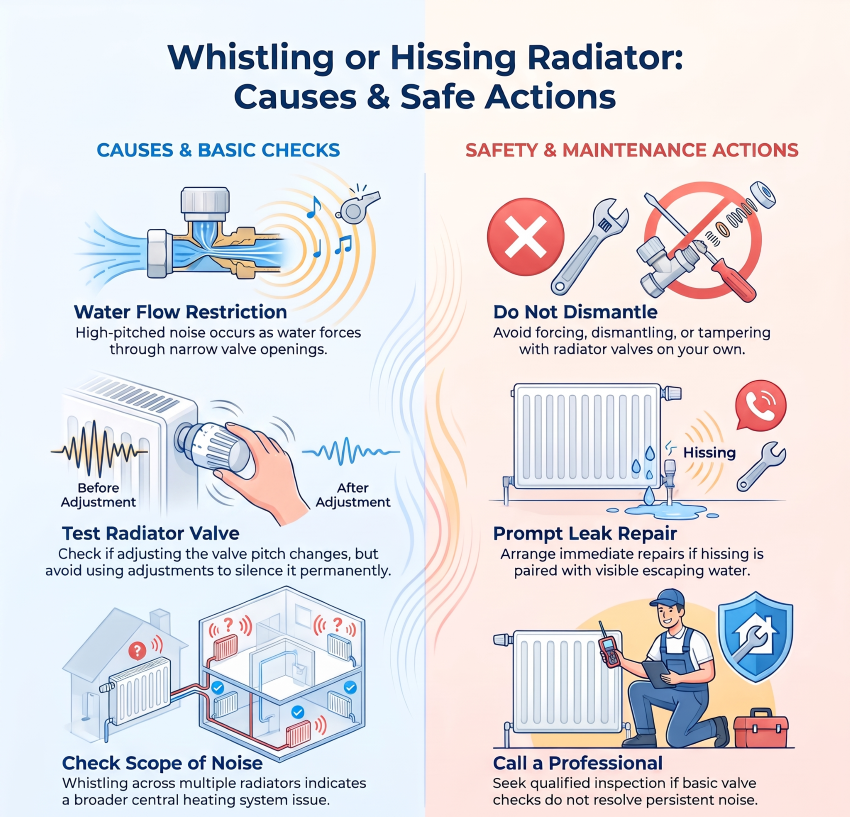
A whistling radiator can produce a high-pitched sound that becomes particularly noticeable when the room is quiet.
Possible causes include water passing through a valve, a restriction affecting water flow or a problem with the way the heating system is operating.
If the sound changes when you adjust the radiator valve, the valve or water-flow conditions may need checking. Avoid repeatedly changing the setting simply to silence the noise, as this may not address the underlying cause.
Check whether the sound affects one radiator or several. If multiple radiators are whistling, the problem may involve the wider heating system.
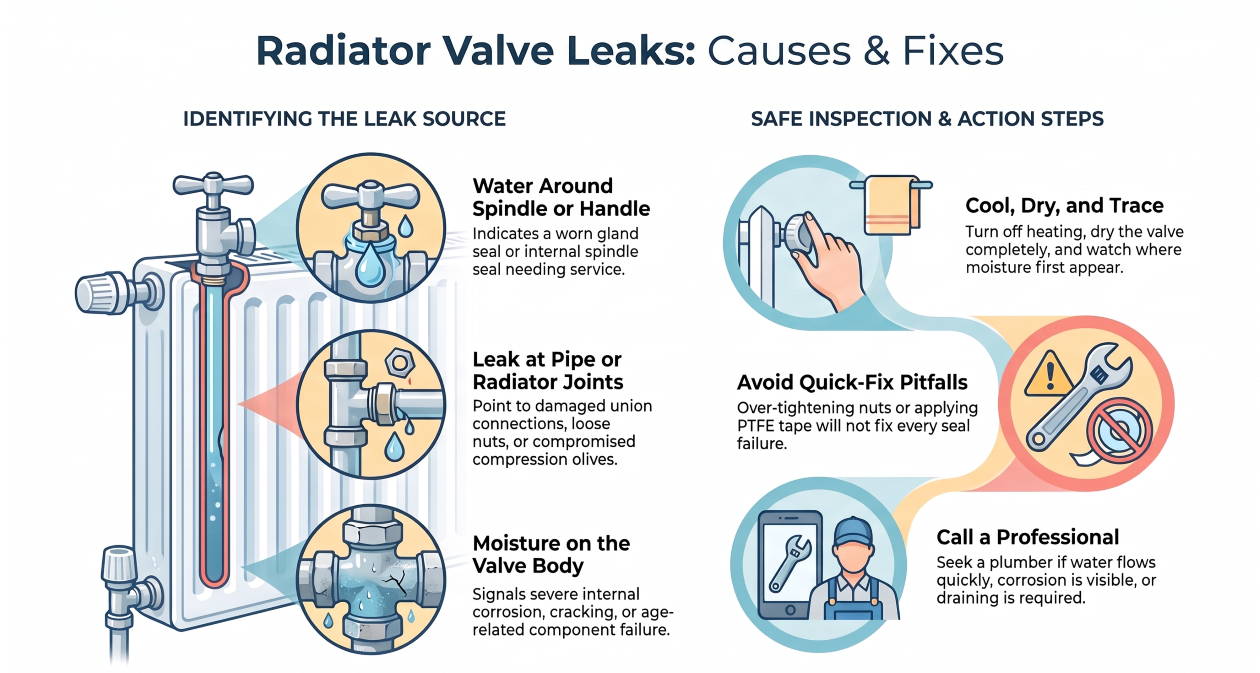
Do not force a valve or dismantle it to investigate the sound yourself. If the hissing is accompanied by visible water escaping around a valve or pipe connection, arrange a prompt repair. Persistent whistling should also be investigated if basic checks do not resolve the issue.
Why Do Radiator Pipes Make Noise?
Sometimes, the radiator itself is not responsible for the sound.
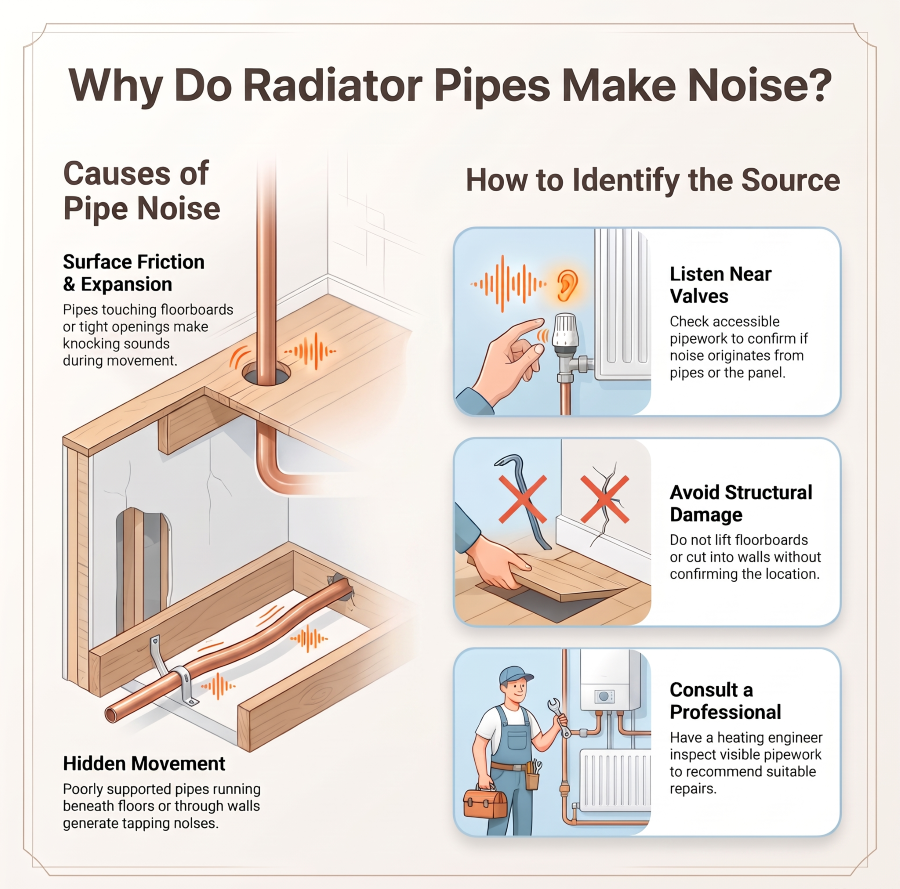
Heating pipes run beneath floors, through walls, and around the home. If they touch a hard surface or are poorly supported, their movement can cause knocking, clicking, or tapping sounds.
This can be particularly noticeable when pipes pass through floorboards or tight openings.
How Can You Identify the Source?
Listen near the radiator valves and accessible pipework to see whether the sound appears to come from the pipes rather than the radiator panel.
If the noise seems to originate beneath the floor or inside a wall, avoid lifting flooring or opening walls unnecessarily. A heating engineer can inspect accessible pipework and determine whether adjustments or repairs are needed.
If you’re planning to replace your radiator, read our guide on measuring radiator pipe centres to check the distance between your existing pipe connections before choosing a new model.
Why Do Radiator Pipes Make Noise?
Sometimes, the radiator itself is not responsible for the sound.
Heating pipes run beneath floors, through walls and around the home. If they touch a hard surface or are poorly supported, their movement can cause knocking, clicking or tapping sounds.
This can be particularly noticeable when pipes pass through floorboards or tight openings.
How Can You Identify the Source?
Listen near the radiator valves and accessible pipework to see whether the sound appears to come from the pipes rather than the radiator panel.
If the noise seems to originate beneath the floor or inside a wall, avoid lifting flooring or opening walls unnecessarily. A heating engineer can inspect accessible pipework and determine whether adjustments or repairs are needed.
How Can You Stop Your Radiator Making Noise?
The right solution depends on the cause. These simple checks can help you understand what might be happening.
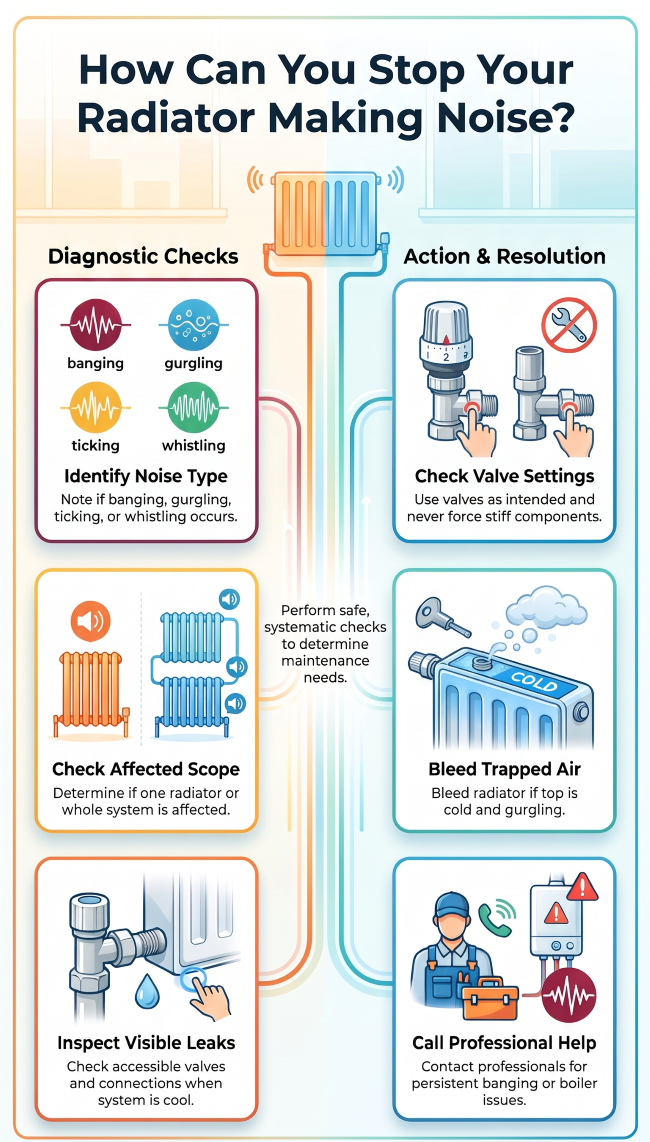
Identify the type of noise. Note whether the radiator is banging, gurgling, ticking or whistling. Pay attention to when it starts and how long it lasts.
Check how many radiators are affected. A noise coming from one radiator may have a different cause from a problem affecting the whole heating system.
Look for visible leaks. Check accessible valves and pipe connections for drips or dampness. Do not dismantle connections or attempt repairs while the system is hot.
Check the radiator valve settings. Make sure the valves are being used as intended. Never force a stiff valve or remove components to investigate a noise.
Consider whether trapped air is likely. Gurgling combined with a cold section near the top of the radiator may indicate trapped air. Bleeding may help, but recurring symptoms need further investigation.
Arrange professional help if necessary. Persistent banging, repeated gurgling, recurring pressure loss or unusual boiler noises should not be ignored.
Avoid attempting to adjust boiler internals or dismantle pressurised heating components yourself.
Regular radiator maintenance can help keep your heating system working efficiently during colder months. Read our guide on how to prepare your radiators for winter for more helpful maintenance tips.
When Should You Call a Heating Engineer?
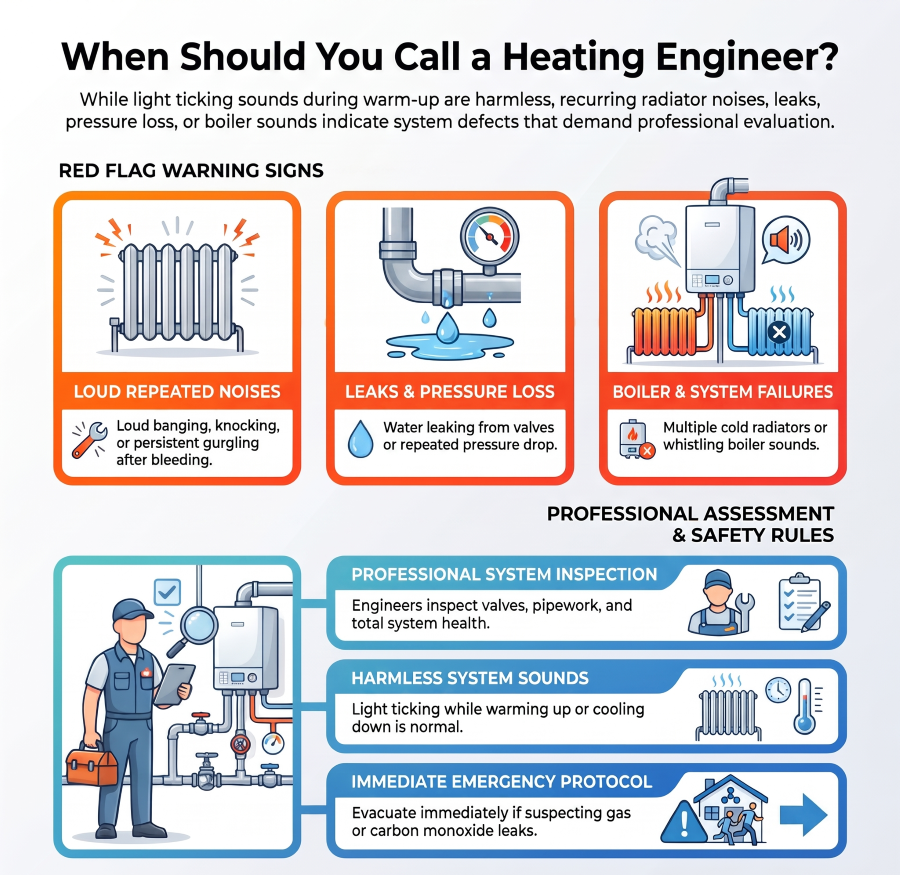
Not every radiator noise signals a fault. Light ticking as the heating warms up or cools down is often harmless.
However, it is worth contacting a qualified heating engineer if:
- Your radiator repeatedly bangs or knocks loudly.
- Gurgling returns soon after bleeding.
- Several radiators become noisy at the same time.
- Your heating system repeatedly loses pressure.
- You notice water leaking from a radiator or its valves.
- Your radiators are not heating properly alongside unusual noises.
- You hear concerning banging, whistling or other unusual sounds coming from the boiler.
A professional can assess the radiator, valves, pipework and wider heating system to identify the likely cause and recommend an appropriate solution.
Important: If you suspect a gas leak or carbon monoxide emergency, leave the affected area and follow the relevant UK emergency safety guidance. Do not attempt to investigate the problem yourself.
Frequently Asked Questions About Noisy Radiators
Why Is My Radiator Making Noise at Night?
Radiator noises can be more noticeable at night because the house is quieter. If your heating switches on during the night, you may hear ticking caused by thermal expansion or contraction. Persistent banging or other unusual sounds may need further investigation.
Is It Normal for Radiators to Make Clicking Noises?
Occasional clicking as a radiator warms up or cools down is often normal. It can happen as metal components expand and contract. Loud, continuous, or worsening clicking may indicate pipework movement or another issue.
Should I Bleed My Radiator If It Is Making a Gurgling Noise?
Possibly. Gurgling can indicate trapped air, particularly if the radiator is cold at the top but warmer at the bottom. Bleeding may help, but it will not resolve every cause of gurgling. If the noise returns, seek professional advice.
Why Does My Radiator Bang When the Heating Comes On?
Possible causes include pipes expanding against nearby surfaces, a valve-related problem, or restricted water flow. If the banging is loud or happens repeatedly, a heating engineer can investigate the cause.
Can Noisy Radiator Pipes Be Dangerous?
Light ticking caused by temperature changes is usually harmless. However, persistent loud banging, leaking pipework, repeated pressure loss or unusual boiler noises may indicate a problem that needs professional attention.
Why Is My Radiator Making Noise When It Is Switched Off?
A radiator can continue cooling after the heating switches off, and the resulting contraction may cause occasional ticking or clicking. If the noise continues unexpectedly or is accompanied by other symptoms, have the system checked.
Why Does My Radiator Gurgle After Bleeding?
A radiator may continue to gurgle if air remains in the system or if another circulation problem is present. If you repeatedly need to bleed the same radiator, arrange for a heating engineer to investigate rather than assuming more bleeding will solve the issue.
Final Thoughts
Radiator noises can have several causes, from normal expansion as the heating warms up to trapped air, moving pipework, or valve problems.
If you’re considering upgrading your radiator, browse our collection of designer radiators to explore different styles for your home.
Pay attention to the type of sound, when it occurs, and whether it affects one radiator or the entire heating system. These details can help you decide whether the noise is likely to be harmless or needs further investigation.
If you’re considering replacing your old radiator, read our radiator buying guide to help you choose the right size, heat output and style for your home.
If banging persists, gurgling repeatedly returns, or you notice leaks or other heating problems, contact a qualified heating engineer to identify the cause.