Blog
Radiator Not Heating Up After Summer? 5 Quick Fixes Before Calling a Plumber

The first chilly evening arrives, you switch on the central heating, and most of your home starts to warm up. But one radiator stays stubbornly cold, even after the heating has been running for a while.
After months of limited use, a radiator may develop a stuck valve, contain trapped air or experience restricted water circulation. Fortunately, a few simple checks can help you identify the possible cause before calling a plumber.
In this guide, we explain five things to check when your radiator is not heating up after summer, how to recognise common warning signs, and when it is best to call a heating professional.
First, Work Out Why Your Radiator Is Cold
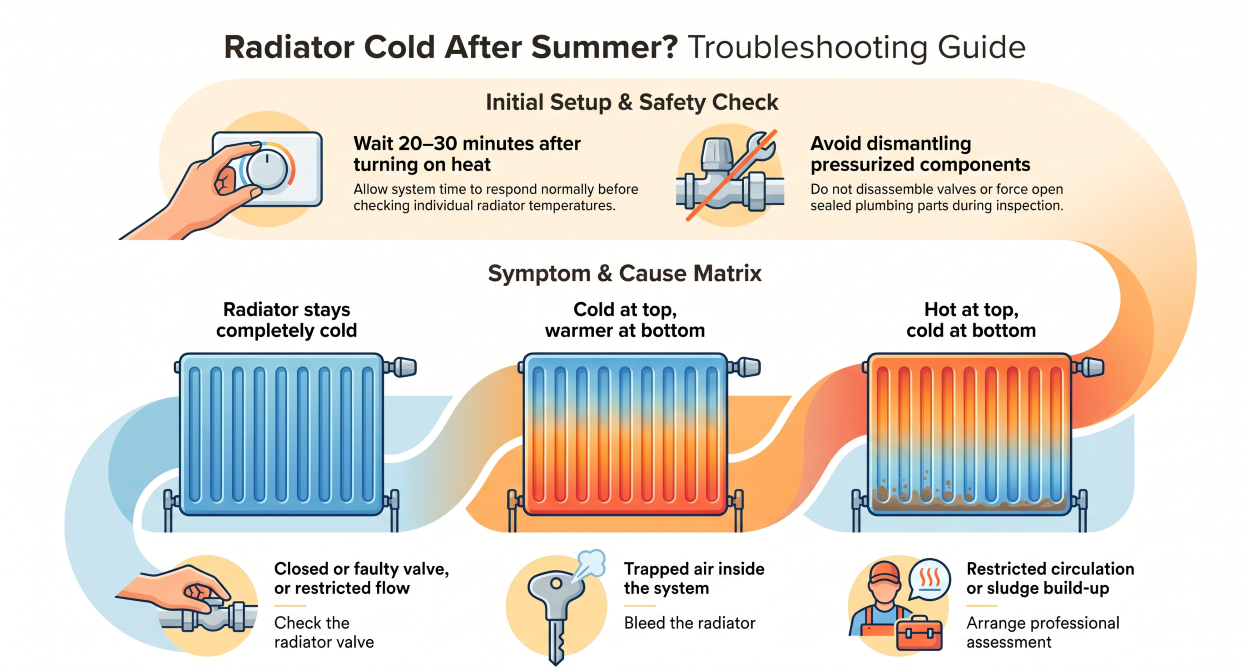
Before making any adjustments, switch on the central heating and allow around 20–30 minutes for the system to respond, assuming it is operating normally. Then check which parts of the radiator are warming up.
The symptoms can offer useful clues about what might be wrong.
What you notice | Possible cause | What to check |
One radiator stays completely cold | Closed or faulty valve, or restricted water flow | Check the radiator valve |
Radiator is cold at the top but warmer at the bottom | Trapped air may be present | Consider bleeding the radiator |
Radiator is hot at the top but cold at the bottom | Restricted circulation or sludge may be present | Arrange a professional assessment if it persists |
Several radiators heat up slowly | Circulation, balancing or heating control issues | Check the controls and wider system |
All radiators remain cold | Boiler, thermostat, programmer or system fault | Check the controls and boiler display |
These symptoms are not definite diagnoses, but they can help you decide what to check next. Avoid dismantling valves or opening pressurised components.
Fix 1: Check Your Heating Controls and Thermostat
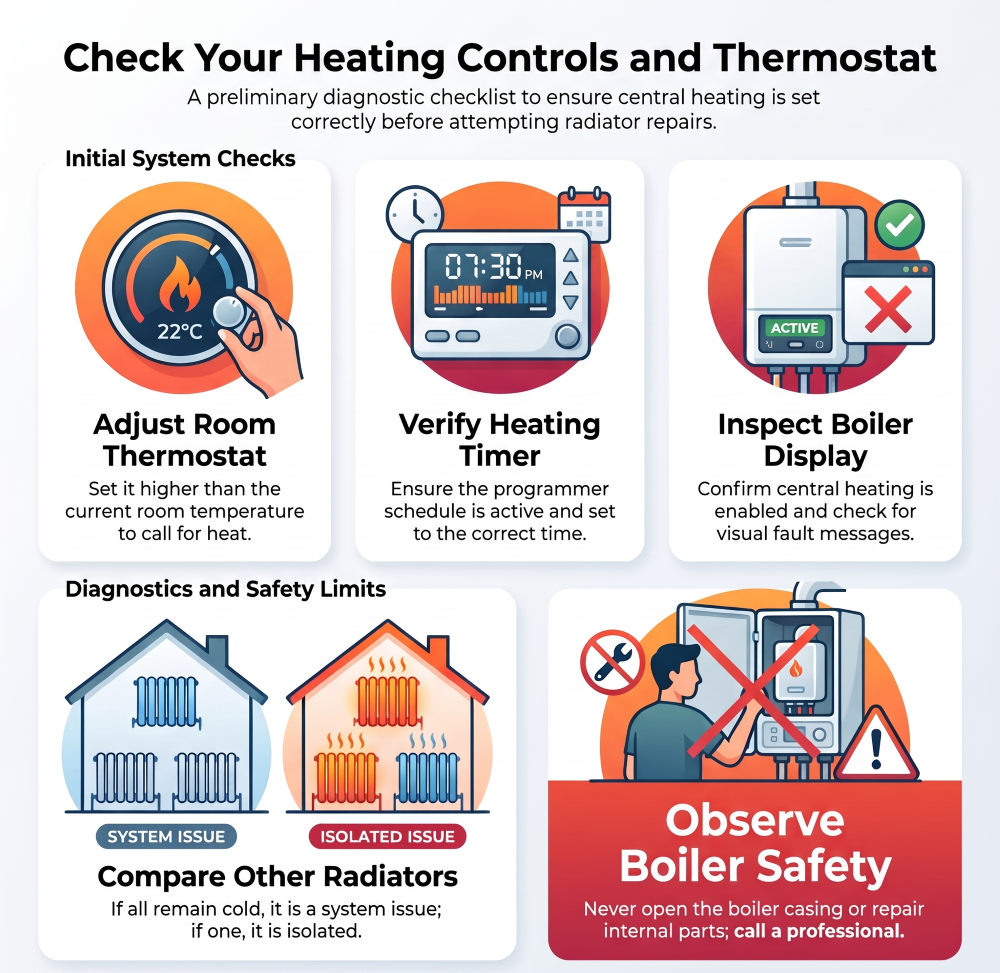
Before adjusting individual radiators, make sure your central heating is actually calling for heat.
If the heating has been switched off for most of the summer, your timer or programmer may still be using an old schedule. The room thermostat may also be set below the current room temperature.
Start with these simple checks:
- Room thermostat: Set it above the current room temperature to call for heat.
- Heating timer: Check that the central heating is scheduled to come on at the right time.
- Boiler settings: Make sure central heating is enabled and look for any fault messages on the display.
- Other radiators: Check whether they are warming up normally.
If all your radiators remain cold, the issue may involve the heating controls, boiler or wider central heating system. If the other radiators are working normally, the problem may be limited to one radiator or its valve.
If your boiler displays an error code or fails to respond, follow the manufacturer's instructions and contact a qualified heating engineer when necessary. Never remove the boiler casing or attempt repairs to its internal components.

Fix 2: Check Whether Your Radiator Valve Is Stuck
When one radiator stays cold while the others heat up normally, its valve is a sensible place to start.
Most central heating radiators have a thermostatic radiator valve (TRV) or manual control valve at one end and a lockshield valve at the other. The control valve regulates the flow of hot water into the radiator, while the lockshield valve is generally used to balance water flow throughout the system.
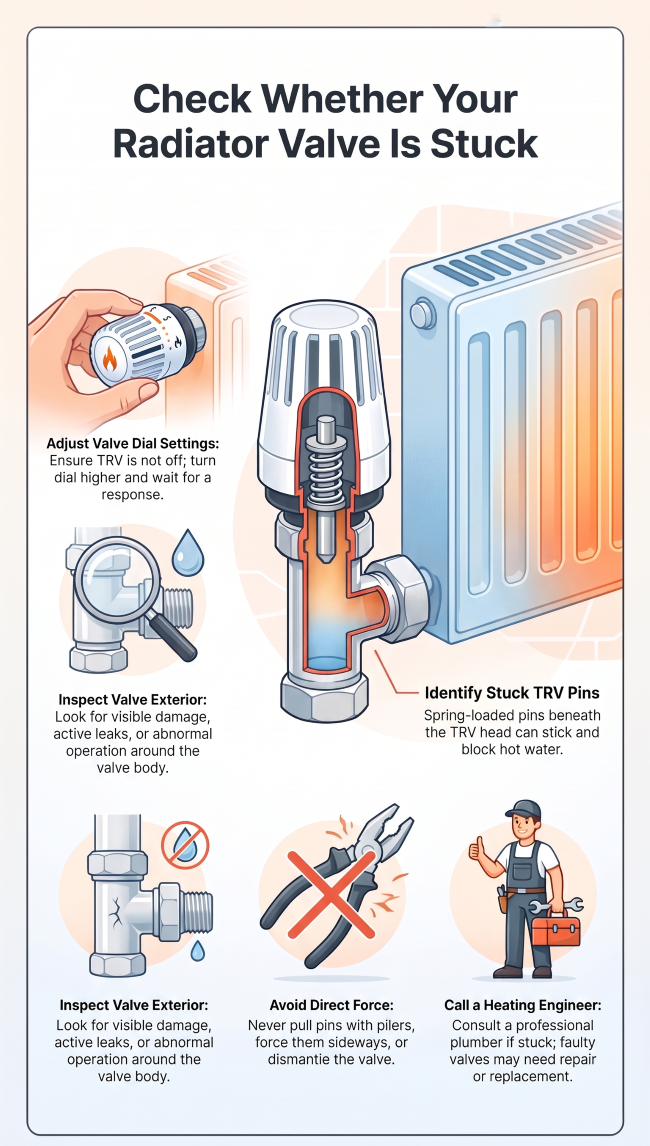
A TRV usually has a numbered dial that controls the room temperature. After a long period without use, the valve may occasionally stick or fail to open properly.
What should you check?
- Make sure the TRV is not set to off or a very low setting.
- Turn the dial to a higher setting and allow time for the radiator to respond.
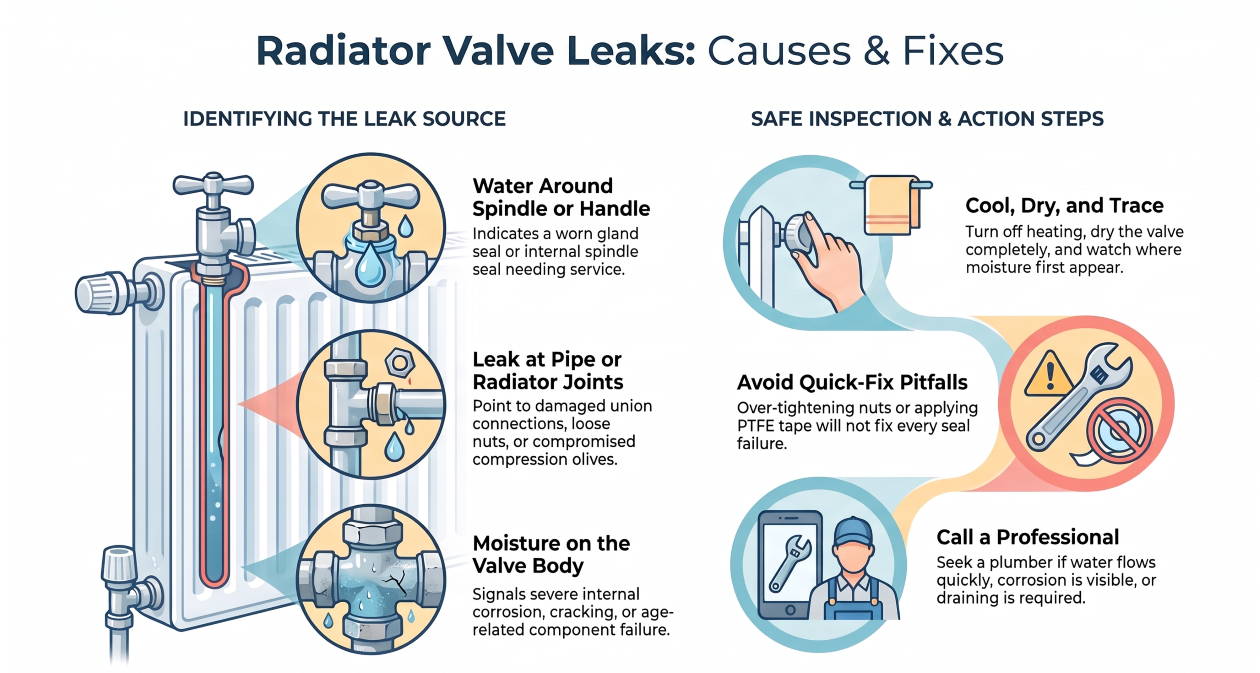
- Look for visible damage, leaks or signs that the valve is not operating normally.
- If the radiator remains cold, consider having the valve inspected by a plumber or heating engineer.
Some thermostatic radiator valves contain a small spring-loaded pin beneath the removable valve head. If this pin sticks, it can prevent the valve from opening properly.
Do not pull the pin out with pliers, force it sideways or dismantle the valve body. If the valve appears stuck and you are unsure how to check it safely, seek professional help.
A faulty valve may need repairing or replacing. If you are considering new radiator valves, check the connection type, pipe arrangement and finish before ordering.
For more information, read our guide to TRVs, manual radiator valves and lockshield valves to understand how the different types work and which may suit your radiator.


Fix 3: Bleed the Radiator if It Is Cold at the Top
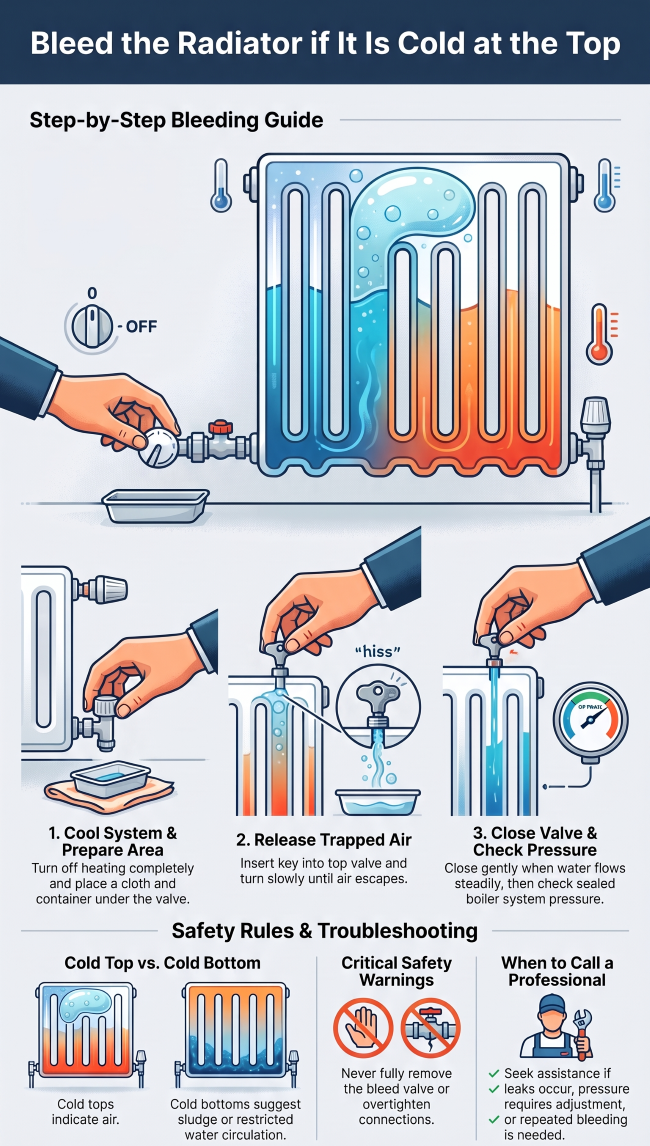
Trapped air is a common reason a radiator may not heat evenly. One sign is a radiator that feels cold at the top while the lower section warms up. You might also hear gurgling sounds when the heating is running.
If these symptoms suggest trapped air, bleeding the radiator may help release it and restore more even heating.
How to bleed a radiator safely
- Switch off the central heating and allow the radiator to cool completely. Make sure the heating pump has stopped.
- Place a cloth and a small container beneath the bleed valve, usually located near the top corner of the radiator.
- Insert a radiator key into the bleed valve.
- Turn the key slowly until you hear air escaping. Do not open the valve more than necessary.
- When water begins to flow steadily, close the valve gently without overtightening it.
- Check the system pressure afterwards if you have a sealed central heating system, following the boiler manufacturer's instructions.
Never remove the bleed valve completely or loosen the radiator's other connections. If water leaks from the valve after closing it, seek professional assistance.
If your boiler pressure needs adjusting, follow the manufacturer's procedure rather than guessing which valves to operate.
What if the radiator is cold at the bottom?
A radiator that is hot at the top but cold at the bottom may have restricted water circulation or sludge build-up. Other faults can produce similar symptoms, so this does not automatically mean the system needs cleaning.
Bleeding is unlikely to resolve a cold-bottom problem caused by restricted circulation. If the radiator continues to heat unevenly, arrange an assessment by a heating professional.
If you are unsure how to bleed your radiator correctly, follow our detailed guide on how to bleed a radiator step by step. It explains the process in more detail and provides additional guidance to help you bleed your radiator safely.
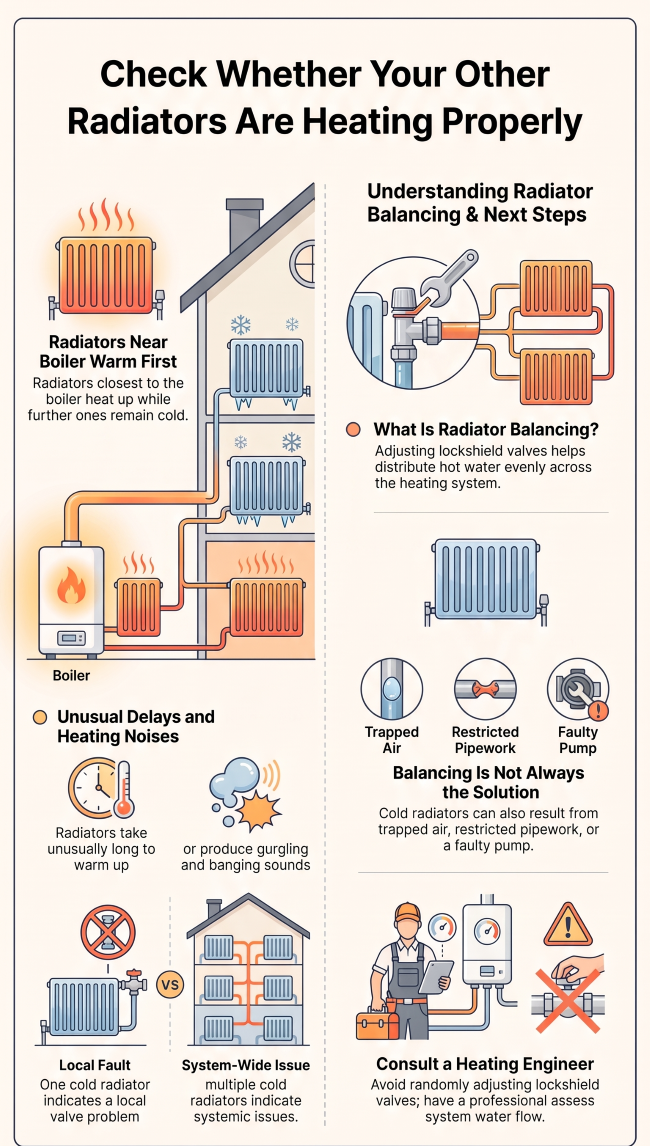
Fix 4: Check Whether Your Other Radiators Are Heating Properly
If several radiators are slow to warm up, the problem may involve more than one valve.
Walk around your home and check for these signs:
- Radiators nearest the boiler warm up while others remain cool.
- Several radiators take much longer to heat than usual.
- One or more rooms stay cold despite the heating running.
- Persistent gurgling, banging or other unusual heating noises occur.
If only one radiator is affected, a local valve or water-flow problem may be responsible. If several radiators are affected, the wider heating system may need attention.
Could your radiators need balancing?
Radiator balancing involves adjusting the lockshield valves to help distribute hot water more evenly around the central heating system.
When a system is poorly balanced, some radiators may receive more hot water than others. This can lead to uneven heating across different rooms.
However, balancing is not the answer to every cold radiator. A faulty pump, restricted pipework, air in the system or another underlying fault can produce similar symptoms.
Avoid randomly opening or closing lockshield valves, as this can make the problem worse. A heating engineer can assess the water flow and determine whether balancing or another adjustment is needed.


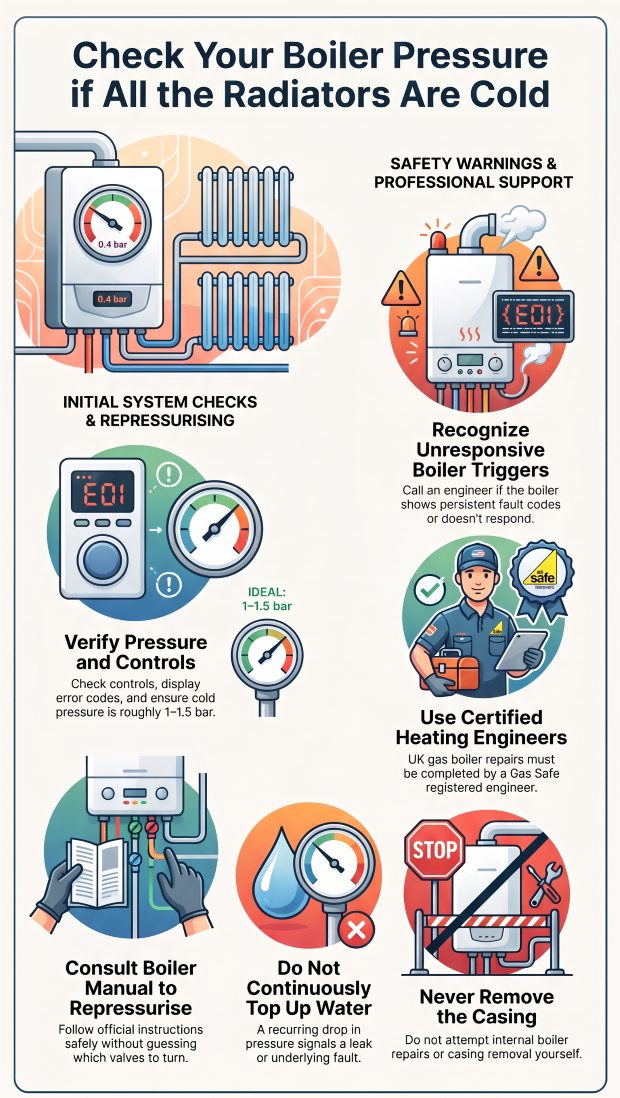
Fix 5: Check Your Boiler Pressure if All the Radiators Are Cold
If none of your radiators heats up, check the boiler display, heating controls and pressure gauge if your system has one.
Many sealed domestic central heating systems operate at around 1-1.5 bar when cold. However, the correct pressure varies by boiler and installation, so consult your manufacturer’s instructions rather than relying on a single figure.
If the pressure is below the recommended range, your boiler manual should explain how to repressurise the system safely.
Do not guess which valves to open or keep topping up the system if the pressure repeatedly drops. A continuing loss of pressure may indicate a leak or another fault that requires investigation.
Also check whether:
- The boiler displays an error code.
- Central heating is enabled on the controls.
- The thermostat is calling for heat.
- The boiler responds when the heating is switched on.
If the boiler is not responding, repeatedly loses pressure, or continues to display a fault, contact a qualified heating engineer. In the UK, gas boiler work must be carried out by an appropriately qualified professional, using a Gas Safe registered engineer for gas boiler work.
Do not remove the boiler casing or attempt internal repairs yourself.
Could Sludge or Restricted Water Circulation Be the Problem?
If you have checked the heating controls and radiator valves, bled the radiator where appropriate, and the problem continues, there may be an underlying circulation issue.
Sludge is a build-up of corrosion products and other debris that can accumulate inside a central heating system over time. It may restrict water flow and contribute to uneven heating.
Possible warning signs include:
- A radiator that remains cold at the bottom.
- Persistent cold patches while the heating is running.
- Several radiators heating poorly.
- Repeated circulation problems.
- Heating that takes longer than usual to warm the house.
These symptoms do not prove that sludge is responsible. A faulty valve, pump problem or another restriction can produce similar results.
A plumber or heating engineer can assess the system and recommend an appropriate solution. Depending on the findings, this might involve balancing, repairing a component, cleaning the system or addressing another fault.
A powerflush may be suitable in some cases, but it is not necessary for every cold radiator. The underlying cause should be identified before deciding on the treatment.
If your radiator is leaking, badly corroded or beyond economical repair, replacement may also be worth considering.
Should You Replace a Radiator That Will Not Heat Up?
Not necessarily. A radiator that stops heating properly after summer does not automatically need replacing.
A faulty valve, trapped air or restricted water flow may be responsible, and resolving the underlying problem could restore the radiator’s performance without the cost of a new one.
However, if you were already planning to replace an old radiator, take the time to choose a model that suits your room and central heating system.
Before ordering, consider the following:
- Heat output: Does the radiator provide enough heat for the room?
- Dimensions: Will it fit the available wall space?
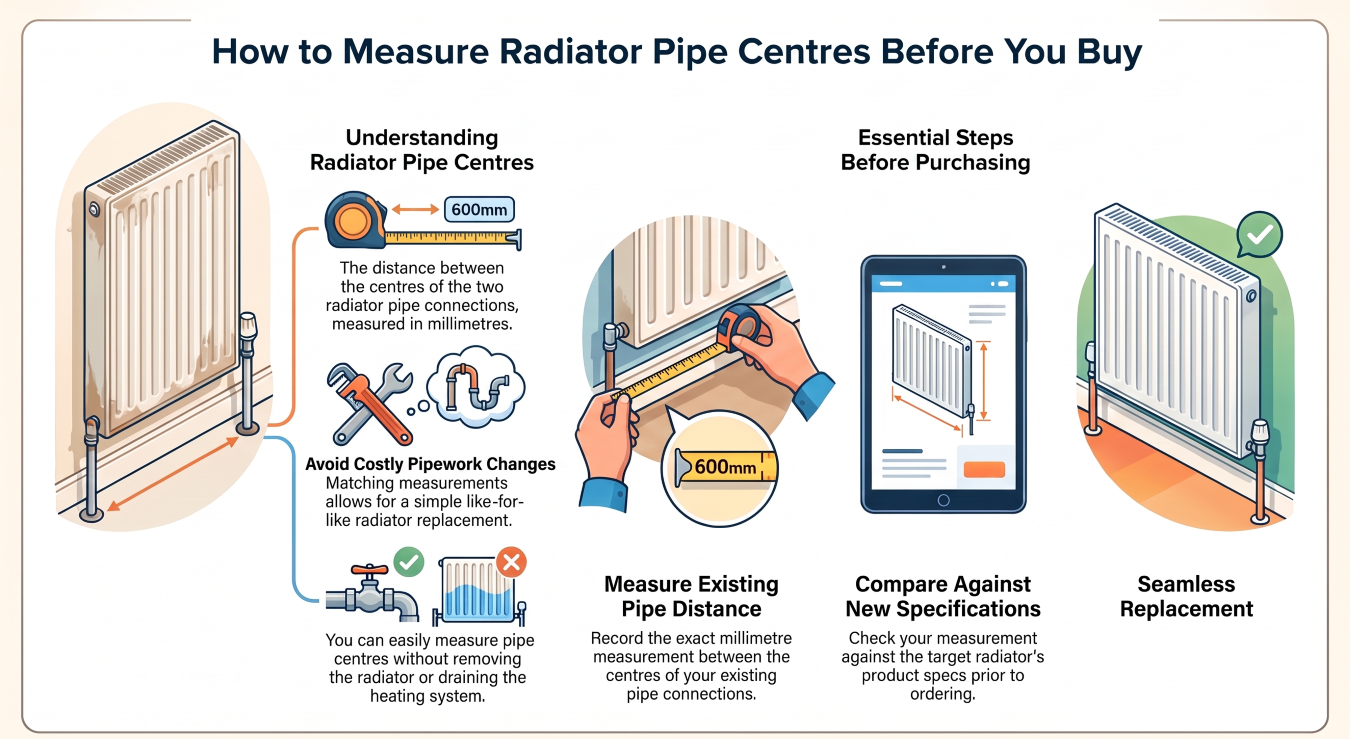
- Pipe centres: Will the connections line up with the existing pipework?
- Valve connections: Are the correct valve type and connection positions available?
- Wall support: Can the wall safely support the radiator’s weight?
- Installation: Will the new model require changes to the existing pipework?
Explore different radiator styles.
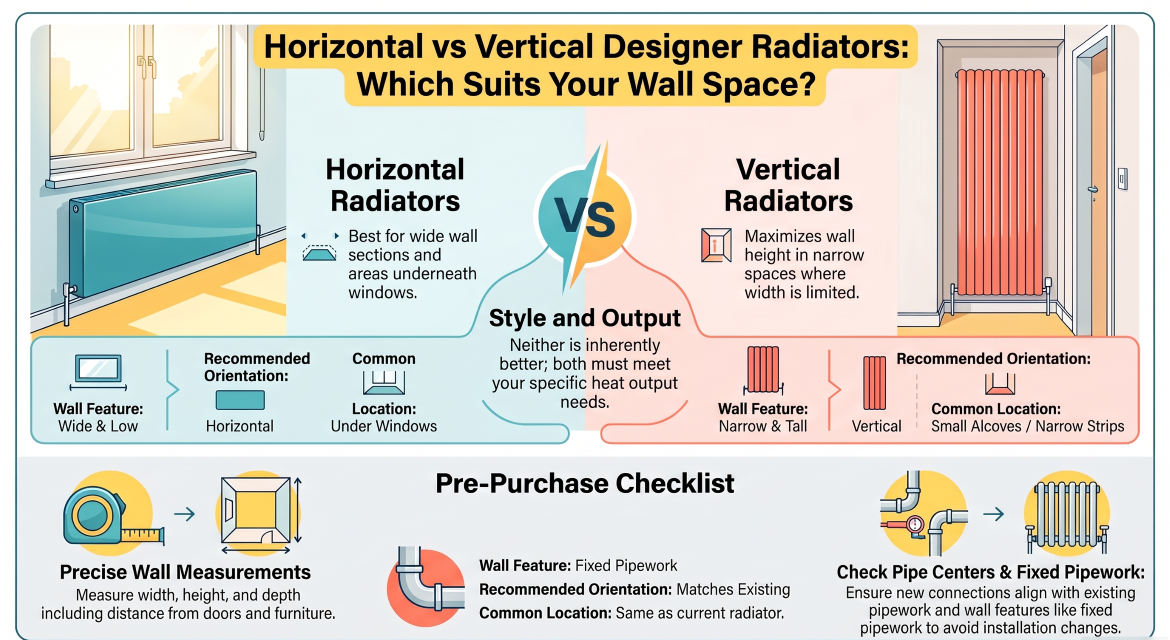
If you are looking to update your heating while refreshing your interiors, column radiators and vertical designer radiators offer different styles to suit different spaces.
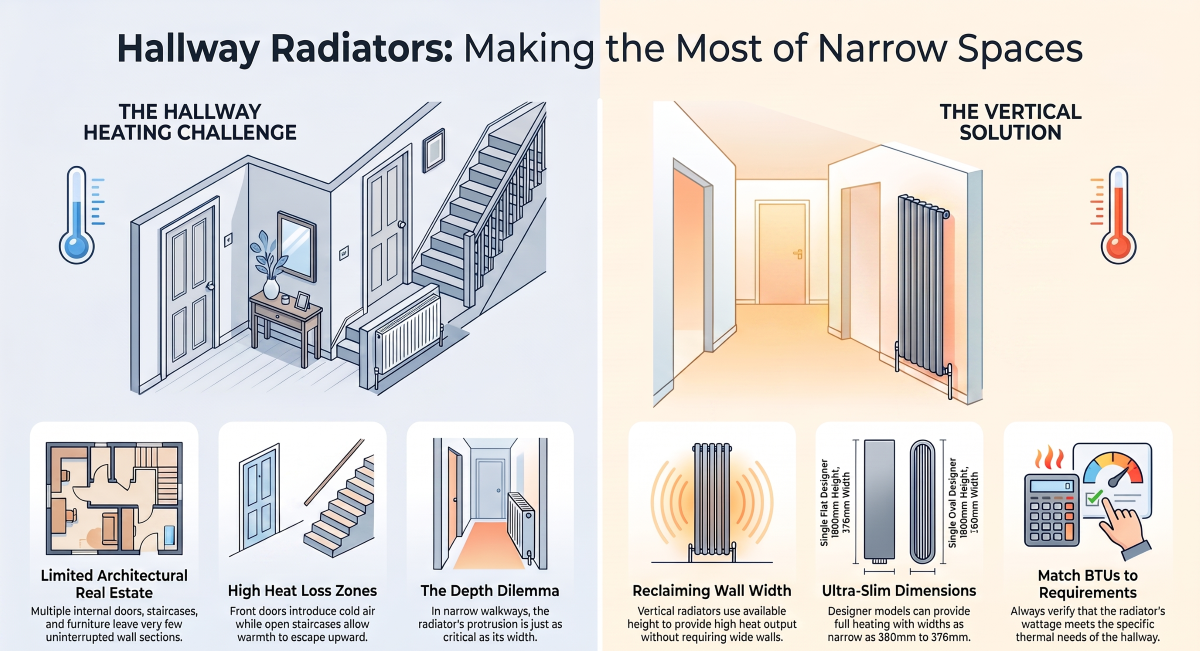
Column radiators can complement traditional interiors, while vertical radiators may be useful where wall width is limited. The right option depends on the room’s layout, required heat output and the specifications of the individual model.
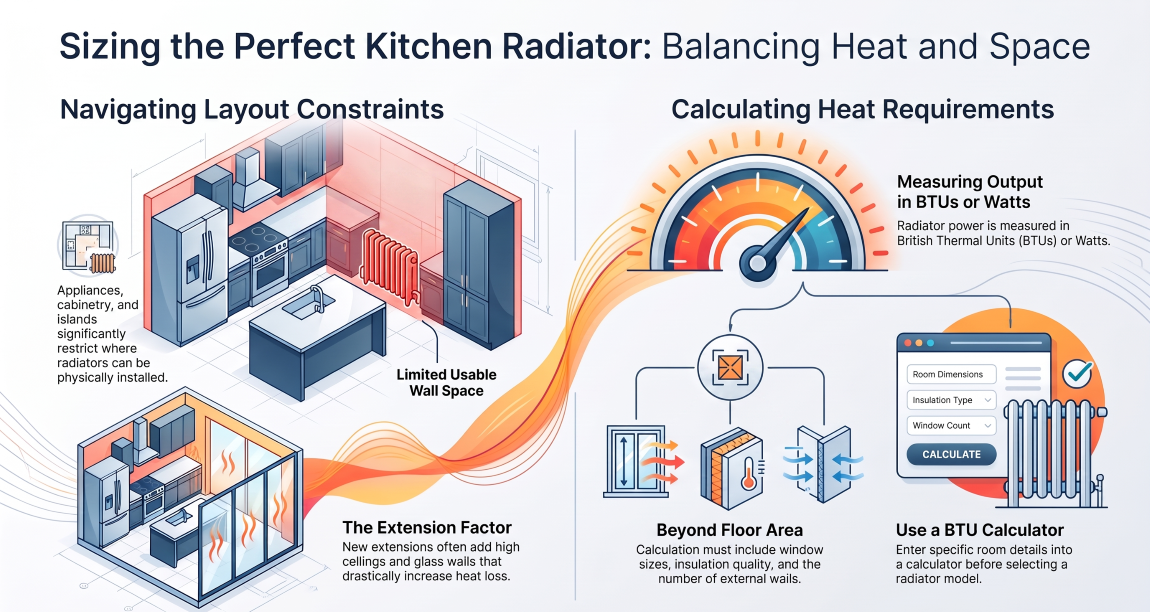
Before choosing a replacement, use our radiator BTU calculator to estimate the heat output your room needs. Compare the result with the output specified for the radiator you are considering.
Remember that a new radiator will not necessarily resolve an underlying boiler, valve, or circulation problem. If the existing system is faulty, address that issue before assuming replacement is the solution.
Frequently Asked Questions
Why is my radiator not heating up after summer?
Possible causes include a closed or faulty valve, trapped air, low boiler pressure or restricted water circulation. Check the heating controls first, then establish whether one radiator or the whole system is affected.
Why is only one radiator cold when all the others are hot?
A closed or faulty valve, trapped air or restricted water flow may be responsible. Check the control valve and consider bleeding the radiator if it is cold at the top. If it remains cold, arrange a professional inspection.
Why is my radiator cold at the top but hot at the bottom?
This can indicate trapped air. Bleeding the radiator may help release it. Switch off the heating, allow the radiator to cool completely and follow the correct bleeding procedure.
Why is my radiator hot at the top but cold at the bottom?
Restricted circulation or sludge may be responsible, although other faults can cause similar symptoms. Bleeding is unlikely to resolve a cold-bottom problem caused by restricted flow. Seek professional advice if the issue persists.
Why are my radiator pipes hot but the radiator stays cold?
Hot pipes do not necessarily mean water is circulating properly through the radiator. A closed or faulty valve, trapped air or a restriction may be responsible. If checking the valve settings does not help, ask a heating professional to investigate.
Should I leave radiator valves open during summer?
There is no single setting that suits every radiator valve and heating system. Follow the valve manufacturer’s guidance. When you switch the heating back on, check that the controls are operating normally rather than forcing a valve that appears stuck.
How often should I bleed my radiators?
Bleed a radiator when there are signs of trapped air, such as a cold top section with a warmer lower section. You do not need to bleed every radiator automatically each year. If air repeatedly collects in the same radiator, have the underlying cause investigated.
What should boiler pressure be when the heating is off?
Many sealed domestic systems operate at around 1-1.5 bar when cold, but the correct pressure depends on the boiler and installation. Check the manufacturer’s instructions and seek professional help if the pressure repeatedly falls.
When should I call a plumber about a cold radiator?
Contact a plumber or heating engineer if the radiator remains cold after basic checks, several radiators are affected, a valve is leaking, the boiler pressure repeatedly drops, or unusual noises continue. For gas boiler faults in the UK, use a Gas Safe registered engineer.
Can a new radiator still fail to heat up properly?
Yes. A new radiator may not heat correctly if a valve is closed, air is trapped, the connections are incorrect or the wider heating system has a problem. Check the installation and product specifications, and contact your installer if the issue persists.
Get Your Heating Ready for the Colder Months
A radiator that will not heat up after summer can be frustrating, but the cause is not always serious. Checking the heating controls, radiator valves, and trapped air can help you identify a possible issue before calling a professional.
If all your radiators remain cold, check the boiler display and pressure according to the manufacturer’s instructions. If the problem continues, a qualified heating professional can investigate the cause and recommend a suitable solution.
If you need a replacement, compare the radiator’s dimensions, pipe connections, and heat output before ordering. Choosing a model that suits your room and installation can help you avoid unnecessary changes later.
For more seasonal advice, read our guide to preparing your radiators for winter.