Blog
How Much Does It Cost to Replace Radiators in a 3-Bed House? UK 2026

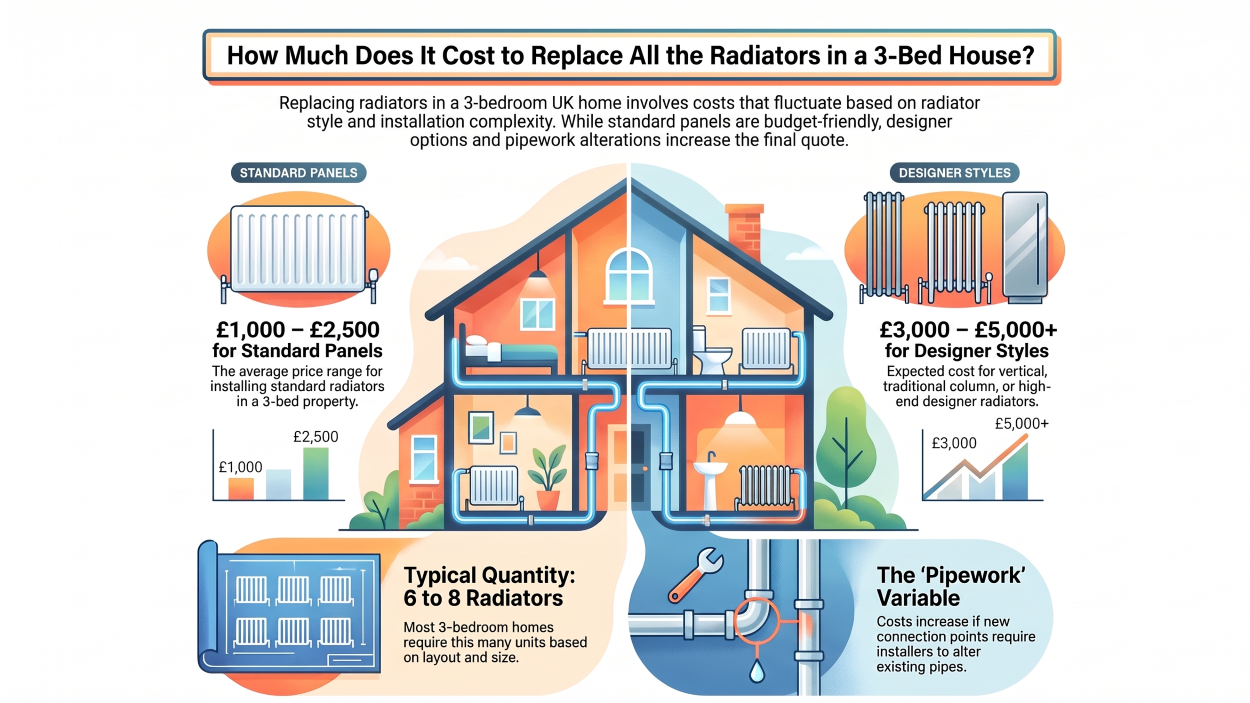
Replacing all the radiators in a typical 3-bedroom UK home can cost around £1,000-£2,500 when using standard panel radiators, depending on the number of radiators, their size and the installation requirements. If you choose vertical radiators, traditional column radiators or designer radiators throughout the property, the total can rise to around £3,000-£5,000+.
Most 3-bedroom homes have around six to eight radiators, although the exact number depends on the size and layout of the property.
The radiator style you choose will affect the price, but installation requirements can make an even bigger difference. If the new radiators have different pipe centres or connection points, your installer may need to alter the existing pipework, adding to the labour and materials.
So, how much should you budget for replacing all your radiators in 2026? Here's what you need to know.

2026 Radiator Replacement Costs by Type
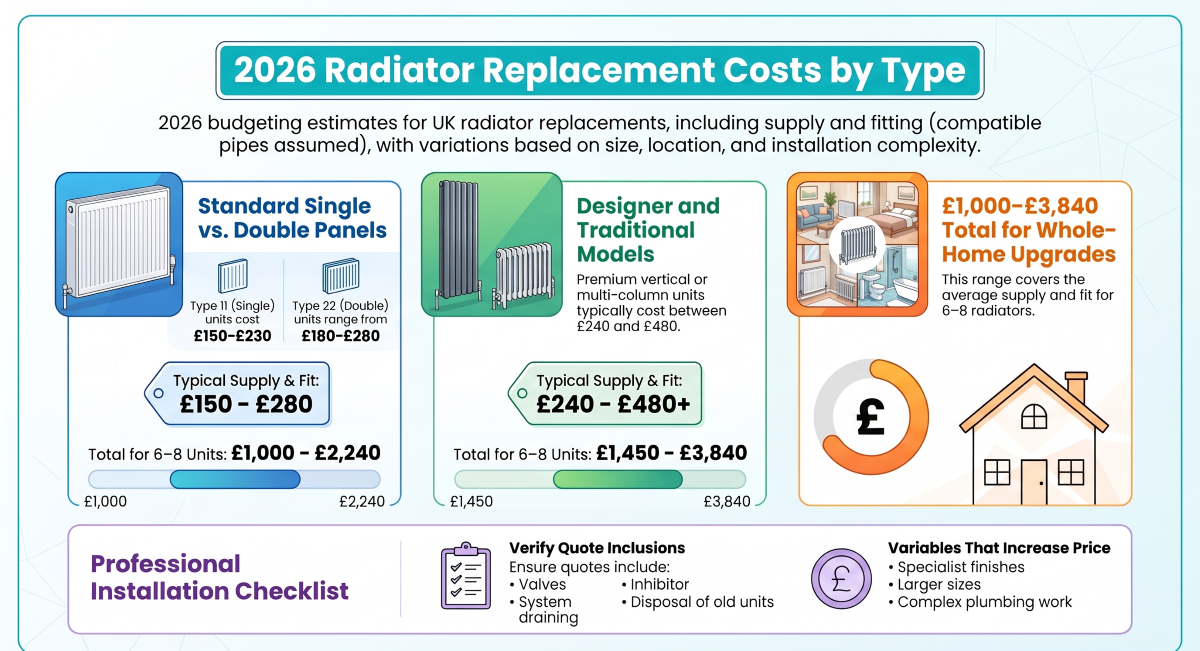
For a straightforward replacement where the new radiator is compatible with the existing pipework, you could budget around £150-£300 per radiator for supply and fitting of standard models.
The figures below are general UK budgeting estimates, not fixed prices. The final cost can vary depending on the radiator, size, valves, installer, location and any additional plumbing work required.
Radiator Type | Supply Only | Typical Supply & Fit | Approx. Total for 6–8 Radiators |
Standard Single Panel | £40-£100 | £150-£230 | £1,000-£1,840 |
Double Panel Convector | £70-£140 | £180-£280 | £1,100-£2,240 |
Vertical Designer Radiator | £120-£350+ | £240-£450 | £1,450-£3,600 |
Traditional Multi-Column Radiator | £140-£380+ | £260-£480 | £1,550-£3,840 |
The figures above are intended to help with initial budgeting. Larger radiators, premium finishes, specialist products and more complicated installations can increase the final price.
When comparing quotes, check whether the price includes radiator valves, removal and disposal of old radiators, system draining and refilling, inhibitor, bleeding and balancing.

What Affects the Cost of Replacing Radiators?
Several factors can change the final price of your radiator replacement project.
1. Pipe Centres and Existing Pipework
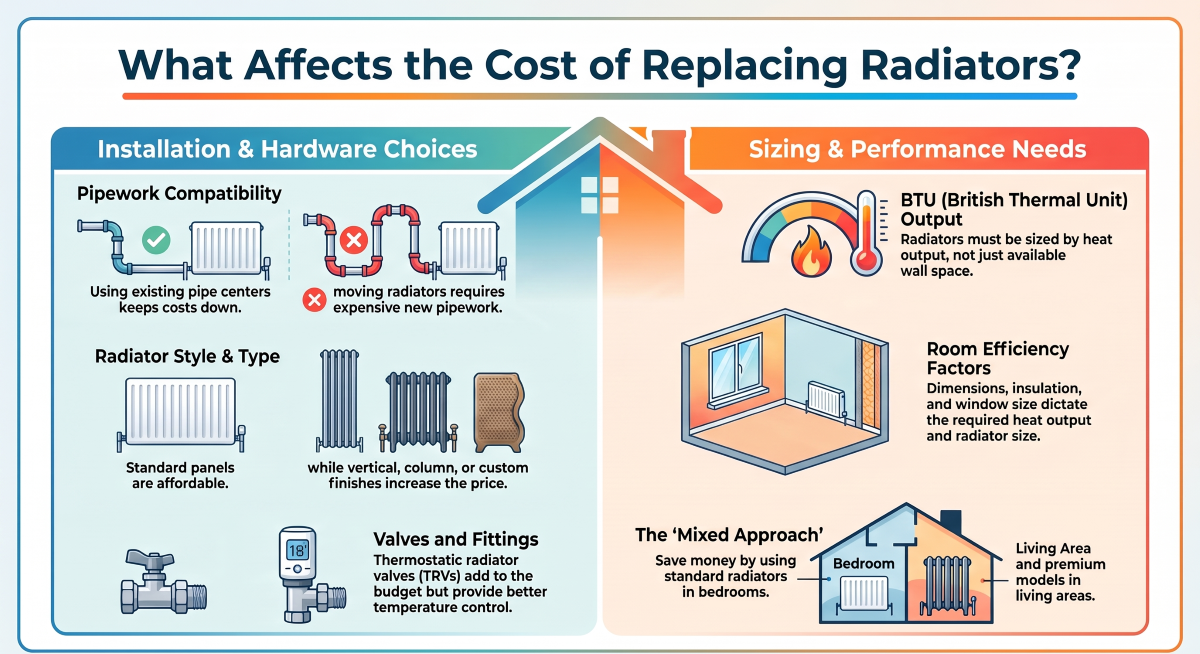
One of the easiest ways to keep installation costs down is to choose a replacement radiator that works with your existing pipework.
If the new radiator has compatible pipe centres and connections, your installer may be able to replace it without making major changes.
However, a different radiator width, connection position or design may require the pipe tails to be adjusted.
Moving a radiator to a completely different wall can cost more because the installer may need to run new pipework beneath floors, through walls or around other obstacles.
If you're renovating a room, it's worth deciding where your radiators will go before installing new flooring or completing decorating work.
2. The Type of Radiator You Choose
Standard panel radiators are generally one of the more affordable options.
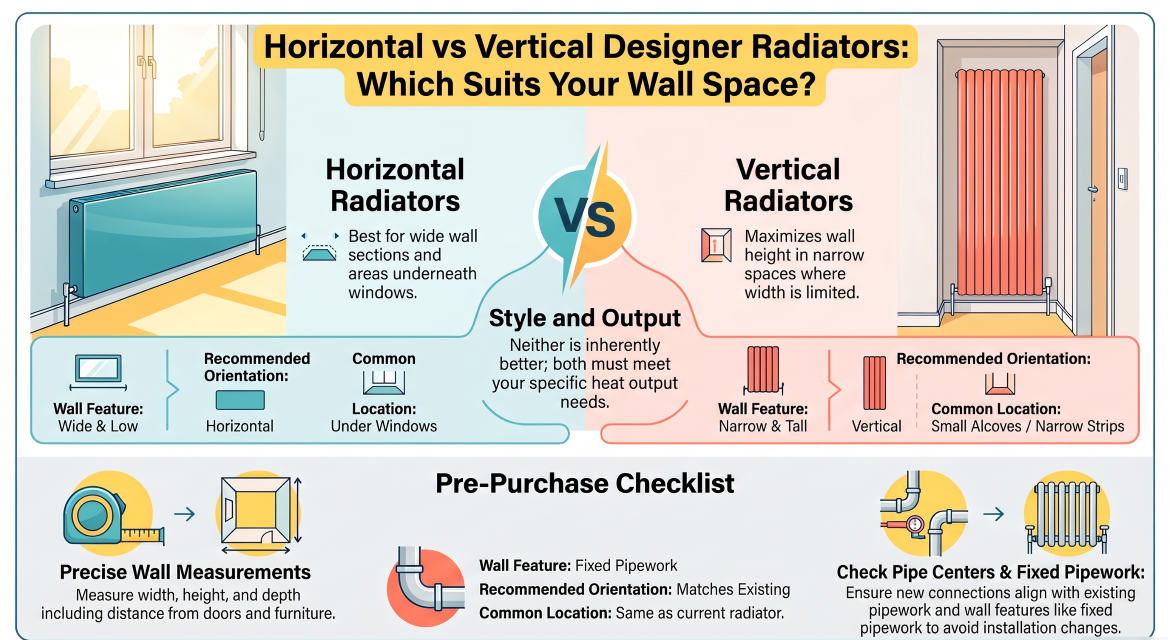
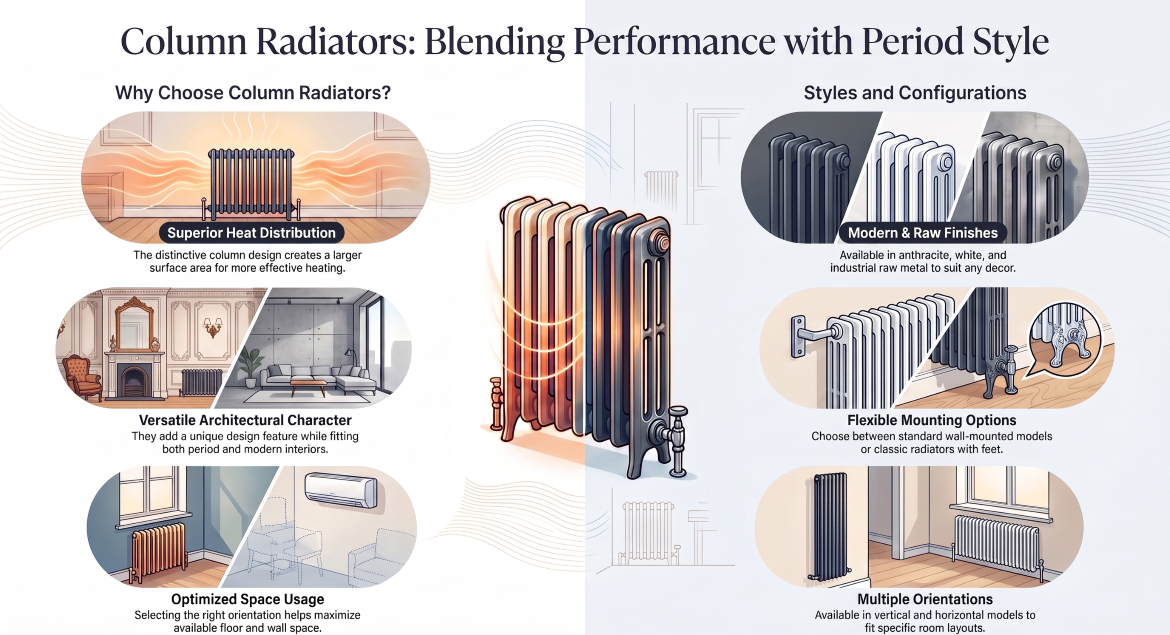
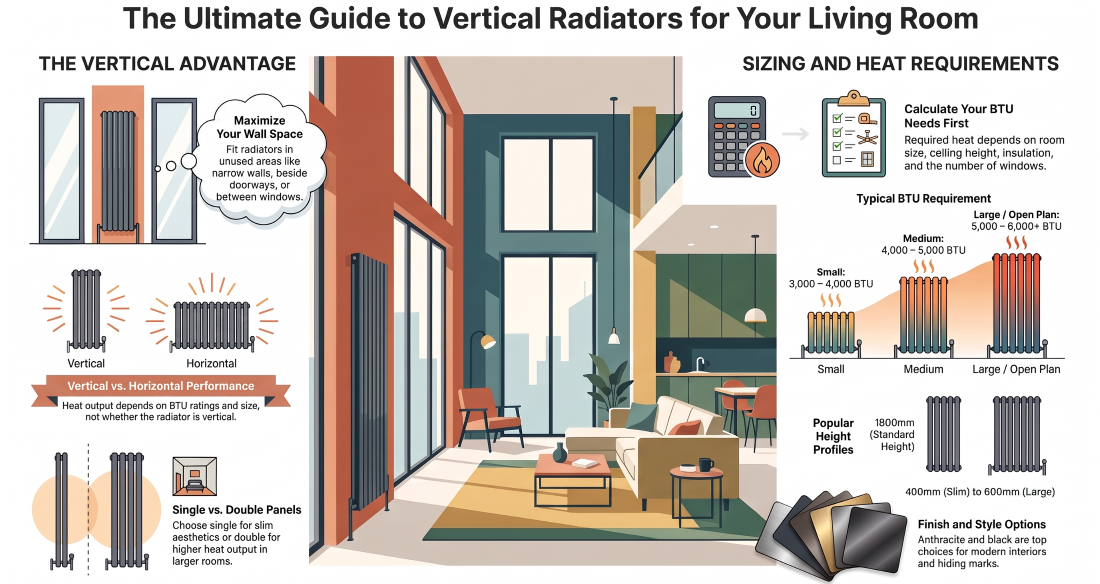
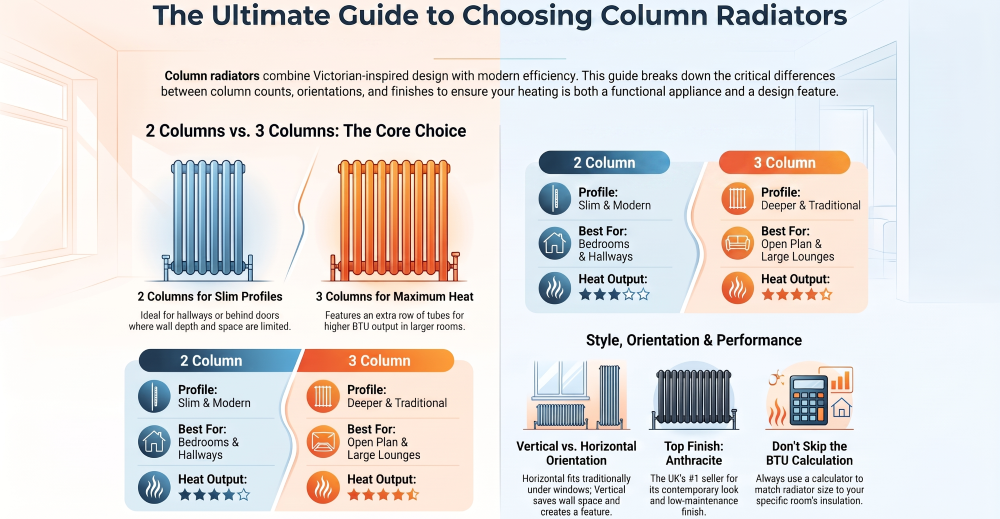
If you're looking for something more decorative, vertical radiators and column radiators can cost more. If you're deciding between different radiator layouts, our guide to vertical vs horizontal radiators explains the key differences to consider. You don't have to use the same radiator style throughout the house.
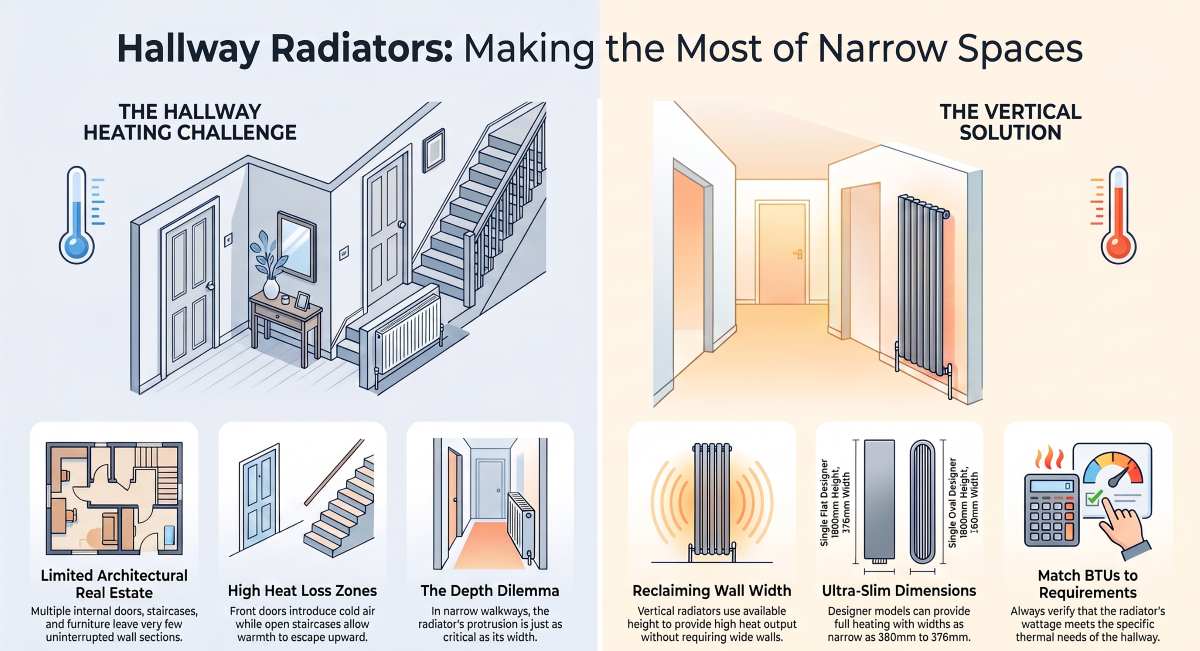
For example, you could use standard panel radiators in bedrooms and choose a vertical radiator for a narrow hallway or kitchen. A column radiator could then provide a feature finish in the living room. The finish can also affect the look of your heating system. See our guide to anthracite, black and white radiators for help comparing popular radiator colours.
You don't have to use the same radiator style throughout the house.
For example, you could use standard panel radiators in bedrooms and choose a vertical radiator for a narrow hallway or kitchen. A column radiator could then provide a feature finish in the living room.
This mixed approach lets you add more distinctive radiators where they matter most without paying for premium models throughout the entire property.
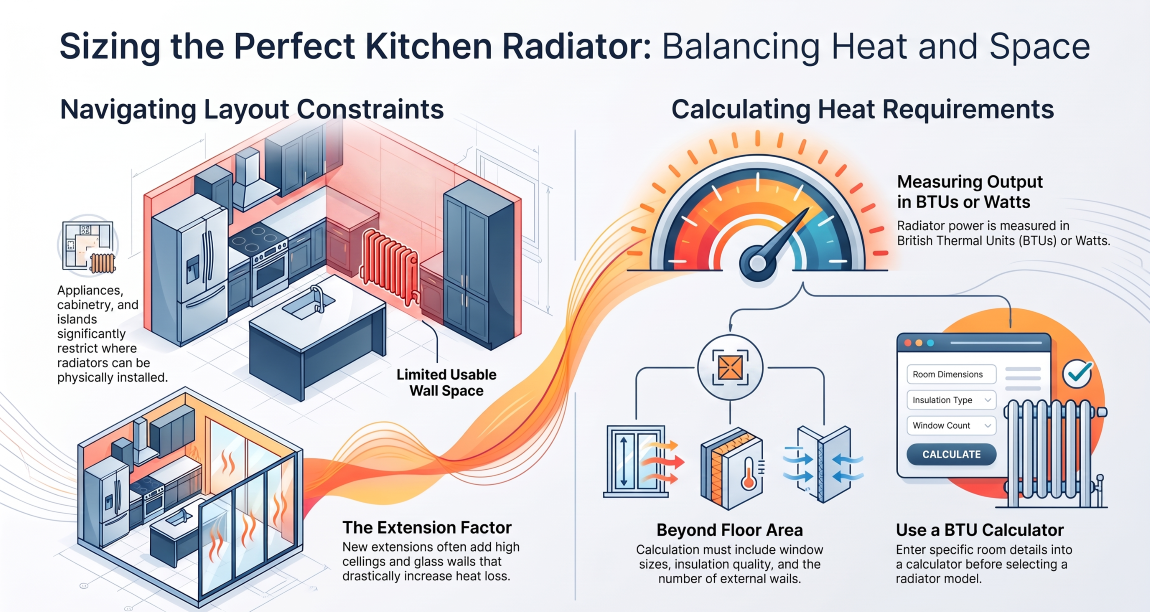
3. Getting the Right BTU Output
Radiator sizing should be based on more than the available wall space.
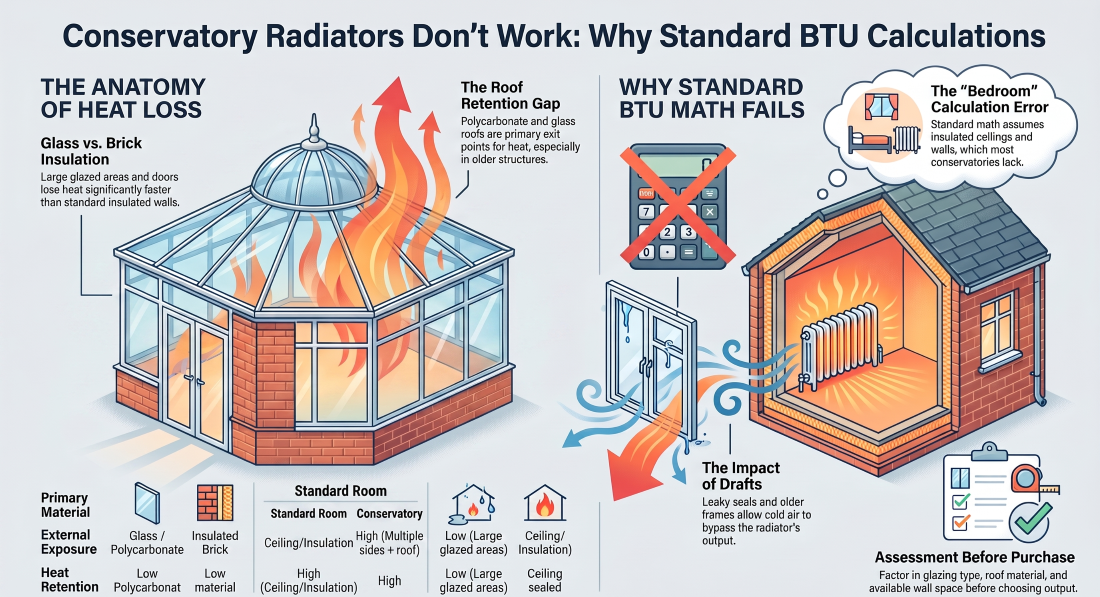
BTU (British Thermal Unit) is commonly used to describe a radiator's heat output. The required output for a room depends on factors such as:
- Room dimensions
- Ceiling height
- Window size and glazing
- External walls
- Insulation
- Property construction
A radiator that fits the wall may still be too small to heat the room effectively.
Before ordering, calculate the approximate BTU requirement for each room and compare it with the radiator's stated heat output.
Not sure what size radiator you need? Use our BTU Calculator to estimate the heat output required for your room before choosing a radiator.
4. Radiator Valves and Fittings
Remember to include valves when working out your total budget.
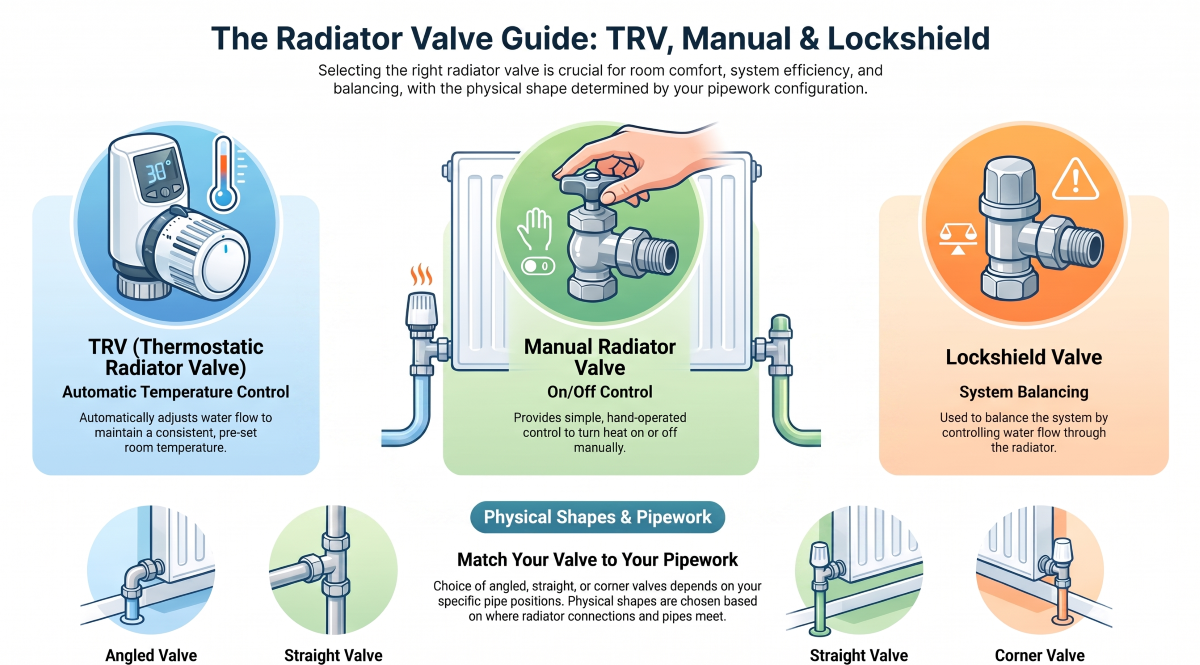
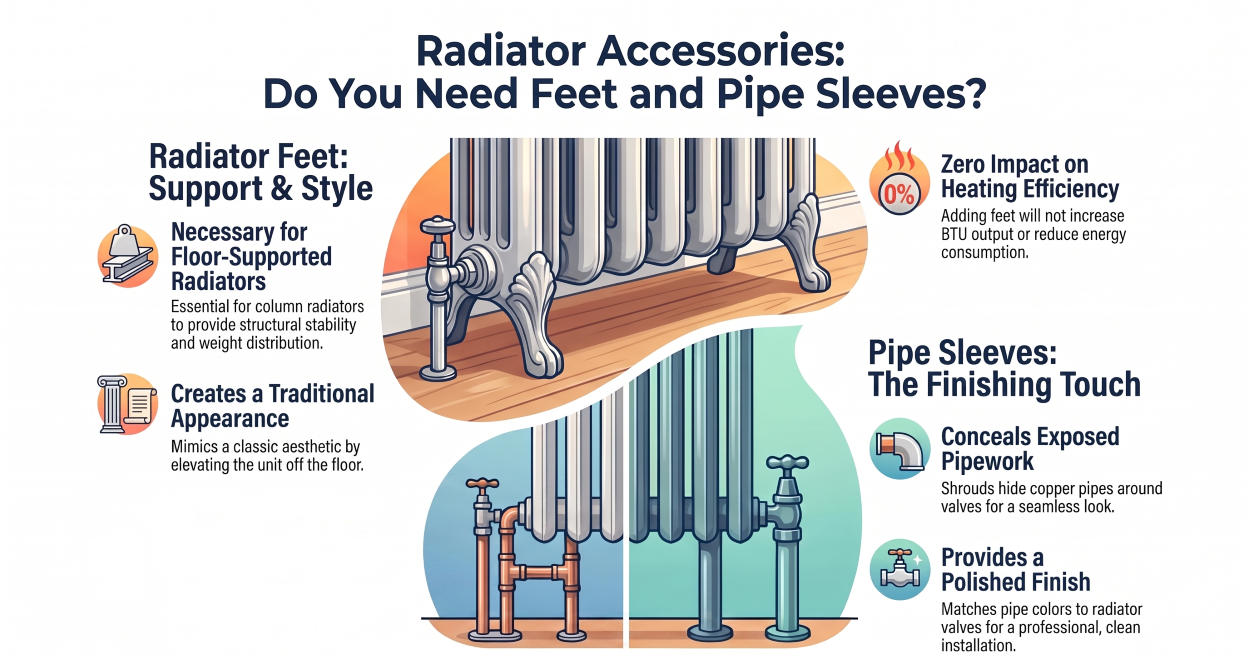
Depending on the type and finish you choose, thermostatic radiator valves (TRVs) and lockshield valves can add to the cost of each radiator.
TRVs allow you to control the temperature of individual rooms, making it easier to manage your heating.
If you're replacing several radiators at the same time, upgrading the valves during the same installation can be more convenient than arranging separate work later.
You can also compare different radiator valves to find a suitable option for your new radiators.
Labour Costs for Replacing Radiators
Radiator installation prices vary by location, installer and the complexity of the work.
Some installers charge a fixed price per radiator, while others use hourly or daily rates.
As a general budgeting guide, heating engineers may charge around £40-£70 per hour or £250-£450 per day, although rates can vary and may be higher in some areas, particularly London and the South East.
Replacing six to eight radiators in a 3-bedroom house may take around one to two working days for a straightforward installation, although more complex work can take longer.
The job may take longer if the installer needs to move radiators, alter pipework, lift flooring or deal with difficult access.
Having several radiators replaced during the same project can be more practical than arranging multiple separate visits.
What Should a Radiator Replacement Quote Include?
Before accepting a quote, check whether it covers:
- Removal and disposal of the old radiators
- Installation of the new radiators
- New radiator valves where required
- System draining and refilling
- Central heating inhibitor
- Bleeding the radiators
- Balancing the heating system
- Any additional pipework or materials
An itemised quote makes it much easier to compare different installers fairly.
Do I Need New Pipework?
Not necessarily.
If your new radiator has compatible pipe centres and connections, the existing pipework may be suitable.
Additional plumbing is more likely to be required when:
- You move the radiator to another wall
- The new radiator has different connection points
- The new radiator is a significantly different size
- Existing pipework or connections are damaged
- The installation requires new pipe runs
If keeping costs down is important, choosing a radiator that works with your existing pipework can help reduce unnecessary plumbing work.
Do I Need a New Boiler When Replacing Radiators?
Usually, no.
Replacing your radiators does not automatically mean you need to replace your boiler.
If your existing boiler is in good working condition and is suitable for your property's heating requirements, it can normally continue to supply replacement radiators.
However, if your boiler is old, regularly develops faults or you're planning a complete heating upgrade, it may be worth asking a qualified heating professional to assess the boiler, controls and radiators together.
A radiator replacement is also very different from installing a completely new central heating system, so the two projects should be priced separately.
Do I Need a Power Flush When Replacing Radiators?
Not always.
A power flush is not automatically required simply because you're installing new radiators.
However, your heating system may need cleaning if there are signs of sludge or poor circulation, such as:
- Radiators cold at the bottom
- Uneven heating
- Poor circulation
- Dark or dirty system water
- Recurring heating or circulation problems
If an engineer finds significant contamination, they may recommend a chemical clean or power flush before or as part of the radiator replacement work.
Cleaning the system when necessary can help reduce the amount of sludge and debris circulating through the new radiators and other heating components.
Should I Replace All My Radiators at Once?
If most of your radiators are old, damaged or no longer performing well, replacing them together can be a convenient option.
It allows you to update the heating throughout the property in one project rather than arranging several separate installations.
However, you don't necessarily need to replace every radiator.
If a radiator is in good condition, correctly sized and providing enough heat, there may be no reason to replace it simply because you're upgrading others.
If your budget is limited, prioritise radiators that are corroded, damaged, underperforming or unsuitable for the room.
5 Ways to Keep Radiator Replacement Costs Down
1. Keep Existing Radiator Positions
Moving a radiator can involve additional pipework, labour and making good walls or floors. Keeping the same position can help reduce the installation cost.
2. Match Existing Pipe Centres
Where possible, choose replacement radiators with compatible pipe centres and connections. This can reduce the need for pipework alterations.
3. Mix Different Radiator Styles
You don't need a designer radiator in every room. Use standard models where practicality matters and choose feature radiators for rooms where appearance is more important.
4. Replace Several Radiators Together
Grouping the work together can reduce repeated visits and disruption compared with replacing radiators individually over a longer period.
5. Get Detailed Quotes
Ask installers to list radiator supply, valves, labour, removal, disposal and any plumbing work separately. This helps you compare quotes on a like-for-like basis.
Frequently Asked Questions
How much does it cost to replace 6 radiators?
For six straightforward replacements using standard radiators, a rough starting budget is around £900-£1,800+ for supply and fitting. The final price depends on the radiator models, valves, labour and any additional plumbing.
How much does it cost to replace 8 radiators in the UK?
Replacing eight standard radiators could cost around £1,200-£2,400 for supply and fitting. Vertical, column and designer radiators can increase the overall cost.
Is it cheaper to replace all radiators at once?
It can be. Replacing several radiators during the same project can reduce repeated visits and may make the overall installation more efficient.
However, the saving depends on the installer and the amount of work involved, so it's worth comparing the total project price.
Do I need a new boiler when replacing my radiators?
No, not necessarily. If your existing boiler is suitable for your property, working correctly and able to meet the heating demand, you can usually replace the radiators without replacing the boiler.
Do I need a power flush when fitting new radiators?
Not automatically. A power flush may be recommended if the heating system contains significant sludge or debris or there are signs of poor circulation, such as radiators being cold at the bottom.
How long does it take to replace all radiators?
For a typical 3-bedroom house with six to eight radiators, a straightforward installation could take around one to two working days. More complicated work involving pipe alterations, radiator relocation or floor lifting may take longer.
Are column radiators worth the extra cost?
Column radiators can be worthwhile if you want a more distinctive look alongside good heat output. They are available in traditional and modern designs and can work particularly well in living rooms, dining rooms and other visible areas.
Always check the radiator's BTU output, dimensions and connection requirements before buying.
What Should You Budget for Replacing Radiators?
For a typical 3-bedroom UK home with six to eight radiators, £1,000-£2,500 can be a reasonable starting budget for standard radiator replacements.
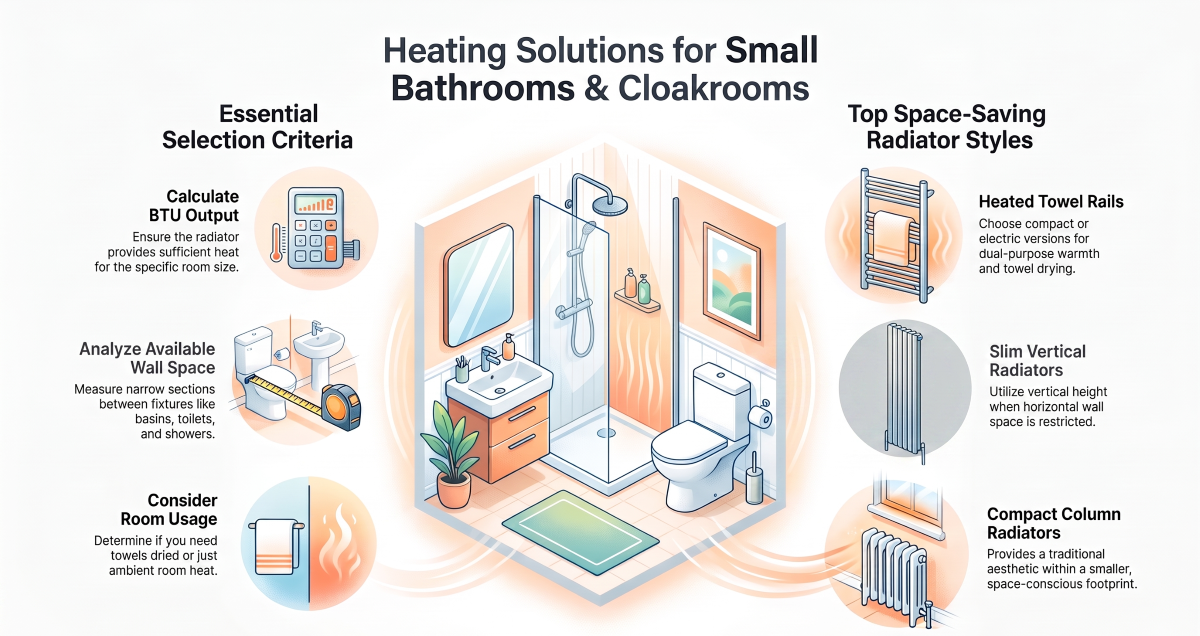
The Radiator Hub offers panel radiators, vertical designer radiators, traditional column radiators, designer radiators and bathroom radiators in different sizes and finishes. You can also mix styles, such as using panel radiators in bedrooms and a vertical or column radiator as a feature in your living room or hallway.
Before buying, check the BTU output, dimensions, pipe centres and valve connections.
Not sure what size you need? Use The Radiator Hub's BTU Calculator to quickly estimate the heat output required for your room.