
Blog
What Radiator Do I Need? The Ultimate UK Room-by-Room Guide

What Radiator Do I Need? The Ultimate UK Room-by-Room Guide
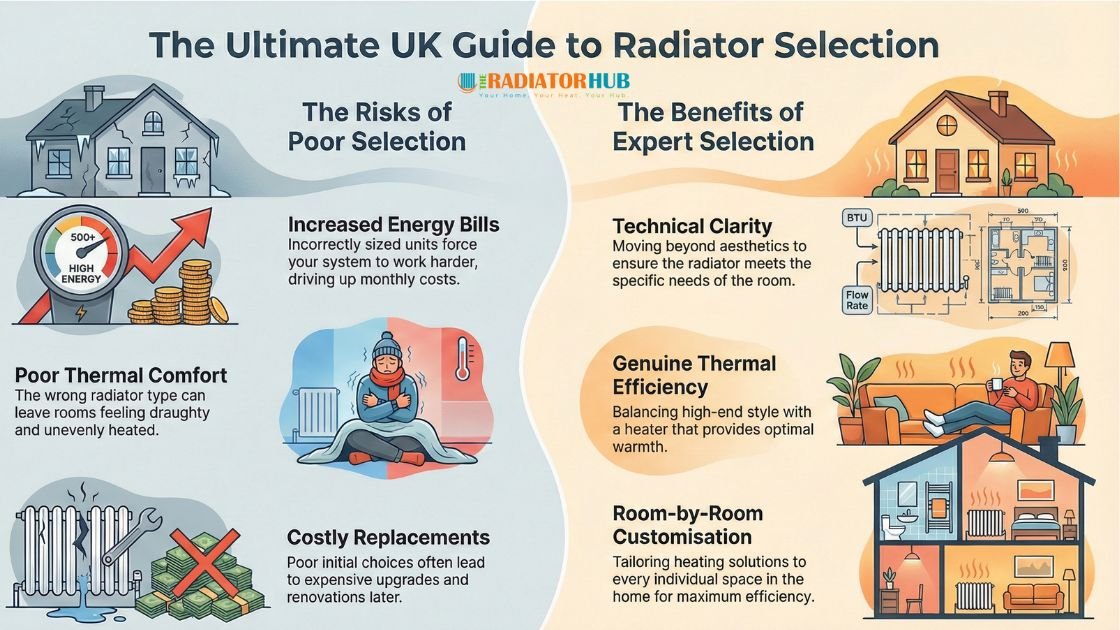
Choosing the right radiator is about far more than just aesthetics. Selecting the wrong size or type can leave your home feeling draughty, increase your monthly energy bills, and lead to costly replacements later.
In this comprehensive UK radiator guide, we explain exactly how to choose the perfect heater for every room in your home. Whether you are upgrading a single unit or renovating an entire property, this guide provides the technical clarity you need to make an informed decision. At The Radiator Hub, we specialise in heating solutions that balance high-end style with genuine thermal efficiency.
Understanding Heat Output: Why BTU Matters
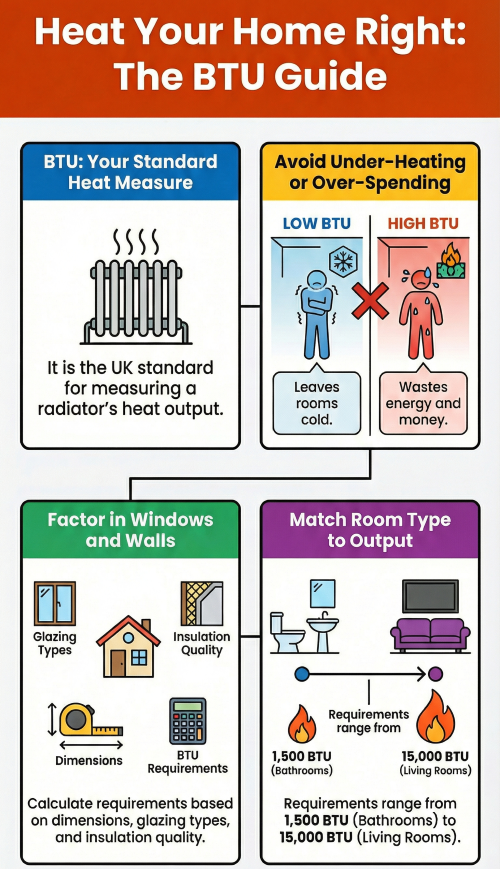
Before choosing a style, you must calculate the BTU (British Thermal Unit). This is the standard measurement of heat output in the UK. If your radiator’s BTU is too low, the room will never reach a comfortable temperature. Conversely, if it is too high, you will waste energy and money.
To find your perfect match, you must consider several factors:
- Room Dimensions: Length, width, and ceiling height.
- Windows: The number of windows and whether they are single or double-glazed.
- Wall Type: How many external walls the room has and the quality of your insulation.
Quick UK BTU Reference Table
Room Type | Average BTU Range | Recommended Radiator Style |
Small Bedroom | 2,000 – 4,000 | |
Master Bedroom | 5,000 – 8,000 | |
Living Room | 8,000 – 15,000 | Horizontal or Vertical Designer |
Bathroom | 1,500 – 4,000 | |
Kitchen | 3,000 – 6,000 |

Choosing Radiators by Room Type
The Living Room: Comfort Meets Design
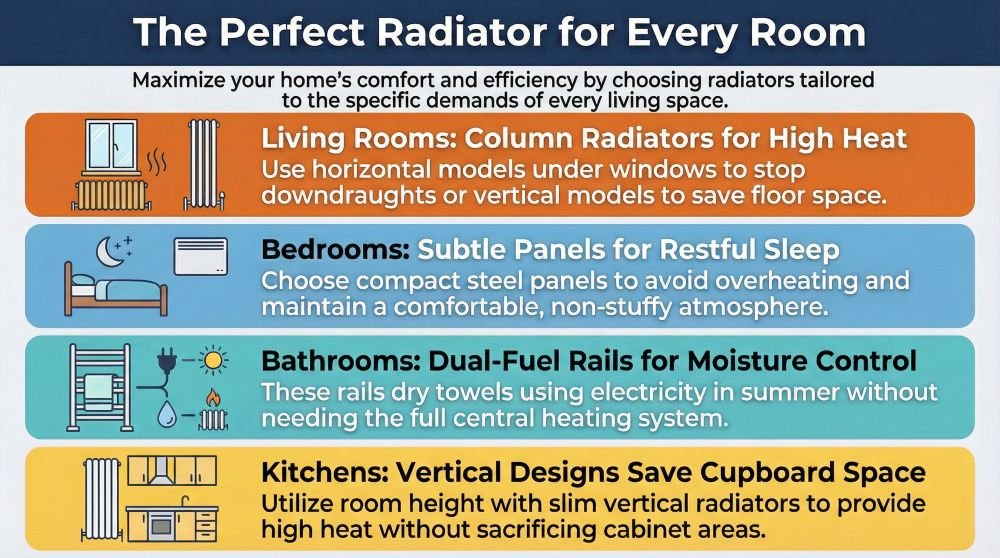
As the heart of the home, the living room requires consistent, reliable warmth. Because these rooms are often the largest spaces, Column Radiators are an excellent choice due to their increased surface area and excellent heat retention.
- Strategic Placement: If you have large windows, placing a horizontal radiator underneath helps counteract cold downdraughts.
- Space Saving: Alternatively, use a Vertical Radiator on a narrow wall to free up floor space for furniture.
The Bedroom: Subtle and Precise Heating
Bedrooms generally require lower heat levels than living areas. However, they still need precise control to ensure a restful night's sleep without overheating.
- The Best Choice: We recommend compact Steel Panel Radiators or elegant Column Radiators to complement your interior design.
- Expert Tip: Avoid oversizing your bedroom radiators. An output that is too high can lead to a "stuffy" atmosphere that disrupts sleep patterns.
The Bathroom: Moisture Control and Warmth
In UK bathrooms, the primary goal is often dual-purpose: drying towels while maintaining a comfortable base temperature to prevent dampness.
- The Dual-Fuel Advantage: We highly recommend Dual-Fuel Towel Rails. These connect to your central heating in winter but can run on electricity during the summer. This allows you to dry towels without heating the entire house.
The Kitchen: Maximising Limited Space
Kitchens are notoriously difficult to heat because wall space is usually occupied by cabinets, larders, and appliances.
- The Solution: Vertical Designer Radiators are the ideal solution for kitchens. They utilize the vertical height of the room, providing high BTU output without sacrificing valuable cupboard space.
Material Comparison: Steel vs. Aluminium
When selecting your radiator, the material is just as important as the size. Both have distinct advantages depending on your heating habits.
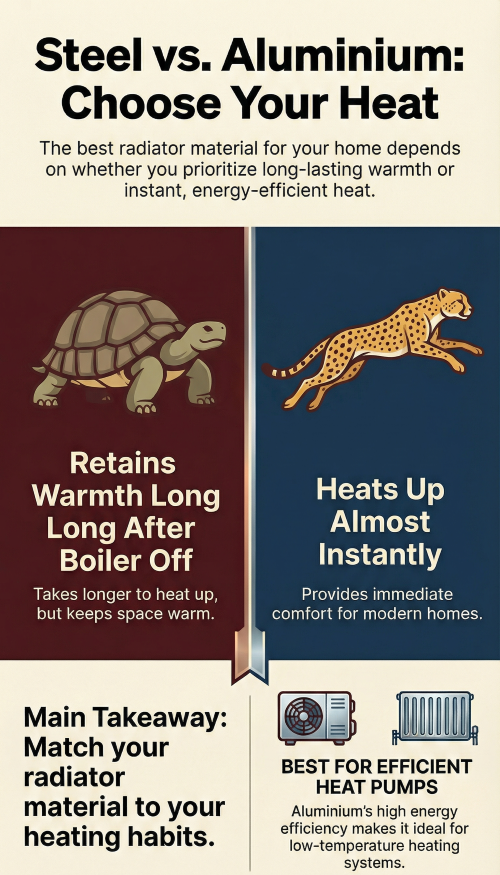
- Steel Radiators: These are the most popular choice in the UK. While they take slightly longer to heat up, they retain their warmth for much longer after the boiler is turned off.
- Aluminium Radiators: These are “fast-response” heaters. They heat up almost instantly and are incredibly energy-efficient, making them perfect for modern homes or systems using low-temperature heat pumps.
Common Sizing Mistakes to Avoid
To ensure your home stays warm and your bills stay low, avoid these frequent pitfalls:
- Blocking Airflow: Never place a large sofa directly in front of a radiator; the fabric will absorb the heat rather than allowing it to circulate.
- Ignoring Insulation: If you live in a period property with high ceilings or poor insulation, you may need to increase your BTU requirements by 15-20%.
- Underestimating Bathrooms: A standard towel rail is often not powerful enough to heat a large family bathroom on its own. Consider a "towel radiator" combo for larger suites.
Why Choose The Radiator Hub?
At The Radiator Hub, we provide more than just products; we provide trade-quality expertise. We ensure you get the right heat output for your specific room requirements, backed by UK-based support.
- Accurate BTU Guidance: Our team helps you calculate exactly what you need.
- Premium Selection: From traditional columns to modern vertical units.
- Fast UK Delivery: High-quality heating delivered directly to your door.
Frequently Asked Questions
Q: What size radiator do I need for my room?
A: You should use a BTU calculator that factors in your room dimensions, window types, and wall insulation for the most accurate result.
Q: Are vertical radiators as efficient as horizontal ones?
A: Yes. Modern vertical radiators are designed to be highly efficient and are often better at circulating air in rooms with limited horizontal wall space.
Q: Can I replace a single-panel radiator with a double-panel one?
A: Usually, yes. This is a common way to increase the heat output (BTU) of a room without needing a wider radiator.
Ready to find your perfect radiator?
Explore our full range of Column and Vertical Radiators or contact our team for expert advice on your project.