Blog
How to Bleed a Radiator Step-by-Step Guide

How to Bleed a Radiator: Step-by-Step Guide (UK)
Last updated: June 2026 | Written by The Radiator Hub Heating Specialists
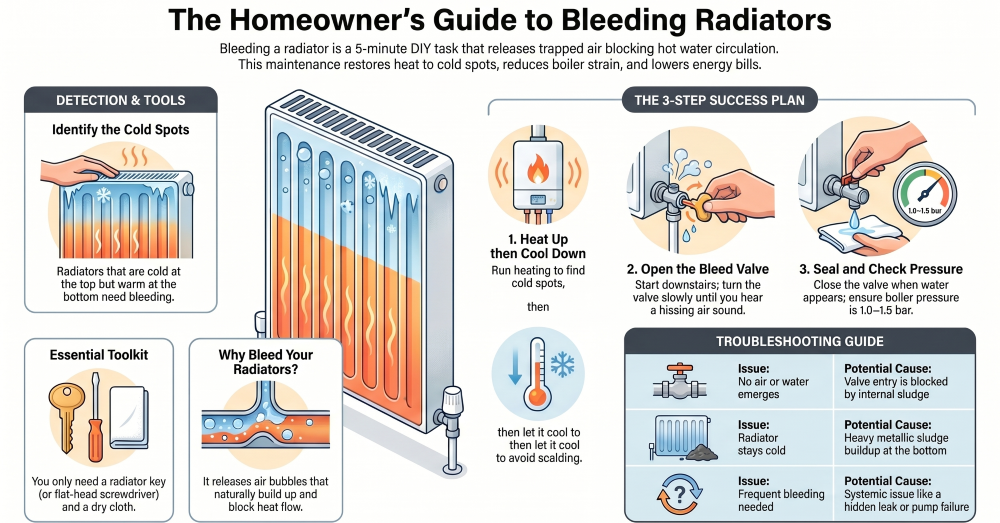
If your home isn’t heating up like it used to, you don’t necessarily need a brand-new central heating system. More often than not, the culprit is just trapped air. When pockets of air get stuck inside your pipework, they block hot water from circulating properly, leaving you with a radiator cold at the top but warm at the bottom.
The good news? Bleeding a radiator is a quick, straightforward DIY job that takes less than five minutes per unit, costs absolutely nothing, and instantly helps lower your energy bills.
What Does Bleeding a Radiator Mean?
When people talk about bleeding radiators, they simply mean releasing trapped air from inside the heating unit. As water cycles through your central heating system, air bubbles naturally build up over time. Because air rises, it gets trapped at the very top of your radiators, creating stubborn cold spots.
By opening the bleed valve, you let that air escape, allowing hot water to completely fill the unit again. This takes the unnecessary strain off your boiler and ensures you aren't paying for heating you aren't actually getting.
Signs Your Radiator Needs Bleeding
Before turning your heating system upside down, walk through your house and check for these telltale signs:
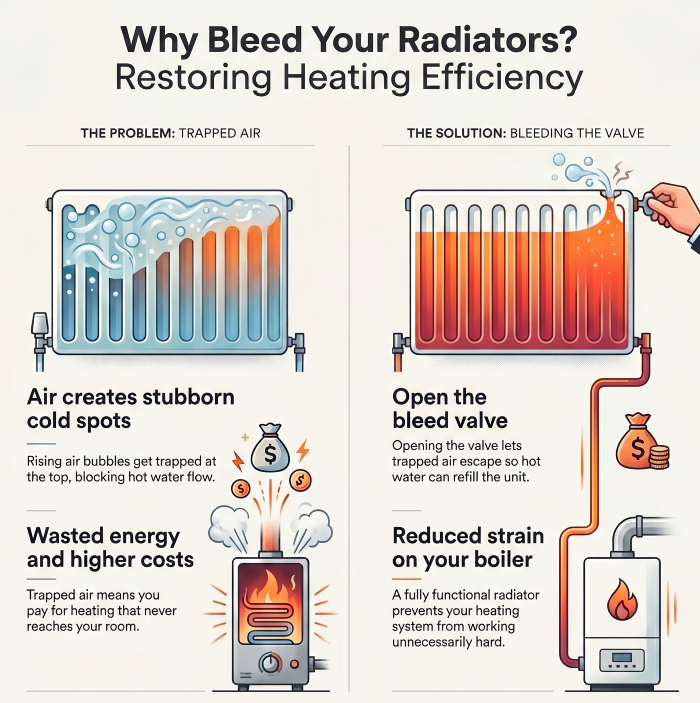
The radiator is cold at the top but warm at the bottom: This is the ultimate giveaway. If the top half feels lukewarm or freezing while the bottom is hot, air is definitely trapped up there.
Gurgling, clanking, or bubbling noises: If your pipes sound like they’re boiling a kettle or making strange rattling noises when the heating kicks in, that’s air moving through the water.
Uneven heat across the house: You might notice the living room is boiling but a bedroom upstairs stays frustratingly chilly.
The radiator is completely cold: In severe cases, an massive air blockage can completely stop hot water from entering the radiator at all.
Your energy bills are creeping up: If your boiler is running constantly but the house still feels damp or cold, the system is working twice as hard to fight through air pockets.
What You'll Need to Bleed a Radiator
You don’t need a massive toolkit for this. In fact, you probably have most of this lying around the house:
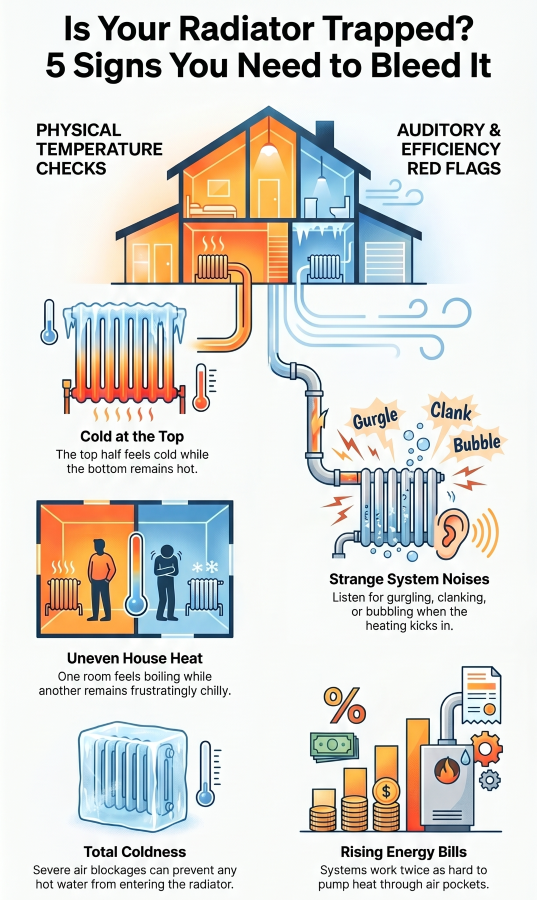
A radiator key: A small, brass or steel tool used to open the valve. You can pick these up for a couple of pounds at any local DIY shop.
A flat-head screwdriver: If you can't find your radiator key, don't panic. Most modern radiator bleed valves feature a central slot that fits a standard flat-head screwdriver perfectly.
A dry cloth, old towel, or small container: To catch the small trickle of water that escapes immediately after the air clears.
Shopping Tip: If your old valves are looking a bit worse for wear, or you've completely lost your key, check out our range of universal radiator valves and accessories to get things sorted.
How to Bleed a Radiator: A Step-by-Step Guide
Follow these steps carefully to bleed your radiators safely and efficiently without making a mess.
Step 1: Turn your heating on
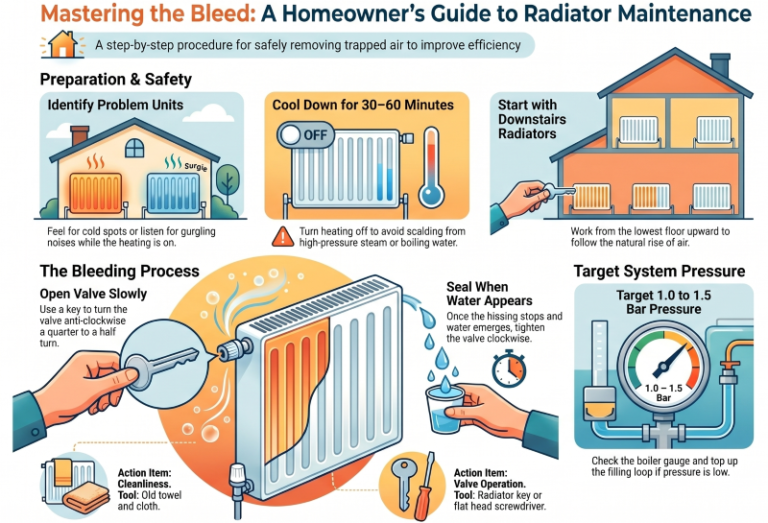
Fire up your central heating system and give it a good 15–20 minutes to heat up fully. Take a walk around the house and carefully feel each unit. Note down which ones have cold spots or are making strange noises—these are the ones you’ll need to target.
Step 2: Turn the heating off and let it cool completely
This step is vital. Switch your heating off and wait at least 30 to 60 minutes. If you try bleeding radiators while the system is active or hot, you risk scalding yourself with blistering steam or boiling water spraying out under pressure.
Step 3: Start with your downstairs radiators
Always start at the lowest point of your home (usually the downstairs hallway or living room) and work your way up to the top floor. Air naturally rises through a pipe network, so starting downstairs ensures you push the air out in the correct logical order.
Step 4: Locate the bleed valve
Look at the top corner on either side of your radiator. You’ll see a small, round metal valve with a square pin inside it. Place your old towel on the floor directly beneath it and hold your cloth right under the valve to catch any rogue drops.
Step 5: Open the valve slowly
Insert your radiator key or flat-head screwdriver into the valve pin. Turn it anti-clockwise slowly—you usually only need a quarter to a half turn. You should immediately hear a distinct hissing sound. This is the trapped air safely escaping. Do not unscrew the valve entirely, or the pin will pop out and flood your room.
Step 6: Wait for the water to appear
Keep holding your cloth steady. As soon as the hissing sound stops, a steady stream of water will emerge. This tells you all the air has successfully left the radiator.
Step 7: Close the valve firmly
Quickly turn your key clockwise to seal the valve back up. You don’t need to swing on it—just tighten it firmly enough to stop the water. Wipe away any moisture from the radiator to prevent rust.
Step 8: Check your boiler pressure
Because you’ve let air and a little water out, your system’s pressure will have dropped. Walk over to your boiler and check the pressure gauge on the front. It should ideally sit between 1.0 and 1.5 bar. If it has dropped below 1.0, you’ll need to top it up using your boiler’s filling loop (check your manual if you aren't sure how to do this).
Step 9: Turn the heating back on
Switch your central heating back on. Give it a few minutes, then check your problem radiators. They should now be completely hot from top to bottom, with no more annoying gurgling sounds.
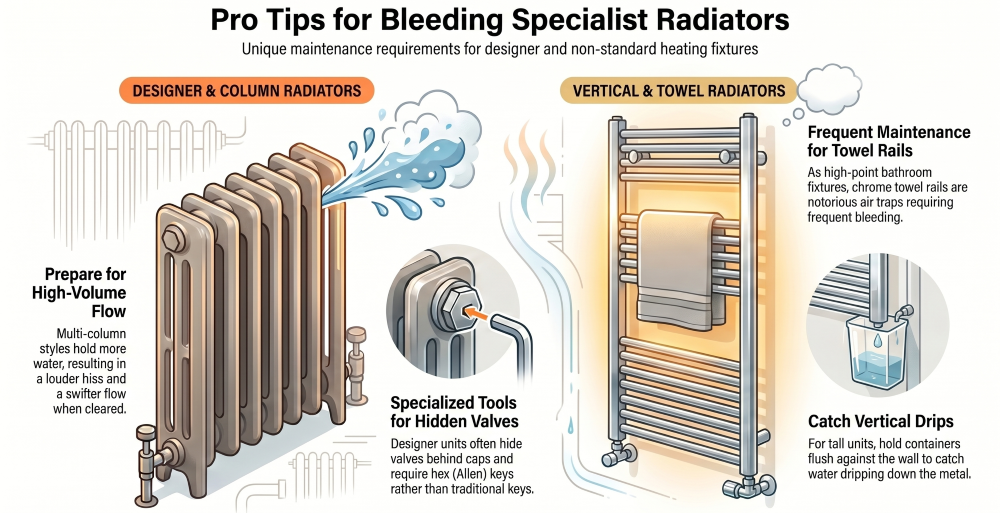
Handling Special Cases: Designer, Column & Towel Radiators
If you’ve moved away from standard panel radiators and invested in modern home design, bleeding can look slightly different. The generic advice from big energy companies usually leaves these out, but at The Radiator Hub, we know exactly how to manage them:
Designer Radiators: High-end architectural designs often favour clean lines, meaning the bleed valves are frequently hidden behind decorative caps or recessed deeply into the metalwork. Many modern designer radiators require a specific hex key (Allen key) rather than a traditional radiator key.
Column Radiators: Traditional multi-column styles have their valves tucked neatly at the very top of the end loop. Because column radiators hold a significantly larger volume of water, you might hear a louder hiss, and you should be ready for a swifter flow of water when the air clears.
Vertical Radiators: Because these units are tall and narrow, the air accumulates at the absolute highest point—often close to the ceiling. Make sure you have a sturdy step stool and hold your container directly against the wall, as water will drip straight down the vertical length.
Heated Towel Rails: Chrome towel rails usually feature a bleed valve on the top back corner, often capped with a plastic plug. Because heated towel rails sit at the highest point in bathrooms, they are notorious air traps and may need bleeding more frequently than your living room units.
How Often Should You Bleed Your Radiators?
Think of bleeding your radiators like servicing your car, it’s routine maintenance. You should aim to bleed your radiators once a year, ideally in the early autumn right before the winter freeze sets in.
You should also do a quick sweep of the house and bleed the system if:
You’ve just had a brand-new radiator or boiler installed.
A central heating engineer has just completed repair work on your pipes.
Your system has recently undergone a deep chemical power flush.
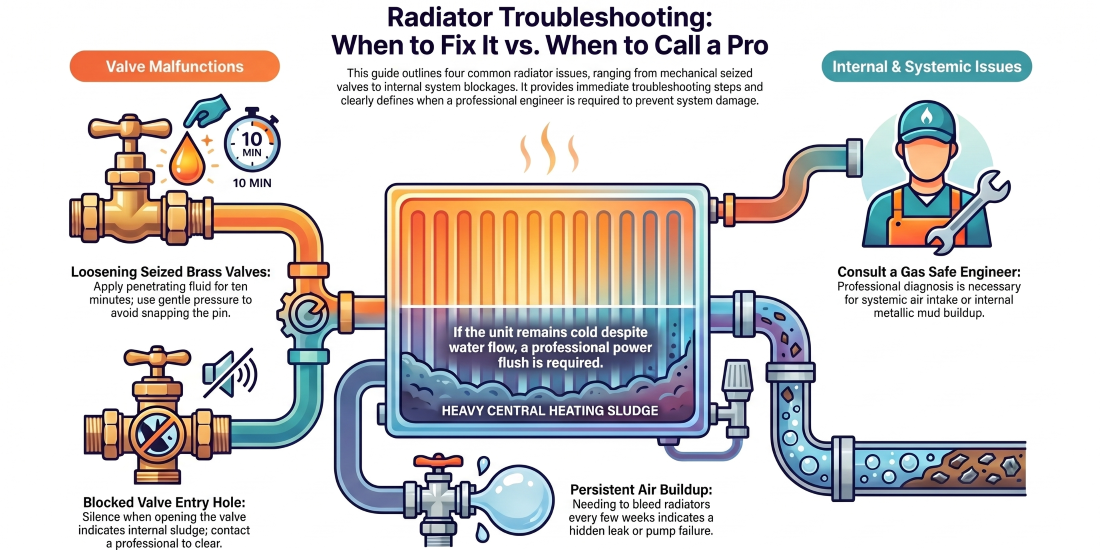
Troubleshooting: What to Do When Things Go Wrong
The valve is completely stuck or seized Older brass valves can seize up over time. Spray a tiny bit of penetrating fluid (like WD-40) directly onto the valve pin and leave it for ten minutes. Try again with gentle pressure. If it still won't budge, do not force it. Applying too much pressure can snap the valve pin entirely, which will require an emergency call-out.
No air or water comes out when I open the valve If you open the valve and get absolute silence, the valve entry hole is likely blocked with internal sludge and rust. Close the valve and contact a professional to clear the blockage safely.
Water keeps pouring out, but the radiator stays cold If you’ve bled the radiator, water is flowing, but the unit remains cold after turning the heating back on, you likely have a buildup of heavy central heating sludge at the bottom of the unit. This thick, metallic mud blocks the hot water flow and usually requires a professional power flush to clean out.
The radiator needs bleeding every few weeks If you are constantly releasing air from the same radiator month after month, you have a systemic issue. It means air is continuously being drawn in, likely via a tiny, hidden leak or a failing water pump. You should book a visit from a Gas Safe registered engineer to diagnose the root cause.
When to Call a Professional
While bleeding radiators is the ultimate beginner-friendly DIY task, some issues require professional tools and certifications. You should step away and call a professional heating engineer if:
Your boiler pressure keeps dropping rapidly every time you try to top it up.
You notice active water leaks pooling around the base valves or floor pipes.
Your boiler starts making loud banging noises or emits an unusual metallic smell.
You feel uncomfortable working with your boiler's filling loop.
When dealing with gas appliances or complex system pressures, always ensure your engineer is listed on the official Gas Safe Register.
Frequently Asked Questions
Can I bleed a radiator when the heating is on? Absolutely not. Not only does it increase the risk of hot water spraying out under pump pressure, but running the pump while a valve is open can actually suck more fresh air into your system, making the problem worse.
How long does it take to bleed a radiator? It takes roughly 2 to 5 minutes per radiator. Walking through a typical three-bedroom semi-detached home usually takes less than half an hour.
Do I need to bleed upstairs radiators first? No, always start downstairs with the radiators furthest away from your boiler, then move upstairs. This allows the air to naturally rise up through the system as you bleed out the lower levels.
How do I know when a radiator is fully bled? The moment the hissing air stops and a solid, continuous stream of water begins to trickle out into your cloth, your radiator is completely clear of air.
Can you bleed a radiator without a key? Yes, the vast majority of modern standard radiators feature a central slot inside the valve that accommodates a flat-head screwdriver.
Will bleeding radiators actually lower my heating bills? Yes. When air is trapped, your system is inefficient. Your boiler works harder, burns more gas, and runs longer to get the room to your thermostat's target temperature. Clearing that air streamlines the process, saving you money.
What should boiler pressure be after bleeding? Once you are finished, check your boiler's pressure dial. It should read between 1.0 and 1.5 bar. If it is sitting in the red zone below 1.0, use your filling loop to bring it back up.
Need an Upgrade?
Sometimes, an old radiator is simply past its prime, rusted through internally, or filled with decades of un-flushable sludge. If your heating system still feels sluggish after troubleshooting, it might be time for an upgrade.
At The Radiator Hub, we supply premium-quality, high-efficiency heating solutions across the UK. Whether you need a space-saving vertical designer piece or a classic column installation, we've got you covered.
Calculate your room's exact heating requirements with our free BTU Calculator
Have a technical question? Chat with our UK team today on 01257 452879